
Indiana liquor liability insurance covers alcohol-related injury claims and their defense. Indiana’s dram shop law, IC 7.1-5-10-15.5, makes a person who furnishes alcohol liable only with actual knowledge that the recipient was visibly intoxicated and when that intoxication proximately caused the injury. An intoxicated adult cannot sue for their own injuries. We found no statutory insurance mandate, but server training is required.
This guide is for Indiana bars, brewery taprooms, restaurants with a bar program and caterers, from Fort Wayne to Bloomington. It covers the actual-knowledge standard, training deadlines, the claims that drive losses and how carriers price your operation. Start with restaurant insurance in Indiana, or see restaurant insurance in Indianapolis.
What actual knowledge means under IC 7.1-5-10-15.5
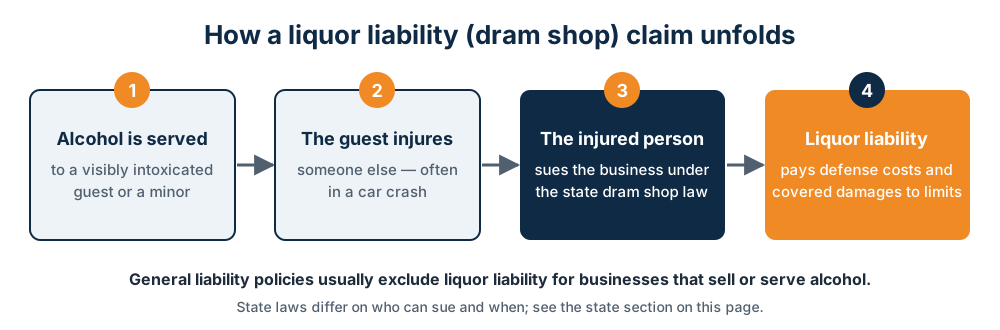
Indiana’s statute defines furnishing broadly: selling, giving away, bartering or otherwise providing alcohol. A person who furnishes alcohol is civilly liable for death, injury or damage only if two things are true: they had actual knowledge the recipient was visibly intoxicated, and the intoxication was a proximate cause of the harm. An intoxicated person 21 or older cannot sue the furnisher for their own injuries. There is no statutory damage cap.
Actual knowledge is a higher bar than the should-have-known standards used in other states, but it is not a free pass. Juries can infer knowledge from circumstances: POS data showing rapid rounds, a bartender’s own messages, security footage of a guest stumbling at the rail. That is why documented refusals and cut-off notes are unusually valuable evidence in Indiana.
| Question | Indiana answer |
|---|---|
| Who can sue | Third parties harmed by the intoxicated person; not an intoxicated adult 21 or older for their own injuries |
| Knowledge standard | Actual knowledge that the recipient was visibly intoxicated |
| Causation | Intoxication must be a proximate cause of the death, injury or damage |
| Who the rule reaches | Any person who furnishes alcohol, including non-licensees |
| Damage cap | None in the statute |
Social hosts in Indiana
The actual-knowledge rule applies to any person who furnishes alcohol, not only permit holders, so a private host who knowingly serves a visibly intoxicated guest faces the same test. Other social-host rules specific to minors are unverified, so check with counsel before assuming either way. Restaurants that rent private rooms and caterers pouring at client events should confirm which policy answers when the host, not the business, is sued.
Is liquor liability insurance required in Indiana?
We identified no statutory requirement, and that point is unverified with the Indiana Alcohol and Tobacco Commission (ATC). The requirement usually comes from contracts: commercial landlords, lenders, stadium-area and event venues, franchisors and festival organizers ask for liquor liability with named limits and additional insured status, backed by a current certificate of insurance.
Indiana’s mandatory server training and the 18–20 permit rule
Alcohol servers at permitted establishments must complete an approved server training program within 120 days of starting work and take a refresher every 3 years, and the employer must keep proof on file. All 18- to 20-year-olds must finish approved training before applying for a restricted employee permit. The ATC offers free online Certified Server Training. Training teaches staff to recognize visible intoxication, so pair it with a habit of documenting cut-offs; a trained server who kept pouring is a harder fact to defend.
BYOB rules are unverified in Indiana, so ask the ATC before letting guests bring bottles. Our BYOB liquor liability guide covers the coverage questions.
Claim scenarios typical for Indiana venues
A downtown Indianapolis bar on a race weekend keeps serving a guest the bartender later admits was slurring, and the guest’s crash on the interstate injures another driver. A Bloomington bar near campus sees a fight between two groups after a game, and the injured student sues for negligent security. A Fort Wayne brewery taproom’s trivia night ends with a patron falling on wet stairs. A caterer pouring at a Carmel wedding is named with the venue after a guest’s late-night crash, and the question becomes who had actual knowledge.
Assault and battery and the liquor exclusion
General liability excludes injury arising from selling or serving alcohol once you are in that business, so claims under IC 7.1-5-10-15.5 belong on a liquor policy. Assault and battery is often excluded or sublimited in both policies, and fights are among the most common bar claims. See whether liquor liability covers assault claims.
Setting per-occurrence and aggregate limits
The per-occurrence limit caps what the policy pays for one incident; the aggregate caps the policy year. Leases usually specify both. With no statutory cap, size limits to a serious auto injury, confirm whether defense erodes the limit and check that your umbrella sits over the liquor policy. More in per-occurrence vs aggregate limits.
How liquor receipts drive Indiana pricing
Liquor liability is rated mainly on liquor receipts, meaning annual alcohol sales and their share of total revenue. A family restaurant pouring beer with dinner rates very differently from a late-night bar where drinks are most of the sales. Hours, event traffic, entertainment, drink specials, security, training compliance and loss history adjust the rate. Current training certificates on file, accurate receipts and an incident log help you see what you qualify for.
Which Indiana businesses face which issues
- Bars and taverns — event-day volume, fights and the actual-knowledge fight in over-service cases.
- Breweries and taprooms — taproom pours and events alongside manufacturing risks.
- Fine dining and restaurants with bars — lower receipts, but training deadlines apply to every server.
- Caterers — off-site pours and venue certificate demands.
- Every covered employer — workers’ comp is required with no minimum employee count and is rated through the ICRB; see Indiana restaurant workers’ comp.
Coverage checklist for Indiana permit holders
- Liquor liability — answers claims your GL excludes.
- Assault and battery — full limits for bars and late crowds.
- General liability — slips, falls and food claims.
- Umbrella — scheduled over the liquor policy.
- Employment practices liability — staffing and harassment disputes.
- Workers’ comp owner elections — sole proprietors, partners and LLC members are not covered unless they elect in writing.
Getting Indiana quotes through an independent agency
Provident Financial Group takes one application to multiple carriers and compares the quotes side by side, including A&B terms and umbrella fit. Have your permit type, liquor receipts, hours, server training records and loss runs ready. After binding, live certificates of insurance for landlords and venues are issued quickly. Call (866) 964-6660 or start online.
Frequently asked questions
Can an intoxicated customer sue my Indiana bar for their own injuries?
Not if they are 21 or older. IC 7.1-5-10-15.5 bars an intoxicated adult from suing the furnisher for their own injuries; third parties they harm can still sue.
How soon must new Indiana servers be trained?
Within 120 days of starting work, with a refresher every 3 years. Keep proof on file for every server.
Can 18- to 20-year-olds serve alcohol in Indiana?
They need a restricted employee permit, and approved server training must be completed before applying for it.
Does Indiana cap dram shop damages?
No statutory damage cap applies, so limits should reflect a serious injury claim, not a statutory figure.
Serving alcohol in Indiana? Compare liquor liability, A&B and umbrella options from multiple carriers. Get Multiple Quotes within minutes.
Official Indiana sources
- Indiana Code § 7.1-5-10-15.5 (alcohol furnisher liability)
- Indiana Alcohol and Tobacco Commission: certified server training
- Indiana state FAQ: which permit employees need server training
State facts on this page are drawn from the statutes and agency pages above. Laws and agency rules change, so confirm current requirements with the agency before relying on them. This page is general information, not legal advice or a coverage opinion.
Related pages
- Bar insurance in Indiana
- Brewery insurance in Indiana
- Catering insurance in Indiana
- Fine dining insurance in Indiana
- Restaurant insurance in Indiana
- Liquor liability laws by state
- Liquor liability vs host liquor liability