
Catering companies in Indiana typically need general liability with products coverage, liquor liability if they pour at events, commercial auto for vans and hired and non-owned auto for staff vehicles, inland marine for equipment in transit, and workers’ compensation. Venues usually require additional insured status, and Indiana’s dram shop statute reaches anyone who furnishes alcohol, not just licensed bars.
This page is for full-service caterers, drop-off catering businesses, event kitchens and restaurants with a meaningful off-site catering operation anywhere in Indiana. Catering risk follows you from the commissary to the wedding barn to the corporate campus, which is why a policy written for a single dining room often leaves gaps.
Indiana requirements that follow a caterer to every venue
If you cook raw animal foods, Indiana requires at least one certified food protection manager responsible for all hours of operation (IC 16-42-5.2), with six months to comply for a new establishment or new owner and three months to replace a departing manager. Your kitchen is permitted through the local county health department under the Indiana Food Code (410 IAC 7-24).
On alcohol, IC 7.1-5-10-15.5 applies to any person who furnishes it, including selling or simply providing it. Liability requires actual knowledge that a guest was visibly intoxicated and that the intoxication caused the harm, and damages are uncapped. If your company holds an ATC permit, your servers must complete approved server training within 120 days of hire with refreshers every three years. Even when the couple buys the alcohol and your staff only pours it, your bartenders are the ones who see who is intoxicated, so your liquor coverage needs to address that setup. See our Indiana liquor liability page for detail.
Vans on Indiana roads must carry at least 25/50/25 (in thousands of dollars) in liability, though venues and corporate clients routinely ask for far higher limits. Workers’ comp is required for covered employers under IC 22-3-5-1 regardless of headcount, and event staff you call employees count; details are on our Indiana restaurant workers’ comp page.
Where catering jobs go wrong
A 200-guest wedding buffet sits out too long in a warm tent, and by Sunday dozens of guests report food poisoning. Instead of one claimant you have many, each with medical bills and lost wages, and the venue tenders its own defense to you under the contract. That concentration of claimants is what makes catering different from a sit-down restaurant.
Chafing fuel tips over and burns a guest’s hand. A server carrying a hotel pan down a loading dock ramp falls and tears a knee. A delivery van runs a red light on the way to a corporate lunch. A rented historic venue’s hardwood floor is scorched by a portable burner, and the venue sends you the bill. An employee’s personal SUV, loaded with sheet pans, is in a crash while running forgotten linens to the site.
Equipment losses are common too: warmers, coolers and serving pieces stolen from an unlocked van overnight, or dropped and broken during load-out.
Coverages a catering company should carry
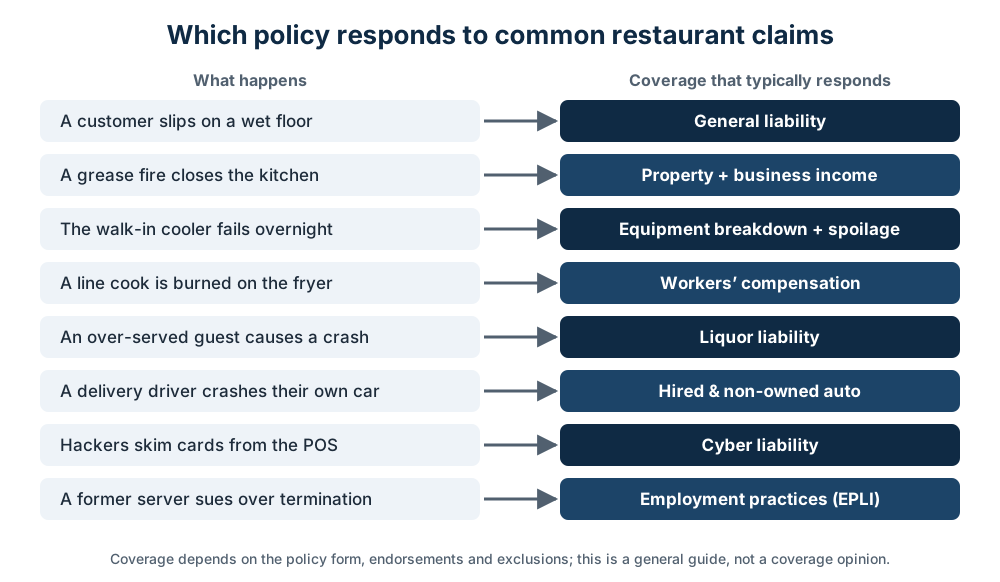
- General liability — guest injuries at events and damage to venue property; check the damage to rented premises limit.
- Products liability — foodborne illness claims from meals you prepared and served off-site.
- Liquor liability — bartending services at weddings and corporate events, including when the client supplies the alcohol.
- Commercial auto — company vans and box trucks carrying food, staff and equipment.
- Hired and non-owned auto — employees using personal cars for deliveries or supply runs.
- Inland marine — chafers, warmers, coolers and tents while in transit or at a venue.
- Spoilage and equipment breakdown — walk-in failures before a big event.
- Workers’ compensation — burns, falls and lifting injuries for kitchen and event staff.
- Umbrella — higher limits many venues and corporate clients now require.
Rating factors carriers apply to caterers
Underwriters look at annual revenue, the share of events with alcohol, largest event size, whether you bartend or only cook, the number and type of vehicles, driver records, cooking done on site at venues versus in your kitchen, and claims history. Tented outdoor events with open-flame cooking rate differently from drop-off boxed lunches.
Pricing improves when you can show written time and temperature controls for transport and holding, hot and cold holding logs, trained bartenders who card guests and cut service off, motor vehicle record checks for anyone who drives for you, and contracts that clearly spell out who supplies alcohol. Reviewing venue contract language before you sign also helps avoid indemnity terms your insurance won’t match.
Getting venue-ready certificates through one agency
As an independent agency, Provident Financial Group takes one application and compares quotes from multiple carriers side by side. After you bind, we issue live certificates of insurance with the additional insured and waiver wording each venue asks for, often the same day. Call (866) 964-6660 when a venue’s insurance requirements land in your inbox.
Frequently asked questions
If the client buys the alcohol, do I still need liquor liability?
Usually yes. Indiana’s dram shop statute applies to whoever furnishes alcohol, and your bartenders are the ones serving it, so a claim is likely to name your company either way.
Why does every venue ask to be an additional insured?
Venues want your policy to defend them if a guest is hurt because of your work. An additional insured endorsement does that, and we can issue the certificate that confirms it.
Are my staff’s personal cars covered when they deliver?
Their personal auto policy responds first, but your business can be sued too. Hired and non-owned auto coverage protects the company in that situation.
Does my policy follow me to venues outside Indiana?
Many catering policies cover events anywhere in the United States, but check the territory wording. We write catering businesses only in the states where our agency is licensed.
Catering events in Indiana? Get Multiple Quotes within minutes. Or call (866) 964-6660.