
Fine dining restaurants in Indiana typically need liquor liability sized for a substantial wine and cocktail program, a package policy with property and business income for a high-value build-out and cellar, workers’ compensation from the first employee, and employment practices liability for a large staff. Indiana’s dram shop statute and mandatory server training shape the liquor side, and valet service adds garagekeepers coverage.
This page is for chef-driven and upscale restaurants in Indiana: tasting-menu rooms, steak and seafood houses, wine-focused bistros and hotel-adjacent dining with private event space. You have more invested in the room, the cellar and the team than a typical restaurant, and alcohol is a meaningful share of every check.
Liquor law in Indiana and a wine-heavy dining room
Indiana’s dram shop statute, IC 7.1-5-10-15.5, makes a person who furnishes alcohol civilly liable only if they had actual knowledge that the guest was visibly intoxicated and the intoxication was a proximate cause of the death, injury or damage. That is a higher bar than the should-have-known standards used in some states, and an intoxicated adult 21 or older cannot sue you over their own injuries. There is no statutory damage cap, though, so when a claim does meet the standard, the exposure can be severe, and defense costs apply either way.
We have not identified an Indiana statute requiring every permittee to carry liquor liability insurance, so confirm any permit conditions with the Indiana Alcohol and Tobacco Commission. In practice, landlords, lenders and private event clients ask for it, and a general liability policy usually excludes liquor liability for businesses that sell alcohol.
Server training is mandatory. Alcohol servers at permitted establishments must complete an approved program within 120 days of starting, take a refresher every three years, and the employer must keep records on file. Employees aged 18 to 20 must finish training before applying for a restricted employee permit. The ATC offers free online Certified Server Training, and a documented program is one of the most useful things you can show an underwriter.
Risks particular to upscale dining rooms
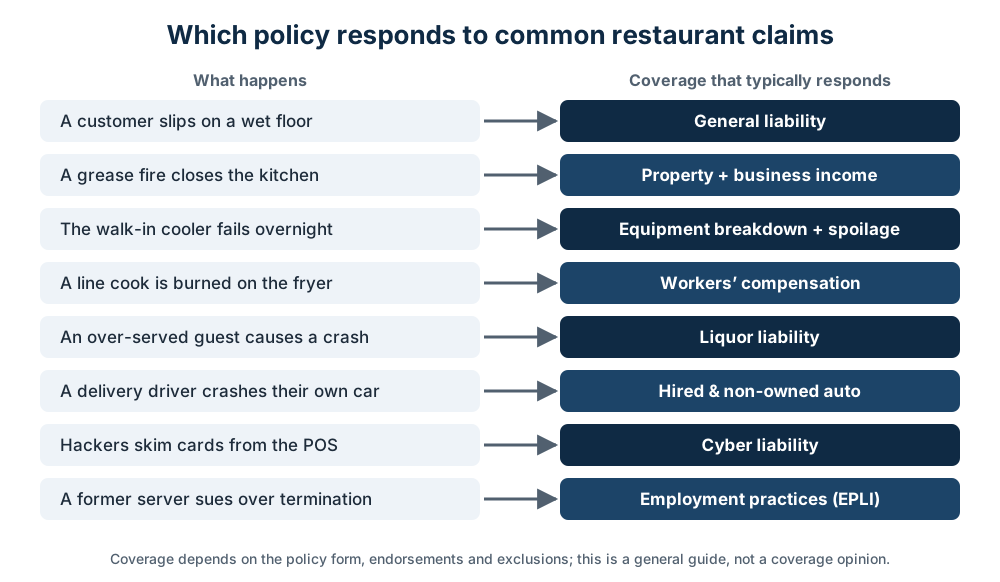
A couple finishes a seven-course menu with full wine pairings, plus a digestif sent out by the kitchen. Under Indiana’s actual-knowledge rule, what your captain saw and wrote down matters, which is why pour tracking and incident notes are worth the effort. Elsewhere in the room, a tableside flambé sends a flame up toward a linen drape, and a crudo course made with fish from a new supplier leaves a private party of twelve sick the next morning.
Money-heavy losses show up behind the scenes. The cellar’s cooling unit fails over a holiday weekend and a collection of aged bottles cooks. An employee quietly walks out with a case of allocated bourbon each month. The valet scrapes a guest’s sports car against a concrete pillar. A former sous chef files a harassment complaint, and a server dispute over the tip pool follows.
Fine dining coverage checklist for Indiana
- Liquor liability — sized for your alcohol share of sales, private events and late seatings, including assault and battery coverage where available.
- General liability and products-completed operations — raw and undercooked preparations raise the stakes on illness claims.
- Property with tenant improvements and betterments — custom millwork, lighting and kitchen build-outs are expensive to replace.
- Wine and spirits stock — ask whether inventory can be valued at selling price rather than cost after a covered loss.
- Equipment breakdown and spoilage — cellar cooling, walk-ins and specialty ovens.
- Crime and employee dishonesty — for high-value bottles and cash handling.
- Garagekeepers — for guest vehicles in your care if you run valet in-house.
- Employment practices liability — note that wage and tip disputes are often excluded or sublimited.
- Workers’ compensation and umbrella — workers’ comp from the first employee, and an umbrella over liquor and general liability.
What moves the premium for an upscale restaurant
Underwriters weigh the alcohol percentage of sales, closing time, the number of private events, valet operations, build-out and inventory values, sprinklers and hood suppression, and claims history. Staff turnover and training records also get attention on a liquor application.
To improve terms, document server training, track pours on pairing menus, keep an incident log, add temperature alarms to the cellar, and require any third-party valet company to carry its own coverage and name you as additional insured.
Working with Provident Financial Group on a fine dining program
Fine dining accounts often need more than one carrier’s appetite. We take one application and compare package, liquor and umbrella options side by side, then issue certificates for landlords and event clients once you bind. Call (866) 964-6660 to talk it through.
Frequently asked questions
Does Indiana require fine dining restaurants to carry liquor liability insurance?
We have not identified a statute requiring it of every permittee, so check your permit conditions with the ATC. Landlords, lenders and event clients commonly require it, and without it a dram shop claim falls on the business.
Is our wine collection covered at what we paid or what we would sell it for?
Standard property forms usually value stock at cost. Some carriers offer selling-price valuation for finished stock, so ask before a loss, not after.
Who pays if the valet damages a guest’s car?
If your staff park cars, garagekeepers coverage responds. If you use a valet company, its policy should respond first, so collect its certificate and be named as additional insured.
Does our sommelier need Indiana server training?
Treat anyone pouring for guests as an alcohol server. Indiana requires servers at permitted establishments to complete approved training within 120 days of starting and refresh it every three years.
Planning a new room or renewing your liquor policy? Get Multiple Quotes within minutes.