
Breweries and taprooms in Indiana typically need general liability with products coverage, liquor liability for taproom and event pours, commercial property with equipment breakdown for the brewhouse and cold side, and workers’ compensation. Indiana’s actual-knowledge dram shop standard and the ATC’s mandatory server training apply to a taproom pint just as they do to a bar, and damages under that statute are uncapped.
This guide is for Indiana production breweries with taprooms, brewpubs, and nano breweries that self-distribute kegs to local accounts. A brewery is really two businesses at once: a manufacturer shipping product into the market and a hospitality venue pouring it. Insurance has to cover both, and a policy built for a restaurant usually misses half of the exposure.
Indiana rules a taproom owner should know
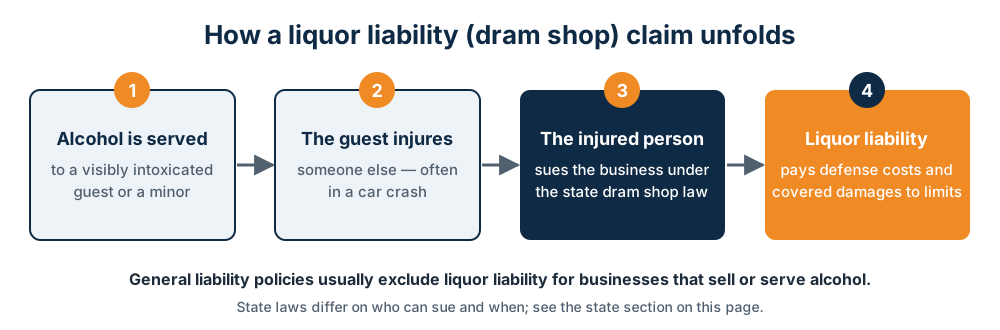
Pints, flights and crowlers all count as furnishing alcohol under IC 7.1-5-10-15.5, which covers selling, giving away or otherwise providing it, so free samples at a release party count too. Liability requires actual knowledge that the person was visibly intoxicated plus proximate cause, and an intoxicated adult 21 or older cannot sue over their own injuries. There is no statutory damages cap.
Taproom staff who pour must complete an ATC-approved server training program within 120 days of hire and refresh every three years, and you keep the records on file. Beertenders aged 18 to 20 need training before they can apply for a restricted employee permit. Separately from anything the state requires, distributors, retail accounts and festival organizers commonly demand evidence of liquor and product liability limits and ask to be named as additional insureds.
Workers’ comp is mandatory for covered employers under IC 22-3-5-1, with no statutory headcount floor. If your taproom kitchen cooks raw animal foods such as burgers or wings, Indiana requires a certified food protection manager responsible for all hours of operation (IC 16-42-5.2). If you rely on visiting food trucks instead, collect each truck’s certificate of insurance before it parks.
Brewhouse and taproom exposures that turn into claims
Brewing is hot, wet, pressurized work. A brewer opens a fermenter before it has fully vented and takes a face full of foam; a cellar hand’s back gives out wrestling a full half-barrel onto a pallet; a forklift clips a stack of empty cans and the pallet comes down on someone’s ankle. Carbon dioxide buildup in a poorly ventilated cold room is a real hazard, and caustic cleaning chemicals cause burns. Those are workers’ compensation claims, and brewery payroll often spans several job types that carriers rate separately.
Product exposures look different. A batch that keeps fermenting in the can can cause cans to swell or burst on a store shelf. A glass fragment in a bottle, an undeclared allergen in a fruited sour or a pastry stout, or a faulty keg coupler at an account can lead to bodily injury claims. Pulling contaminated product from every tap account costs money even when nobody is hurt, and that recall expense is usually a separate coverage rather than part of general liability.
In the taproom, think trivia nights, dog-friendly patios and release-day lines wrapping around the building: slip hazards, dog bites, and the patron who had four high-gravity stouts and then drove home.
Policies a brewery and taproom should line up
- General liability with products-completed operations — covers injuries caused by beer you have already shipped to bars and stores.
- Liquor liability — taproom pours plus festivals and off-site events; confirm off-premises events are not excluded.
- Commercial property — brewhouse, fermenters, brite tanks, canning line, grain and finished inventory.
- Equipment breakdown — glycol chillers, boilers and pumps; one chiller failure can warm an entire cellar.
- Spoilage and contamination — batches lost to refrigeration failure or a utility outage.
- Product recall expense — the cost of retrieving and destroying suspect product from accounts.
- Inland marine — kegs sitting at accounts, mobile canning equipment and festival gear.
- Commercial auto or hired and non-owned auto — self-distribution runs; Indiana’s liability minimums are 25/50/25 (in thousands of dollars), and accounts usually expect more.
- Workers’ compensation — brewers, cellar staff, packaging crew and taproom employees.
Pricing levers for breweries
Carriers weigh annual barrelage, the split between taproom sales and distribution, whether you ship beyond Indiana, food service, taproom hours, event volume, equipment values, fire protection and loss history. A brewery distributing across several states is rated very differently from a taproom-only nano pouring a few hundred barrels a year.
To improve terms, document confined-space and CO2 monitoring procedures, lockout and tagout, and forklift certification. Keep lot codes tied to a written recall plan, maintain sanitation and QA logs, and keep server training certificates current. Collect additional-insured requirements from your accounts before renewal so endorsements are built in rather than added mid-term.
One application, several brewery-friendly carriers
Provident Financial Group is an independent agency. You send one application, and we compare quotes from multiple carriers side by side, including markets that understand manufacturing and hospitality in the same building. We point out differences in products coverage, recall options and liquor wording, then issue live certificates of insurance for distributors, festivals and landlords once you bind. Call (866) 964-6660 to walk through it.
Frequently asked questions
Is a brewery’s liquor liability different from a bar’s?
The statute is the same, but a brewery’s policy has to account for taproom pours, samples and off-site festivals. Make sure events and tastings away from your licensed premises are not excluded.
Does general liability cover beer I sold to another bar?
The products-completed operations part of general liability responds to bodily injury or property damage caused by your beer after it leaves your premises. The cost of recalling product is usually separate.
What if a glycol chiller fails over a long weekend?
Equipment breakdown coverage addresses the repair, and spoilage coverage can address beer lost to warm temperatures, subject to policy terms and limits. Many basic property forms leave both out.
Do festival pours need their own policy?
Not always. Many brewery programs extend liquor and general liability to festivals, but organizers often require specific limits and additional insured status, so send us their requirements early.
Brewing in Indiana? Get Multiple Quotes within minutes. Or call (866) 964-6660.