
Restaurants in New Haven, CT typically need general liability, property with business interruption, workers’ compensation, and liquor liability if they sell alcohol, plus commercial auto for food trucks and flood coverage near the shoreline. The Connecticut rule that matters most is workers’ comp: every employer must insure under Conn. Gen. Stat. § 31-284 with no employee minimum, and a knowing, willful failure to insure is a felony.
New Haven’s food scene is shaped by Yale and its visitors, a large hospital and medical district, downtown theaters and a pizza tradition known well beyond Connecticut. Provident Financial Group is an independent agency licensed in Connecticut, and we compare multiple carriers for New Haven pizzerias, restaurants, cafes and trucks.
Why New Haven kitchens draw extra underwriting questions
Solid-fuel ovens. Many New Haven pizzerias bake in coal- or wood-fired ovens. Underwriters treat solid fuel differently from gas: they ask about oven age and condition, chimney and flue cleaning frequency, ash disposal in metal containers, clearances to combustibles, and whether the hood suppression system is designed for solid fuel. Some carriers decline solid-fuel risks outright, which is why comparing several markets matters.
Lines out the door. Popular spots draw long sidewalk lines, tourists and big groups, which adds slip, trip and crowding exposure outside your front door.
Campus and hospital crowds. Students, faculty, visiting families and hospital staff keep demand steady, and food trucks serve much of that lunch traffic around campus and the medical area.
The shoreline. Coastal Connecticut is exposed to hurricanes, tropical storms and flooding along Long Island Sound, and nor’easters, snow load and freeze-ups hit the whole state.
Connecticut requirements for New Haven operators
- Workers’ compensation: required from the first employee, written by authorized private carriers (no state fund) and rated using NCCI. Uninsured employers face per-employee and daily civil penalties under § 31-288. Details: Connecticut restaurant workers’ comp.
- Dram Shop Act (§ 30-102): a seller who serves an intoxicated person can be liable for resulting injuries, capped at $250,000 per person and in the aggregate. Connecticut allows no negligence claim for sales to anyone 21 or older, but claims for wanton or reckless service are not subject to the cap.
- Liquor permits: issued by the Department of Consumer Protection. New applicants, transfers and substitute permittees must finish DCP’s Liquor Law Education Program (since January 1, 2026). Knowingly or recklessly allowing minors to possess alcohol on private property is a crime under § 30-89a.
- Food safety: local health directors permit and inspect under the Connecticut Food Code; Class 2, 3 and 4 establishments need a certified food protection manager and a designated alternate.
- Food trucks: permitted by local health directors, and § 19a-36i directs reciprocal licensing so a truck permitted in one town can operate in others, though local zoning and vending permits can still apply.
- Auto: 25/50/25 minimum liability (in thousands of dollars) with uninsured/underinsured motorist coverage of at least 25/50.
- CT Paid Leave: employers deduct 0.5% of wages (2026) and remit it, or use an approved private plan.
New Haven loss scenarios
- Embers left in an ash bin ignite a back-room fire overnight, closing a pizzeria for weeks.
- A pizza maker suffers a serious burn reaching into a coal-fired oven, leading to a comp claim.
- A food truck’s propane line leaks at a lunch stop near the hospital, injuring a customer.
- A coastal storm floods a waterfront restaurant’s storage area and ruins inventory.
Coverage checklist for New Haven restaurants
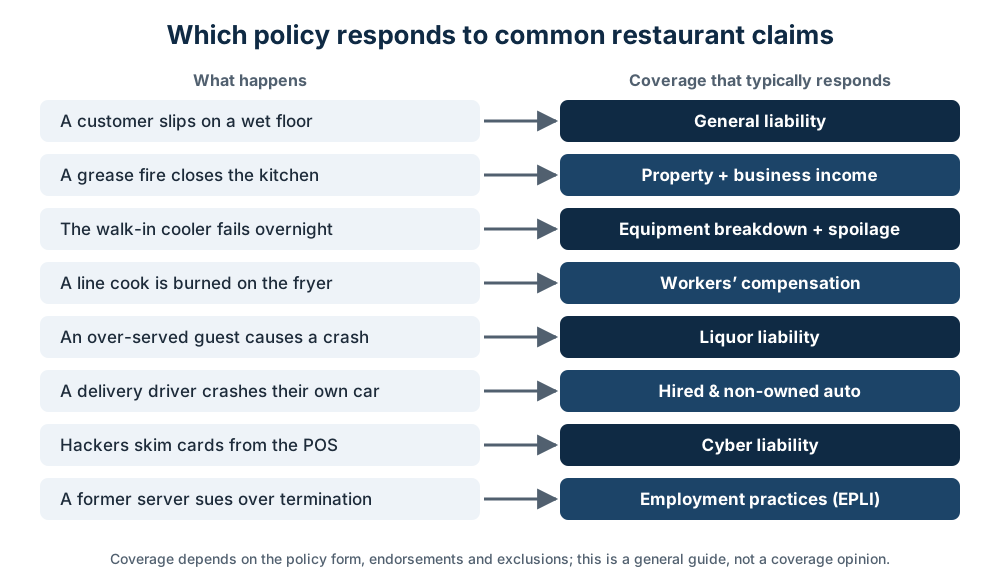
- Property with solid-fuel oven coverage — confirm the carrier accepts coal or wood ovens as described.
- Business interruption — pays lost income while fire damage is repaired.
- General liability — sidewalk lines, crowded dining rooms and foodborne illness.
- Workers’ compensation — burns and cuts are the common restaurant injuries.
- Liquor liability — restaurants and bars serving students, visitors and staff.
- Commercial auto — food trucks, including trailers and propane equipment.
- Flood — shoreline and low-lying locations need a separate policy.
- Equipment breakdown — ovens, compressors and refrigeration.
What drives New Haven pricing
Carriers weigh cooking method (solid fuel vs gas), oven maintenance records, sprinklers, building age, alcohol share, distance to the coast, payroll by class and claims history. Documented chimney and duct cleaning, metal ash containers, staff burn-safety training, and a propane inspection routine for trucks all help.
How the quote process works
You complete one application, and Provident Financial Group compares multiple carriers quoted through our agency side by side, including markets that accept solid-fuel ovens. We send certificates to landlords, campus event organizers and the hospitals or venues where your truck parks. Call (866) 964-6660.
Frequently asked questions
Will my coal-fired oven make insurance harder to find?
It narrows the field, since some carriers avoid solid fuel, but other markets will write it with good maintenance records.
Can my food truck work in towns outside New Haven?
Connecticut law directs reciprocal licensing among towns, but check each town’s zoning and vending rules before you park.
Do student part-timers need workers’ comp?
Yes. Connecticut sets no minimum and makes no exception for part-time student workers.
Is flood part of my property policy?
No. Flood is excluded from standard property forms and needs a separate policy.
See what your New Haven restaurant qualifies for, subject to underwriting and policy terms. Get Multiple Quotes within minutes.
Official Connecticut sources
- Connecticut General Statutes § 30-102 (Dram Shop Act)
- Connecticut General Statutes § 31-284 (employer duty to insure)
- State of Connecticut adoption of the FDA Model Food Code (via Ledge Light Health District)
State facts on this page are drawn from the statutes and agency pages above. Laws and agency rules change, so confirm current requirements with the agency before relying on them. This page is general information, not legal advice or a coverage opinion.