
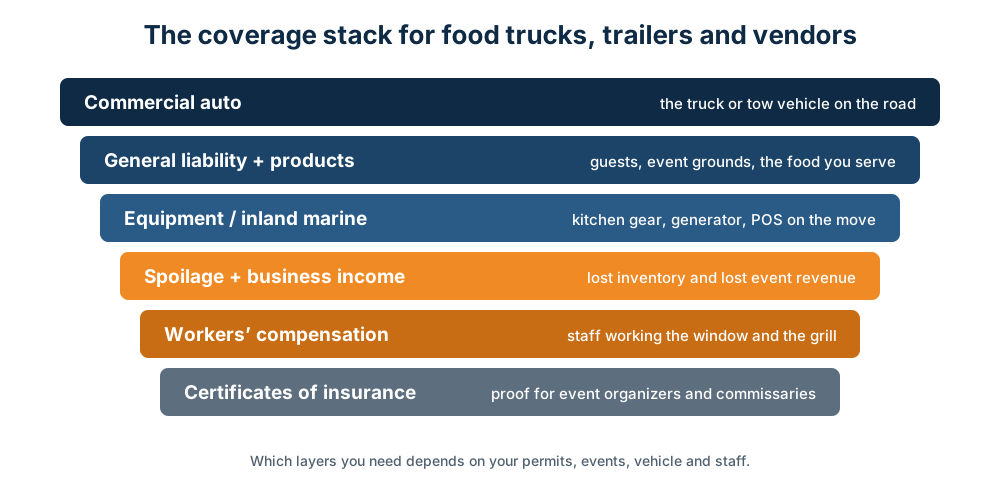
Food trucks in Connecticut typically need commercial auto insurance on the truck (at or above the state’s 25/50/25 minimum plus uninsured motorist coverage), general liability with products coverage that event organizers and towns will ask to see, equipment and spoilage coverage for the kitchen inside the truck, and workers’ compensation for anyone on the line, since Connecticut requires it of every employer.
This page is for owners of food trucks, trailers and mobile kitchens working brewery lots, town greens, shoreline festivals and corporate lunch stops across the state. A truck is a restaurant and a commercial vehicle at the same time, and most coverage gaps sit at the line between the two. For the basics, see our national food truck insurance guide.
Permits, reciprocity and town-by-town rules
In Connecticut, food trucks are permitted as itinerant food vending establishments by local health directors. Conn. Gen. Stat. § 19a-36i directed the Department of Public Health and local health directors to set up reciprocal licensing so a truck permitted in one municipality can operate in other towns, to be implemented by January 1, 2022. Local zoning and vending permits may still apply town by town, and commissary rules were not confirmed here, so check with the health department that issued your permit before booking a new town.
Event organizers and municipalities commonly ask for a certificate of insurance naming them as additional insured before you can park. Having a policy that can issue those certificates quickly matters as much as the coverage itself.
Auto minimums and why a personal policy will not do
Connecticut’s minimum auto liability limits are 25/50/25 (in thousands of dollars), and uninsured/underinsured motorist coverage of at least 25/50 (in thousands) is also required. A personal auto policy generally will not cover a vehicle used as a commercial kitchen, so the truck needs a commercial auto policy. Many festivals and private venues ask for auto limits well above the state minimum, and a collision in a crowded lot can exceed them quickly. If you tow a trailer, confirm the trailer and the tow vehicle are both scheduled.
What goes wrong inside and around a truck
A food truck packs fryers, flat tops, propane cylinders and a generator into a few feet of space. A loose propane fitting or an overheated generator can start a fire that destroys the truck in minutes; grease buildup in a small hood does the same. Staff work shoulder to shoulder next to hot oil, so burns and cuts are constant, and stepping down from the service door onto uneven pavement causes sprains and knee injuries.
Customers bring different claims. A child runs around the back of the truck and touches the hot generator. A festival-goer trips over your power cord on a crowded town green in August. A batch of lobster rolls sits too long in a cooler that cannot keep up with a July heat wave at a shoreline event, and several customers get sick. Winter brings its own trouble: water lines that freeze during a cold snap and trucks parked for months that are exposed to theft and vandalism.
The coverage package for a Connecticut mobile kitchen
- Commercial auto — covers liability and physical damage for the truck or tow vehicle; required, and limits above the state minimums are common.
- General liability — covers customer injuries at the window and around the truck, and is what event organizers ask to see.
- Products-completed operations — responds to foodborne illness or allergen claims after food is served.
- Inland marine or equipment coverage — protects fryers, generators, POS devices and kitchen build-out inside the truck.
- Equipment breakdown and spoilage — pays for refrigeration or generator failure and the food lost with it.
- Business income — replaces revenue while the truck is off the road after a covered loss.
- Workers’ compensation — required for every Connecticut employer, including seasonal and weekend staff.
- Umbrella liability — adds limits when large events or venues require more than your base policies.
Underwriting questions that shape your price
Carriers ask about the value of the truck and its equipment, cooking method (fryers and open flame draw more questions than a coffee or dessert truck), propane setup and fire suppression, driver ages and records, where the truck parks overnight, how many events you work and whether alcohol is served at them, and your prior claims. Newer operators without history can still be written; it just helps to present a clean application.
To help your pricing, keep a fire suppression system serviced and tagged, inspect propane lines regularly, store the truck in a secured lot, keep driver records clean, and log cooler temperatures at every event. Keep a folder of your permits and event contracts so certificate requests go smoothly.
How we quote and certify food trucks
Provident Financial Group is an independent agency. You complete one application and we compare multiple carriers side by side for auto, liability and equipment. When a festival or town asks for a certificate naming it as additional insured, we can issue it quickly. Call (866) 964-6660. Coverage is always subject to underwriting and policy terms. Our Connecticut restaurant insurance and Connecticut restaurant workers’ compensation pages have more state detail.
Frequently asked questions
Does my Connecticut health permit let me sell in every town?
State law called for reciprocal licensing between towns, but local zoning and vending permits can still apply. Confirm with each town before you book a new location.
Can I insure my food truck under my personal auto policy?
Generally no. A truck used as a commercial kitchen needs a commercial auto policy, and personal policies commonly exclude business use of this kind.
Is the equipment inside the truck covered by my auto policy?
Auto physical damage may not fully cover custom kitchen equipment. Most operators schedule it separately under inland marine or equipment coverage.
Do weekend helpers need to be on workers’ comp?
If they are paid employees, yes. Connecticut requires every employer to carry coverage, with no minimum headcount.
Get the truck covered before the next festival season. Get Multiple Quotes within minutes.