
Vermont first-, third- and fourth-class liquor licensees must carry liquor liability insurance under 7 V.S.A. § 501(i), which the current statute lists as effective July 1, 2026, with minimums set by Department of Liquor and Lottery rule. Vermont’s dram shop law is also broad: any injured person can sue a licensee that served a minor, served after hours, or negligently served someone apparently under the influence.
This page is for Vermont licensees, from a Burlington brewpub to a ski-town après bar, an inn’s dining room or a caterer pouring at barn weddings. It explains § 501, the new insurance mandate, training rules and the coverage that fits. For the statewide picture, see restaurant insurance in Vermont.
How broad is Vermont’s dram shop law?
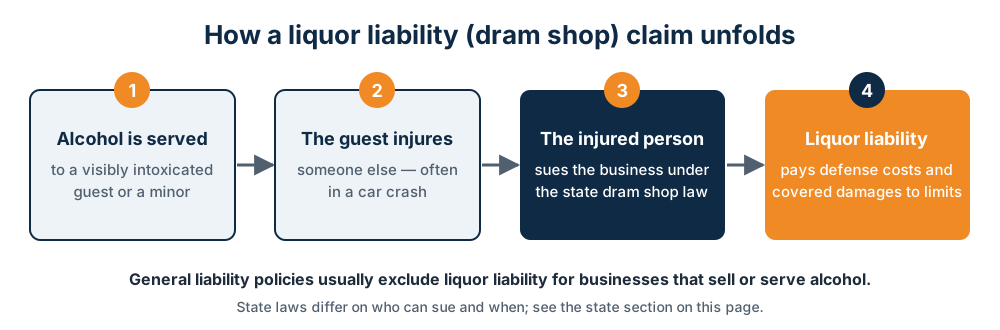
Under 7 V.S.A. § 501, any injured person may sue a first-, third- or fourth-class licensee that unlawfully sold or furnished alcohol to a minor or after legal serving hours, or that negligently served someone apparently under the influence (or someone for whom service would reasonably result in intoxication) when a reasonable and prudent person would have known it. The intoxicated person cannot sue. No damages cap is specified, and a two-year limitation period applies under Vermont case law.
Vermont also reaches landlords. A building owner that knew or had reason to know a tenant licensee was unlawfully selling can be named as a defendant, with an affirmative defense for taking reasonable steps. That is one reason Vermont restaurant leases often demand liquor liability coverage.
| Question | Vermont answer under § 501 |
|---|---|
| Who can sue | Any injured person, but not the intoxicated person |
| Who can be sued | First-, third- and fourth-class licensees; landlords who knew or had reason to know of unlawful sales |
| What triggers liability | Unlawful sale to a minor or after hours; negligent service to someone apparently under the influence |
| Damages cap | None specified |
| Time to sue | Two years, per Vermont case law |
The liquor liability insurance mandate in § 501(i)
Act 17 of 2023 added § 501(i), and the current statute lists it as effective July 1, 2026. First-, third- and fourth-class licensees must carry liquor liability insurance meeting minimum coverage requirements set by Department of Liquor and Lottery (DLL) rule, in consultation with the Department of Financial Regulation, before a license is issued or renewed. We have not verified the minimum amount set by rule, so confirm the current figure with the DLL Division of Liquor Control before renewal and make sure your certificate meets it.
Social host rules for non-licensees
§ 501 creates no statutory cause of action against a non-licensee social host, except where the host knowingly furnishes alcohol to a minor the host knew or reasonably should have known was underage. Common-law negligence claims against social hosts are preserved, so a business throwing a private party it holds no license for isn’t automatically off the hook. See liquor liability vs. host liquor liability.
Server training before the first shift, then every two years
Vermont training is mandatory. All sellers and servers of alcohol must complete DLL-approved training before they start working and be retrained every two years. Options include DLL in-person or online seminars, or in-house training by an employee certified through DLL’s Train the Trainer program. For ski-season and foliage-season hiring, that means training has to be on the calendar before opening weekend, not after.
BYOB restaurants in Vermont
No state liquor license is required for BYOB because no alcohol is sold, and most Vermont municipalities have chosen not to regulate BYOB restaurants; towns may regulate or prohibit them through nuisance or entertainment ordinances. § 501 and the insurance mandate are written around licensees, so a BYOB spot’s exposure comes from common-law negligence, and whether its GL responds depends on the liquor exclusion wording. See do BYOB restaurants need liquor liability.
Claim scenarios for Vermont venues
- An après-ski bar keeps serving a visibly impaired skier, who crashes on a snowy mountain road; negligent service to someone apparently under the influence is a § 501 trigger.
- A Burlington bar serves a 19-year-old college student whose ID was never checked, and the student is hurt walking home.
- A barn-wedding caterer’s staff keep pouring for a guest who later injures another driver on a back road.
- An inn owner is named alongside the tenant restaurant and must prove it took reasonable steps once it learned of unlawful sales.
Assault and battery, liquor exclusions and your checklist
General liability excludes alcohol-related claims for businesses that sell alcohol, and many bar policies exclude or sublimit assault and battery. Read both, and check whether defense costs erode the limit; see does liquor liability cover assault claims. A Vermont program typically includes:
- Liquor liability meeting DLL’s rule minimum — needed for license issuance and renewal.
- Assault and battery — crowded après and live-music nights.
- General liability — icy walkways, food and premises claims.
- Additional insured status for your landlord — matches § 501 landlord exposure.
- Umbrella — limits above liquor and GL (umbrella vs. excess).
- Workers’ comp — required with one or more employees (Vermont restaurant workers’ comp).
- Property and flood — river and flash flooding, like July 2023, usually needs separate flood coverage.
Choosing occurrence and aggregate limits in Vermont
The per-occurrence limit caps one incident; the aggregate caps the policy year. Your floor is DLL’s rule minimum, but with no damages cap specified in § 501 and landlords able to be named, many owners carry more or add an umbrella. A seasonal bar can see several incidents in a single ski season, so check the aggregate too. See per-occurrence vs. aggregate limits.
What moves the price of Vermont liquor coverage
Alcohol receipts drive the rate: an inn dining room with modest wine sales rates very differently from an après bar where drinks are most of the check. Underwriters also weigh hours, live music, seasonal crowds, prior claims and enforcement history. Current training certificates, ID checks and a firm last-call routine are the practical levers.
Bars, breweries, caterers and fine dining in Vermont
- Bars — after-hours and apparent-intoxication triggers under § 501.
- Breweries — busy tasting rooms and visitors traveling by car.
- Caterers — barn and outdoor weddings, venue certificates.
- Fine dining and inns — wine service and lease demands.
How quoting works with Provident Financial Group
As an independent agency, Provident Financial Group sends one application to multiple carriers and compares limits, A&B terms and exclusions side by side. Once bound, you get live certificates of insurance for DLL, your landlord and event venues. Call (866) 964-6660.
Frequently asked questions
Do I need liquor liability to renew my Vermont license?
Yes for first-, third- and fourth-class licensees under § 501(i), listed as effective July 1, 2026. The minimum amount is set by DLL rule, so confirm it before renewal.
Can my landlord be sued over my bar’s service?
Yes, if the landlord knew or had reason to know of unlawful sales, though it has a reasonable-steps affirmative defense.
Can the drunk customer sue my bar in Vermont?
No. § 501 lets injured third parties sue, but not the intoxicated person.
How often do Vermont servers need training?
Before their first shift and every two years after, through DLL seminars or an in-house Train the Trainer program.
Line up coverage before renewal. Get Multiple Quotes within minutes.
Official Vermont sources
- 7 V.S.A. § 501 (Vermont dram shop liability)
- Vermont Act 17, as enacted (liquor liability insurance requirement)
- Vermont Division of Liquor Control: education and server training
- Vermont Division of Liquor Control: liquor regulation updates
- Vermont Legislature memo: dram shop and social host liability laws (S.241, 2016)
State facts on this page are drawn from the statutes and agency pages above. Laws and agency rules change, so confirm current requirements with the agency before relying on them. This page is general information, not legal advice or a coverage opinion.
Related pages
- Bar insurance in Vermont
- Brewery insurance in Vermont
- Catering insurance in Vermont
- Fine dining insurance in Vermont
- Vermont restaurant insurance
- Restaurant insurance in Burlington
- Liquor liability laws by state