
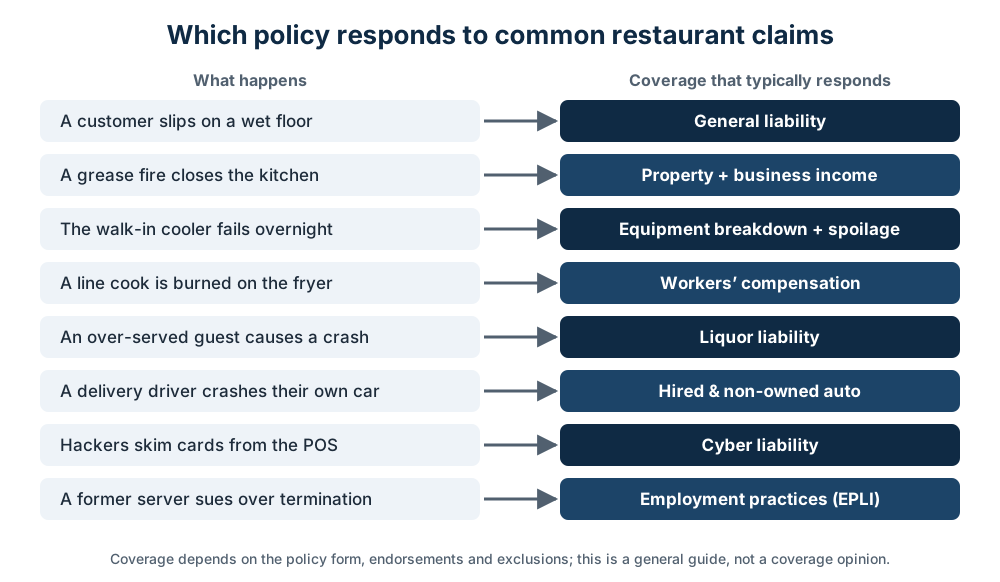
Restaurants in Louisville typically need general liability, liquor liability, commercial property with business income, and workers’ compensation. Kentucky requires workers’ comp from the very first employee, including part-time and family workers, so there is no small-employer exemption to lean on. Bars and bourbon-focused restaurants also need liquor liability sized for Kentucky’s dram shop rule.
Louisville’s food and drink scene is shaped by bourbon, the Kentucky Derby at Churchill Downs, a busy convention and hotel district, and neighborhood restaurant corridors across the city. This page is for owners of bourbon bars, chef-driven restaurants, hotel-adjacent kitchens and caterers who want coverage that fits how Louisville does business.
Bourbon, Derby season and the riverfront
Bourbon tourism draws visitors who come specifically to taste, which pushes alcohol sales higher as a share of revenue than at a typical restaurant. Underwriters notice that mix. Derby season compresses a huge volume of events, private parties and catering into a short window, often with extra temporary staff, rented tents and off-site service, all of which need to be disclosed so coverage follows the work.
Louisville sits on the Ohio River, and some riverfront and low-lying locations fall within mapped flood zones. Standard commercial property policies exclude rising-water flood, so check the flood map for your address and ask about a separate flood policy if you are near the river or a creek. Older downtown buildings also raise questions about electrical systems, sprinklers and building-code upgrade costs after a loss.
Kentucky law a Louisville operator should know
- Workers’ comp: employers with one or more employees must carry coverage unless approved to self-insure. Family members, temporary and part-time workers count. Kentucky Employers’ Mutual Insurance (KEMI) competes in the market and is the insurer of last resort.
- Penalties: each employee and each day without coverage is a separate offense for civil fines under KRS 342.990, and an uninsured employer loses exclusive-remedy protection, so an injured worker can sue directly.
- Dram shop: under KRS 413.241, drinking rather than serving is treated as the proximate cause of injury, and a licensee is not liable for off-premises injuries unless a reasonable person should have known the patron was already intoxicated when served.
- Server training: the Kentucky ABC’s STAR program helps sellers and servers protect themselves from third-party liability; certificates are valid for three years.
- Auto: minimum liability is 25/50/25 (in thousands of dollars), and Kentucky is a choice no-fault state with basic reparation benefits (PIP).
Realistic Louisville loss scenarios
A guest at a bourbon tasting flight dinner orders several extra pours, leaves and causes a crash; the plaintiff’s case will focus on whether your staff should have known he was already intoxicated. During Derby week, a rented tent at an off-site party collapses in wind and injures guests. A dishwasher working twelve hours a week slips and needs surgery; if you skipped workers’ comp because she was part-time, you face fines and a direct lawsuit. River flooding closes the street for days, and your business income coverage only responds if the policy’s flood terms allow it.
Louisville restaurant coverage checklist
- Liquor liability — central for bourbon bars and tasting-heavy menus, with limits your landlord accepts.
- General liability — guest injuries, foodborne illness and event-related claims.
- Workers’ compensation — required from the first employee in Kentucky.
- Commercial property — equipment, improvements and a valuable back-bar inventory.
- Business income — lost revenue after a covered fire or equipment failure.
- Flood insurance — separate coverage for riverfront and low-lying addresses.
- Hired and non-owned auto or commercial auto — for Derby-season catering and deliveries.
- Umbrella liability — added limits for event contracts and hotel-district leases.
Pricing a Louisville restaurant
Carriers look at alcohol share of sales, entertainment, hours, payroll and class of work, building age and protection, flood zone, catering volume and claims history. STAR-trained staff, written pour limits for tastings, documented ID checks, event-specific certificates for Derby work and a clean loss record help you present a stronger submission.
How we shop your policy
As an independent agency, Provident Financial Group takes one application and compares multiple carriers quoted through our agency side by side. We can place workers’ comp, liquor liability and property together or separately, and issue live certificates of insurance for landlords, hotels and event hosts. Call (866) 964-6660 to talk it through.
Frequently asked questions
Do I need workers’ comp for one part-time employee in Louisville?
Yes. Kentucky requires coverage for employers with one or more employees, and part-time, temporary and family workers count.
Does my policy cover off-site Derby parties?
Only if the carrier knows about and accepts off-site catering and events. Disclose them up front and get event certificates issued before the party.
Can a Louisville bar be sued if a guest drives drunk?
Yes. Under KRS 413.241 a licensee can be liable when a reasonable person should have known the patron was already intoxicated when served.
Is flood covered on my Louisville restaurant policy?
Standard commercial property policies exclude rising-water flood; you need a separate flood policy for that exposure.
Find out what your Louisville restaurant qualifies for. Get Multiple Quotes within minutes.