
Caterers in Kentucky typically need general liability that follows them to off-site events, commercial auto for catering vans, liquor liability if staff pour alcohol, and workers’ compensation from the first employee. Venues and wedding planners across the state usually ask for a certificate of insurance naming them as additional insured before you can load in.
This guide is for full-service caterers, corporate drop-off caterers, barbecue caterers who travel with smokers, and restaurants that run a catering side business anywhere in Kentucky. Catering work happens on someone else’s property, on a timeline, with borrowed equipment and temporary staff, and that combination changes how claims arise.
Kentucky law and the traveling caterer
If your staff pour beer, wine, or bourbon at an event, Kentucky’s dram shop statute, KRS 413.241, is the rule to understand. It treats drinking rather than serving as the proximate cause of an alcohol-related injury and makes the intoxicated person primarily liable. A licensee or its employees who serve someone of legal age are not liable for off-premises injuries unless a reasonable person should have known the guest was already intoxicated when served. At a four-hour wedding reception with an open bar, that exception is exactly what a plaintiff will try to prove. Licensing questions for event service belong with the Kentucky Department of Alcoholic Beverage Control, and ABC’s STAR server training is a sensible credential for bar staff.
Catering vans and box trucks are subject to Kentucky’s auto liability minimums of 25/50/25 (in thousands of dollars), or a 60 thousand dollar single limit. Kentucky is a choice no-fault state, and basic reparation benefits pay up to 10 thousand dollars per person for economic loss. Venue contracts routinely ask for much higher auto limits than the state minimum.
Workers’ comp is required from your first employee, and Kentucky counts part-time and temporary workers. Event servers you hire for a busy wedding weekend can count, so tell your agent how you staff peak season.
What goes wrong at catered events
Picture a Derby party in Louisville: a chafing-dish fuel can tips and scorches a client’s hardwood floor, a guest trips over an extension cord running to a warming cabinet, and a server’s car is rear-ended on the way to the venue with a load of rented glassware. Any one of those becomes a claim.
Foodborne illness is the other big one. A buffet sits too long at an outdoor graduation party, and a dozen guests get sick. Allergens hide in sauces and marinades, and a guest with a nut allergy reacts to a dessert labeled incorrectly. Equipment also travels: a smoker trailer, portable fryers, tents, and linens can be stolen or damaged away from your kitchen.
Checklist for a Kentucky catering policy
- General liability with off-premises coverage — injuries and property damage at venues, private homes, and outdoor sites.
- Product liability — foodborne illness and allergen claims tied to food you prepared and served.
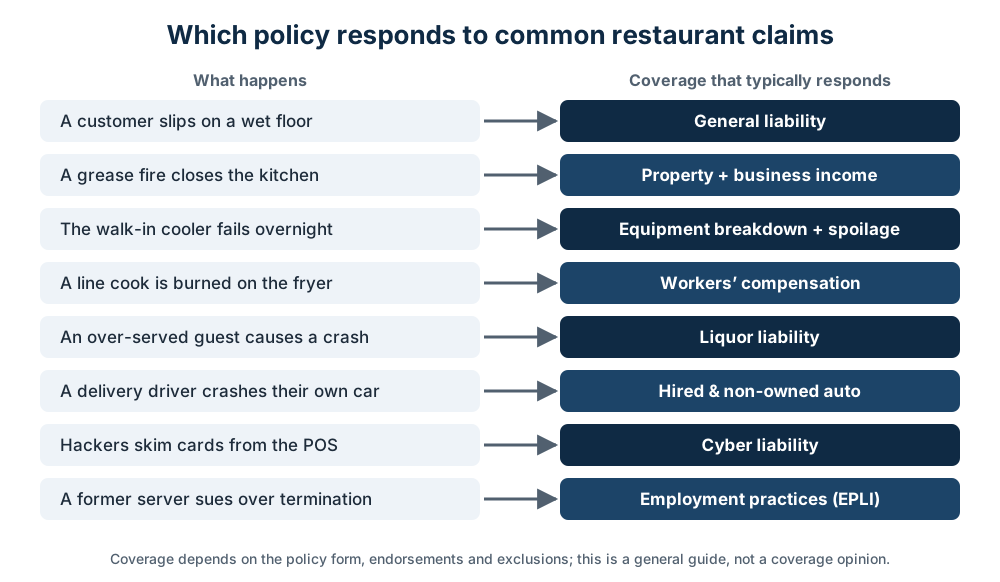
- Liquor liability — needed whenever your staff serve alcohol; confirm whether it covers bartending when the client supplies the alcohol.
- Commercial auto — catering vans and trucks, with limits that meet venue contract requirements.
- Hired and non-owned auto — staff using personal vehicles to deliver trays or run to the store.
- Inland marine — smokers, portable cooking equipment, tents, and serving pieces in transit and at events.
- Workers’ compensation — required from employee one in Kentucky; burns, cuts, and lifting heavy hotel pans.
- Commercial property and spoilage — your commissary kitchen and the food stored there.
- Umbrella liability — extra limits many venues and corporate clients require.
Rating a catering business
Underwriters look at annual receipts, the mix of drop-off versus full-service events, whether you serve alcohol, the largest event size, cooking at the venue with open flame or fryers, and the number of vehicles and drivers. Your commissary’s construction and fire protection shape property pricing, and payroll drives comp.
Clean motor vehicle records for drivers, written food-temperature logs for events, allergen labeling on buffets, and a policy that bar staff complete server training all help. Use contracts that clarify who provides alcohol and who is responsible for the venue’s property.
Getting catering quotes and certificates quickly
As an independent agency, Provident Financial Group sends your catering application to multiple carriers and compares event liability, liquor, and auto side by side. Because caterers need certificates for almost every job, we issue certificates of insurance with additional insured wording for venues and planners, often the same day. Call (866) 964-6660.
Frequently asked questions
Does my liability policy follow me to a client’s venue?
A policy written for caterers generally covers off-premises operations, but confirm that the policy does not limit coverage to a single listed location.
Do I need liquor liability if the couple buys the alcohol?
If your staff are pouring, you are serving, and the risk is yours. Many caterers carry liquor liability for that reason, subject to underwriting.
Are part-time event servers covered by workers’ comp?
Kentucky counts part-time and temporary workers as employees, so they generally need to be included in your comp policy.
Can you add a venue as additional insured?
Yes. Most catering policies allow additional insured endorsements, and we can issue the certificate when the venue sends its requirements.
Booked a big event and need coverage? Get Multiple Quotes within minutes.