
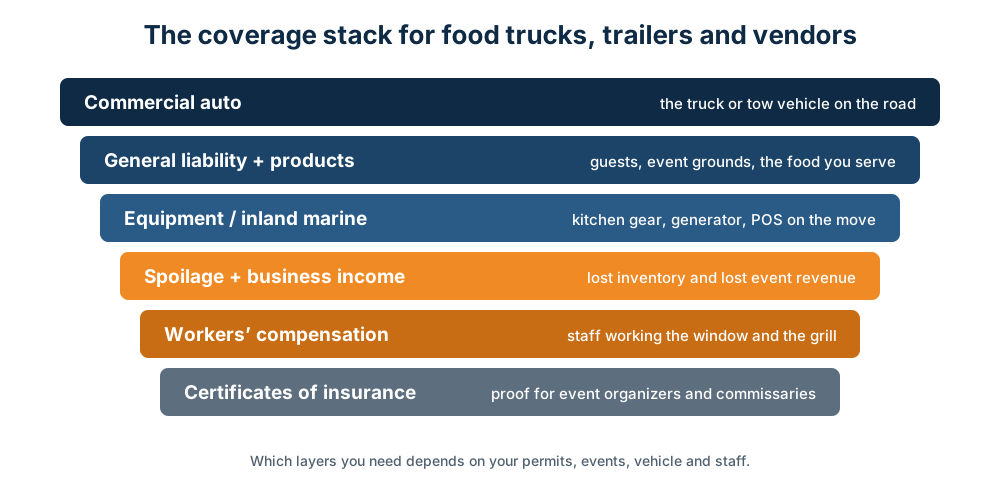
Food trucks in Delaware typically need a commercial auto policy that meets the state’s 25/50/10 liability minimum (in thousands of dollars) with mandatory Personal Injury Protection, plus general liability for event and street customers, coverage for the cooking equipment built into the truck, and workers’ compensation once you hire anyone. Event organizers and towns will usually ask for a certificate before you can park and serve.
This guide is for owner-operators and small fleets running trucks and trailers across the First State, from lunch stops in downtown Wilmington to summer festivals along the Sussex County beaches. It covers the state rules that shape your insurance and the claims that actually hit mobile kitchens.
How Delaware licenses a truck, and the 2026 commissary change
Food trucks in Delaware are permitted at the state level by the Division of Public Health’s Office of Food Protection, the same office that handles restaurants under the State of Delaware Food Code. The Food Code also requires permitted establishments to have a Certified Food Protection Manager, with limited variances for lower-risk operations, so confirm with DPH what your menu requires.
In 2026, Governor Meyer signed Executive Order 21, directing DPH to clarify that a food truck can meet sanitation requirements through onboard equipment alone, without a separate commissary or servicing area, as long as the truck meets the Food Code’s facility and sanitation standards. Confirm current implementation with DPH before you change how you operate. From an insurance standpoint, a truck that no longer parks at a commissary overnight may be stored at your home or an open lot, so tell your agent where it sleeps; overnight location affects theft, vandalism and weather rating.
Auto, PIP and the vehicle side of a mobile kitchen
A personal auto policy generally will not cover a vehicle used as a business, and most will not cover the kitchen equipment inside it. A commercial auto policy with Delaware’s required PIP covers accidents while driving between stops. Because the truck is also a workplace, pay attention to where auto coverage ends and general liability begins: a customer who trips over your generator cord at a festival is a liability claim, while a collision on Route 13 is an auto claim. If you tow a trailer, list it on the auto policy and see our food trailer insurance guide.
What goes wrong on a food truck
- A propane line fitting loosens on a bumpy road and a flare-up scorches the interior and injures the cook.
- A hurricane or nor’easter sends water across a low-lying Kent County lot where the truck is parked, flooding the generator and electrical panel.
- A child at a Lewes fair touches the hot exterior near the fryer vent and the parents file a claim.
- A customer gets sick after eating chicken held too long in a failing reach-in cooler during a July heat wave.
- Someone breaks into the parked truck overnight and takes the point-of-sale tablet, cash box and a portable generator.
Food truck coverage checklist
- Commercial auto with PIP — required-minimum liability plus Delaware PIP, with physical damage to repair or replace the truck itself.
- General liability — covers bodily injury and property damage to customers and event venues while you are parked and serving.
- Products-completed operations — responds when food you sold makes someone ill after they walk away.
- Inland marine or equipment coverage — protects fryers, griddles, generators and refrigeration mounted in the truck, which auto physical damage may not fully cover.
- Spoilage — pays for inventory lost when refrigeration or power fails.
- Workers’ compensation — required in Delaware from the first employee, including part-time festival help.
- Business income — replaces revenue while a damaged truck is off the road, a real concern during peak summer weeks.
Pricing a Delaware food truck
Underwriters look at the truck’s value and age, cooking method (open flame and deep fryers draw more attention), miles driven, where the truck is stored, the number of events and whether alcohol is served nearby, your driving record and prior claims. You can improve pricing by keeping fire suppression and extinguishers serviced, securing propane properly, storing the truck in a locked or lit area, logging cooler temperatures and maintaining clean motor vehicle records for every driver.
Getting event-ready certificates fast
Provident Financial Group is an independent agency, so one application lets us compare multiple carriers side by side. Once bound, we can issue certificates of insurance that name festivals, towns and property owners as additional insured when your policy allows, often the same day. Call (866) 964-6660. Coverage is subject to underwriting and policy terms. See also how to get a certificate for a food truck event.
Frequently asked questions
Does Executive Order 21 mean I can drop my commissary agreement?
It directs DPH to clarify that onboard equipment can satisfy sanitation rules if the truck meets Food Code standards. Check current implementation with DPH first, and update your insurer if your overnight parking location changes.
Will my personal car insurance cover my food truck?
Almost never. Personal auto policies typically exclude business use of this kind, so a Delaware food truck needs commercial auto with PIP.
Are the fryers and generator covered if the truck is totaled?
Not always. Auto physical damage may treat permanent equipment differently, so many owners add equipment or inland marine coverage to close the gap.
Do I need a separate policy for each festival?
Usually not. An annual general liability policy covers ongoing operations, and we issue a certificate for each event that asks for one.
Rolling out soon? Get Multiple Quotes within minutes.