Commercial kitchens combine open flame, hot oil, and grease-laden air, which is why cooking fires are a leading concern for restaurant property insurers. If you own or run a restaurant, the equipment above your cooking line, including the hood, ducts, and fire suppression system, is likely to matter to your insurance as much as it does to your fire marshal.
Why Insurers Pay Attention to the Hood System
Grease builds up inside hoods and exhaust ducts over time. A flare-up at the stove can ignite that residue and spread through the ductwork to areas of the building that are hard to reach. Because of this, property insurers often ask about the type of suppression system installed, how recently it was inspected, and how often the hood and ductwork are cleaned. Answers on the application can influence underwriting decisions and pricing.
Inspection and Cleaning Schedules
Fire codes and industry standards generally call for professional inspection of restaurant fire suppression systems at regular intervals, commonly twice a year, and hood and duct cleaning on a schedule that depends on how much and what type of cooking you do. High-volume operations such as those that rely heavily on fryers or solid-fuel cooking typically need more frequent cleaning than low-volume operations. Your local fire authority and your servicing company can tell you what applies in your area.
Keep the paperwork. Service tags on the equipment help, but written reports and invoices from licensed contractors are stronger evidence if a claim ever raises questions about maintenance.
Protective Safeguards Endorsements
Some restaurant property policies include a protective safeguards endorsement. In plain terms, this endorsement may make coverage for a fire loss depend on your maintaining a specified protective system, such as an automatic suppression system in the cooking area, in working order. If the system was impaired or not maintained and a fire occurs, the carrier may have grounds to limit or deny part of the claim under that condition. These endorsements vary, so read yours or ask your agent whether one applies.
What to Do When the System Is Out of Service
Systems sometimes need to be shut down for repairs or after being discharged. Many policies expect you to tell the carrier if a required protective system will be out of service beyond a short period. Consider whether you can pause or limit cooking until it is restored, and ask your agent about your policy’s notification requirements before you are in that position.
Everyday Practices That Support Your Coverage
Good housekeeping helps reduce the chance of a loss and shows careful operation. Staff training on extinguishers and manual pull stations, regular cleaning of grease-prone surfaces, properly stored combustibles, and regular checks of fire extinguisher tags are often part of a strong safety program. Some carriers also review electrical maintenance and the age of cooking equipment.
Coverage Beyond the Building
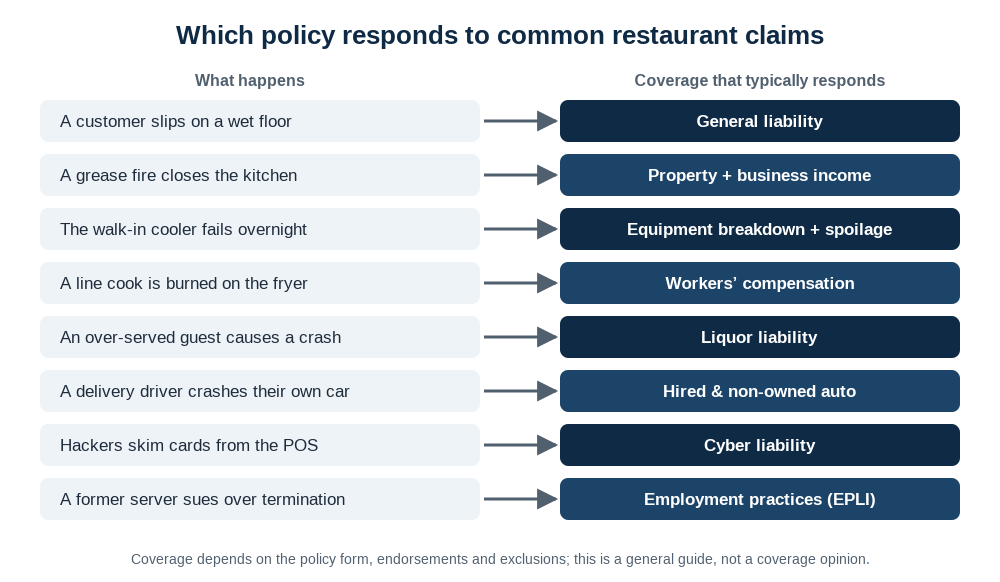
A kitchen fire can trigger more than property damage. Depending on how your policy is written, you may also want to review business income coverage for the closure period, equipment breakdown for non-fire failures, and coverage for tenant improvements if you lease your space. If you rent, your lease may also assign responsibility for the hood system, so it is worth knowing which party maintains it.
Coverage details differ from policy to policy. If you want to know how your restaurant’s fire protection records line up with your policy conditions, an independent agent can review your application, endorsements, and maintenance documentation with you and compare how different carriers evaluate kitchens like yours.