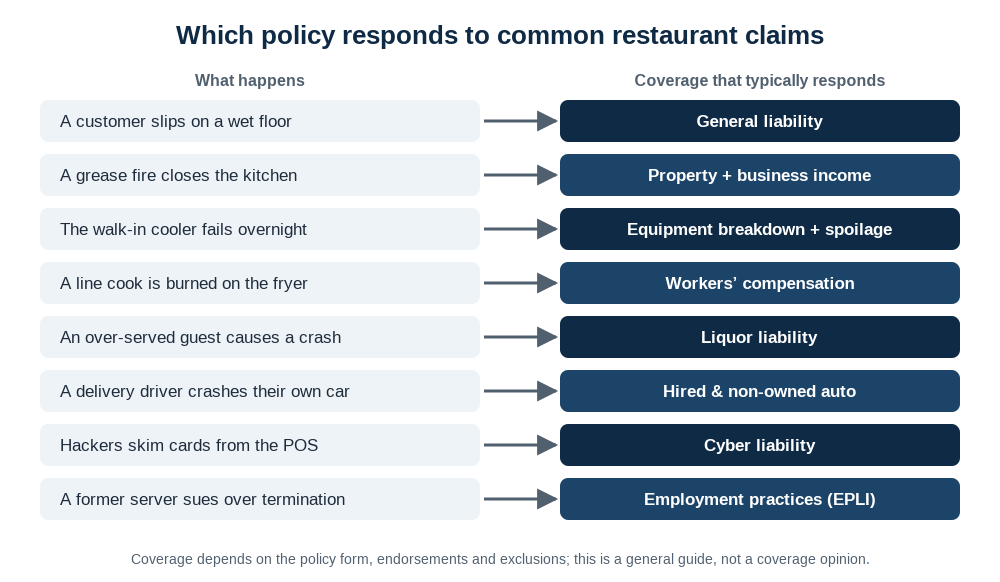
Delivery is now a regular part of many restaurant operations, whether you run your own drivers, use staff to make occasional runs, or arrange catering drop-offs. Each trip puts a vehicle on the road on your restaurant’s behalf, and that can create liability exposure that a standard restaurant general liability policy usually does not address.
Why General Liability May Not Respond
Commercial general liability policies commonly exclude injuries or damage arising from the use of an auto owned or operated by the insured. If an employee in a personal car causes an accident while delivering your food, the claim may not fall under your general liability policy. That is where auto coverages designed for business use come in.
Hired and Non-Owned Auto Coverage
Hired and non-owned auto liability, often shortened to HNOA, is a coverage that typically protects your business when it is held legally responsible for accidents involving vehicles you do not own. “Non-owned” generally refers to employees’ personal vehicles used for business errands. “Hired” generally refers to vehicles you rent or borrow for business purposes. It is liability coverage only, and it usually does not pay to repair the driver’s own car.
For a restaurant where employees occasionally run a catering order or pick up supplies in their own vehicles, HNOA is often a practical and affordable starting point. It can be added to a business owner’s policy or purchased alongside a commercial auto policy, depending on the carrier.
When You Need a Full Commercial Auto Policy
If your restaurant owns vehicles, such as a delivery van or a branded car, those typically need a commercial auto policy rather than relying on a personal policy. Personal auto policies often limit or exclude coverage for vehicles used for delivery and other business purposes, so using personal coverage for regular deliveries could leave a gap. Restaurants with employed delivery drivers on a regular basis often discuss a full commercial policy with their agent.
Third-Party Delivery Platforms
Using a third-party delivery app does not necessarily remove your exposure. Platform arrangements differ, and the contracts between restaurants and platforms vary on who is responsible for what. Drivers are often classified as independent contractors by the platforms, and the platform’s own insurance may have conditions and limits. It is wise to read the agreement carefully, ask what insurance the platform maintains, and ask your agent how those terms interact with your own coverage.
Driver Screening and Records
Insurers often ask whether you check driving records and set standards for drivers. Even if you only use HNOA, consistent practices help: verifying a valid license, reviewing motor vehicle records, setting expectations around phone use, and documenting who made which delivery. Clear policies on reimbursement and personal vehicle use can also reduce confusion after an accident.
Workers’ Compensation Is Part of the Picture
A driver injured while making a delivery for your restaurant may also raise workers’ compensation questions. Whether someone is treated as an employee or an independent contractor depends on the facts and state law, so it is worth discussing how your delivery arrangements are structured.
Every restaurant’s delivery model is different, and coverage depends on policy language and the specifics of how your drivers work. An independent agent can review how deliveries are handled in your operation and compare auto and liability options from multiple carriers.