
Restaurants in Lexington typically need general liability, workers’ compensation, property and business income, and liquor liability if they pour beer, wine or spirits. The Kentucky rule that matters most is workers’ comp: it applies from the first employee, and student part-timers count, which catches many college-town restaurants that assume a few part-time servers don’t trigger coverage.
Lexington is a university town and the center of Kentucky horse country. The University of Kentucky brings students, game-day crowds and visiting families, while race meets at Keeneland and nearby bourbon distilleries attract visitors from around the country. Whether you run a campus-area grill, an upscale farm-to-table room or a food truck, here is how Kentucky rules and local conditions affect your insurance.
College-town staffing and game-day surges
Many Lexington restaurants rely on students working part-time and irregular shifts. That makes workers’ comp payroll reporting important: carriers audit payroll at the end of the term, and underestimating it leads to a surprise bill. Game days and race meets bring sudden surges of guests, long waits, crowded patios and heavier drinking in a few hours, the conditions that produce slips, fights and over-service claims.
Upscale restaurants catering horse-farm events and private parties take their kitchens off-site, often to rural venues. The host will usually want to be named as an additional insured, and your policy needs to cover off-premises catering, rented equipment and the vehicles getting everything there.
Kentucky requirements through a Lexington lens
Kentucky requires workers’ compensation for employers with one or more employees unless the Commissioner approves self-insurance, and family, temporary and part-time workers all count. Classifications follow NCCI, with 9082 Restaurant NOC and 9083 Restaurant: Fast Food as the standard codes. Kentucky Employers’ Mutual Insurance (KEMI) competes for business and serves as the insurer of last resort. Going without coverage exposes you to per-employee, per-day civil fines, possible criminal penalties, reimbursement to the Uninsured Employers’ Fund and direct lawsuits.
For alcohol, KRS 413.241 treats consumption, not service, as the proximate cause of injury, but a licensee can still be liable for off-premises injuries when a reasonable person should have known the patron was already intoxicated when served. Food service is regulated by the Cabinet for Health and Family Services under 902 KAR 45:005, and mobile food units operate under a statewide mobile food unit permit that bars complex food preparation inside the unit.
Where Lexington claims come from
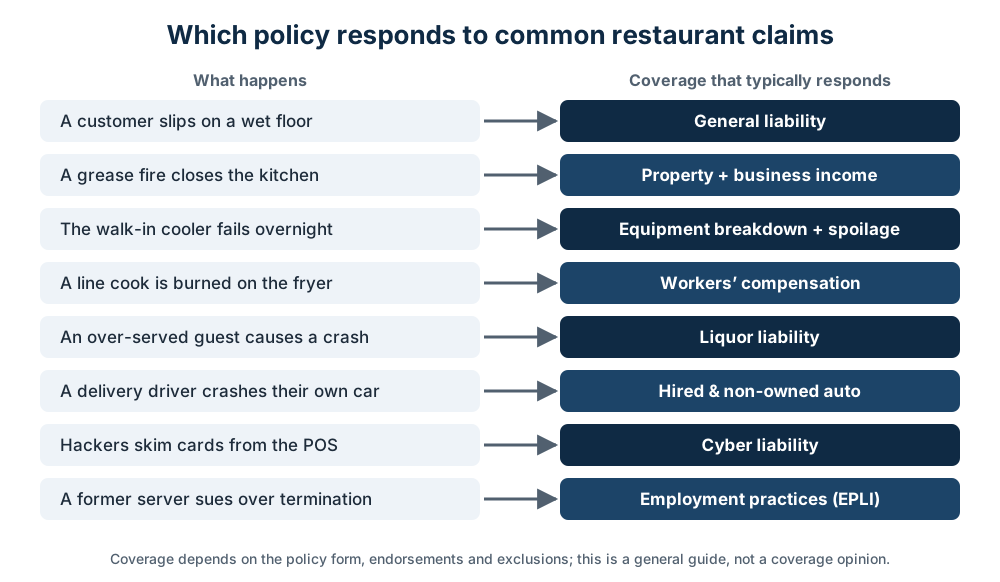
A student server cuts her hand badly on a mandoline during a rushed Saturday prep; without workers’ comp, you are paying fines and facing a lawsuit. After a big win, a crowd on your patio gets rowdy and a guest is shoved into a railing. A catering crew’s box truck backs into a fence at a horse farm. A walk-in fails during race week and you lose product and reservations at the busiest time of year.
Coverage checklist for Lexington restaurants
- Workers’ compensation — mandatory from the first employee, with accurate part-time payroll estimates.
- General liability — crowd, patio and slip-and-fall claims on game days and race days.
- Liquor liability — responds to over-service claims under KRS 413.241; check assault and battery wording.
- Off-premises catering coverage — liability and equipment protection at farm and private venues.
- Commercial auto — for box trucks, vans and food trucks.
- Equipment breakdown and spoilage — protects inventory during peak weeks.
- Business income — keeps you whole if a covered loss closes you during a busy season.
What moves your Lexington premium
Expect underwriters to focus on payroll and staff turnover, alcohol share of sales, proximity to campus and nightlife, patio seating, catering volume, vehicles, fire protection and claims history. Clear training records, STAR-certified servers, crowd plans for game days and a documented cooler maintenance schedule all help.
Quoting with Provident Financial Group
You submit one application and we compare multiple carriers quoted through our agency side by side, from the dining room to catering and trucks. After you bind, live certificates of insurance are ready to send to landlords, farms and event hosts. Call (866) 964-6660 if you’d rather talk.
Frequently asked questions
Do student part-time workers count for Kentucky workers’ comp?
Yes. Part-time and temporary workers count, and coverage is required from the first employee.
Is my Lexington food truck covered by my restaurant policy?
Usually not fully. The truck needs commercial auto coverage, and its equipment and off-site operations should be listed on your program.
What does a horse farm or event venue usually require from my catering company?
Most ask for a certificate naming them as additional insured, with specific liability limits and sometimes liquor liability.
What happens if my workers’ comp payroll estimate is too low?
The carrier’s year-end audit will charge additional premium based on actual payroll, so estimate student and seasonal hours realistically.
Compare your options in one step. Get Multiple Quotes within minutes.