
Restaurants in Stamford, CT typically need general liability, property and business income coverage, workers’ compensation, and liquor liability if they serve alcohol. The Connecticut rule that matters most is workers’ comp: every employer must insure its full liability, with no minimum number of employees, so even a two-person lunch counter needs a policy from its first hire.
This page is for Stamford owners and operators: downtown dining rooms, waterfront restaurants, office-district lunch spots and caterers who feed corporate meetings.
What sets Stamford apart for a restaurant policy
Stamford is a corporate and commuter city on Long Island Sound, with a large weekday office population and rail service into New York. That shapes many restaurant models here: heavy weekday lunch traffic, business dinners, after-work drinks, and catering orders delivered into office towers. Catering inside someone else’s building means you will be asked for certificates naming the building owner or management company as additional insured, and your staff are working in spaces you don’t control.
The coastline matters too. Coastal Connecticut is exposed to hurricanes, tropical storms and coastal flooding along the Sound, and the whole state sees nor’easters, heavy snow loads and freeze-ups. Standard commercial property forms generally exclude flood, so a restaurant near the water needs a separate flood conversation, and coastal locations can carry named-storm or wind deductibles.
Newer downtown and harbor-area buildings often attach detailed lease insurance exhibits (specific limits, waiver of subrogation, primary and noncontributory wording). Send us yours before you sign.
Connecticut requirements a Stamford operator has to meet
Workers’ compensation. Conn. Gen. Stat. § 31-284(b) requires every employer to insure with an authorized insurer or qualify as a self-insurer. Coverage comes from private carriers, with an NCCI-administered assigned risk plan for businesses that can’t find a voluntary market. Civil penalties accrue per employee and per day, and a knowing and willful failure to insure is a class D felony for owners, partners and corporate officers.
Liquor. Connecticut’s Dram Shop Act, § 30-102, makes a seller liable when it sells alcohol to an intoxicated person who then injures someone or damages property. Damages under the statute are capped, the injured party must give written notice within 120 days (180 days for death or incapacity), and suit must be filed within one year. Reckless-service claims can fall outside the cap. Since January 1, 2026, owners on new permit applications must complete the Department of Consumer Protection’s Liquor Law Education Program; server training is voluntary but worth documenting.
Food safety and vehicles. Class 2, 3 and 4 food establishments must employ a certified food protection manager, and your permit and inspections come through the local health director under the Connecticut Food Code. Owned delivery or catering vehicles need at least 25/50/25 (in thousands of dollars) liability plus uninsured/underinsured motorist coverage. Also budget for the CT Paid Leave payroll deduction of 0.5% of employee wages.
Claims that fit a commuter-city dining scene
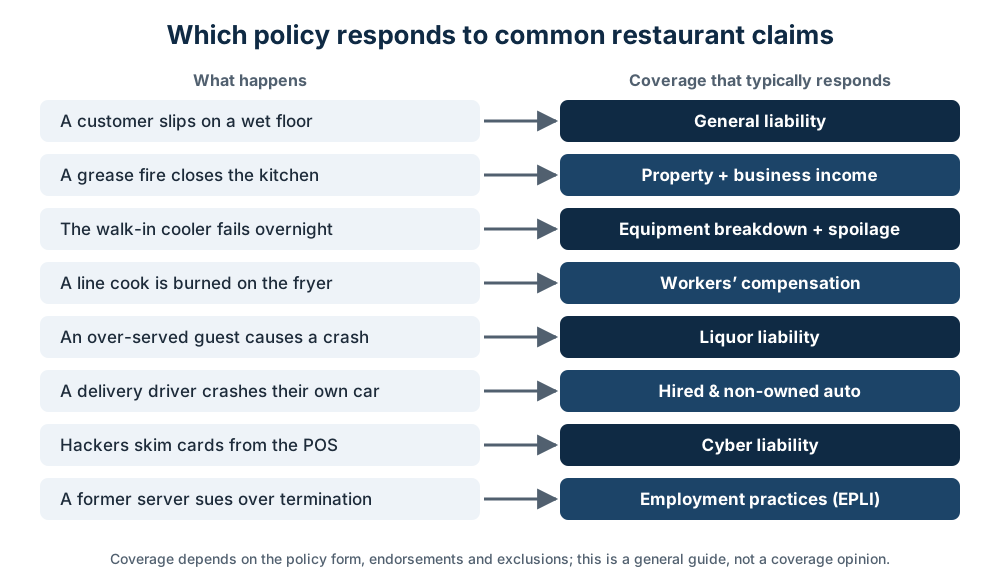
- A caterer’s employee drops a hot chafing dish in a client’s lobby and a visitor is burned; the building’s management company tenders the claim to you as additional insured.
- An after-work guest is served past the point of obvious intoxication and causes a crash on the drive home, triggering a dram shop notice letter.
- A nor’easter knocks out power for two days, spoiling inventory and closing the dining room during a busy week.
- A line cook with three weeks on the job cuts a tendon on a mandoline, and the claim lands on a policy the owner assumed wasn’t required yet.
Coverage checklist for a Stamford restaurant
- General liability — guest injuries in your dining room and on client premises when you cater.
- Liquor liability — dram shop claims under § 30-102, including reckless-service allegations.
- Commercial property — building improvements, kitchen equipment, furniture and stock.
- Business income — lost revenue and payroll during a covered shutdown after a storm or fire.
- Equipment breakdown and spoilage — compressor failures and outage-related food loss.
- Flood coverage — a separate policy for locations exposed to Sound flooding.
- Workers’ compensation — required from the first employee in Connecticut.
- Hired and non-owned auto — staff using personal cars for catering drop-offs or deliveries.
- Umbrella — extra limits many office landlords and corporate clients require.
What moves the price in Fairfield County
Carriers weigh your alcohol share of sales, hours, entertainment, cooking methods and hood suppression maintenance, building age and distance to water, claim history and payroll by job class. Documented server training, hood cleaning records, catering sales broken out on the application and a higher deductible where cash flow allows all tend to help.
How our quote process works
US Restaurant Insure is the restaurant site of Provident Financial Group, an independent agency. You fill out one application, we submit it to multiple carriers quoted through our agency, and we lay the options side by side so you can compare limits, exclusions and deductibles. Once bound, you get live certificates of insurance to send to landlords, building managers and corporate clients. Or call (866) 964-6660.
Frequently asked questions
Do I need workers’ comp if my Stamford restaurant has only one employee?
Yes. Connecticut sets no minimum headcount, so coverage is required as soon as you have an employee.
Does catering in an office building need different coverage?
Your general liability generally travels with you, but clients often require additional insured status, specific limits and hired and non-owned auto. Confirm those endorsements before the first event.
Is liquor liability insurance required by Connecticut law?
No statute requires it, but dram shop exposure under § 30-102 and most commercial leases make it a practical necessity for any Stamford restaurant that pours.
Will my property policy cover flooding from Long Island Sound?
Usually not. Flood is typically excluded from standard property forms and handled through a separate flood policy, subject to underwriting.
Ready to compare options for your Stamford location? Get Multiple Quotes within minutes.
Official Connecticut sources
- Connecticut General Statutes § 30-102 (Dram Shop Act)
- Connecticut General Statutes § 31-284 (employer duty to insure)
- State of Connecticut adoption of the FDA Model Food Code (via Ledge Light Health District)
State facts on this page are drawn from the statutes and agency pages above. Laws and agency rules change, so confirm current requirements with the agency before relying on them. This page is general information, not legal advice or a coverage opinion.