
Restaurants in Burlington, VT typically need general liability, property and business income coverage, workers’ compensation and, if they serve alcohol, liquor liability. The Vermont rule that matters most is 7 V.S.A. § 501(i): first-, third- and fourth-class liquor licensees must carry liquor liability insurance meeting minimums set by Department of Liquor and Lottery rule before a license is issued or renewed.
This guide is written for Burlington cafes, brewpubs, lakefront dining rooms and downtown restaurants that want a plain explanation of Vermont’s rules and the local risks that shape a policy.
Why Burlington’s dining scene insures differently
Burlington is a university city on Lake Champlain and the state’s largest population center, so restaurant traffic swings with the academic calendar, summer lake visitors, fall foliage travelers and skiers passing through in winter. A college crowd raises the importance of ID checks and over-service controls. Seasonal peaks mean temporary hires, new servers learning the job during the busiest weeks, and payroll that can double between slow and busy months.
Weather is the other big factor. Vermont’s main property exposures are river and flash flooding (Tropical Storm Irene in 2011 and the July 2023 floods damaged downtown businesses across the state) and severe winter conditions, including heavy snow loads, ice dams and frozen or burst pipes. For a Burlington restaurant, a burst sprinkler line over a holiday closure or meltwater backing up into a basement storage room are realistic claims, and flood is usually excluded from standard property policies.
Vermont law, applied to a Burlington restaurant
Dram shop exposure is broad. Under 7 V.S.A. § 501, an injured person can sue a licensee that sold to a minor, served after legal hours, or negligently served someone apparently under the influence. The statute specifies no damages cap, and a landlord that knew or had reason to know of a tenant’s unlawful sales can also be named. That is why Burlington landlords routinely write liquor liability requirements into restaurant leases.
Server training is mandatory. Every seller and server of alcohol must complete DLL-approved training before starting work and be retrained every two years, through DLL seminars or an in-house trainer certified in the Train the Trainer program. Keep dated records for each employee; underwriters and regulators both ask.
BYOB. No state liquor license is needed for BYOB because no alcohol is sold, but towns may regulate it through local ordinances, so check with the city before inviting guests to bring bottles. Your general liability policy’s alcohol exclusion may still come into play, so ask us how a BYOB policy is treated.
Workers’ comp, food and vehicles. Coverage is required for any employer with one or more full- or part-time employees, bought from private carriers or the assigned risk plan. Operating uninsured risks daily penalties and a stop-work order from the Department of Labor. The Vermont Department of Health licenses and inspects food service statewide and requires an opening inspection; food trucks need a commercial caterer license from the same department. Owned vehicles need at least 25/50/10 (in thousands of dollars) in liability.
Losses Burlington owners should plan around
- A student uses a borrowed ID, is served, and injures a pedestrian; the suit names both the restaurant and the building owner.
- Pipes in an exterior wall freeze during a January cold snap and flood the dining room the morning of a busy weekend.
- A summer rainstorm overwhelms drainage and water enters a basement prep kitchen.
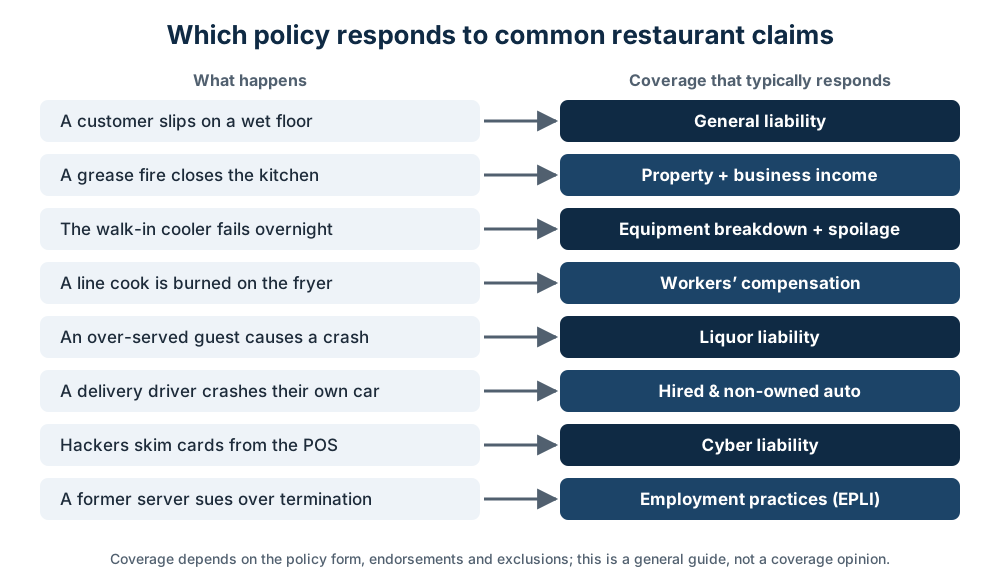
- A seasonal server slips on a wet walk-in floor in her first week.
Coverage checklist for Burlington restaurants
- Liquor liability — now a licensing condition for most Vermont on-premises licensees, with no statutory damages cap on dram shop claims.
- General liability — slips on icy entrances and patio injuries during the short outdoor season.
- Commercial property — equipment, improvements and inventory, with attention to freeze and water damage terms.
- Flood insurance — separate coverage for locations near the lake or low-lying drainage.
- Business income — revenue replacement if a burst pipe closes you during peak season.
- Equipment breakdown and spoilage — for refrigeration failures and outage losses.
- Workers’ compensation — required from the first employee, including part-time seasonal staff.
- Hired and non-owned auto — for delivery or catering runs in employees’ cars.
Pricing factors for a Burlington restaurant
Alcohol share of sales, late hours, entertainment, cooking methods, building age and heating systems, water and freeze controls, payroll by class and loss history all drive pricing. Consistent ID procedures, current DLL training records, low-temperature alarms, heat tape on vulnerable lines and written snow-removal logs help an application stand out with underwriters.
Getting quotes through an independent agency
US Restaurant Insure is part of Provident Financial Group, an independent agency. One application goes to multiple carriers quoted through our agency, and you compare limits, deductibles and exclusions side by side instead of calling around. After binding, you receive live certificates of insurance to share with your landlord, DLL, event hosts or university partners. Questions? Call (866) 964-6660.
Frequently asked questions
Do I need liquor liability to renew my Vermont liquor license?
First-, third- and fourth-class licensees must carry liquor liability meeting DLL’s minimum requirements before a license is issued or renewed under 7 V.S.A. § 501(i). We can match your policy to the current rule.
Can my landlord be sued over my alcohol service?
Yes, in some cases. Vermont’s dram shop law allows claims against a landlord that knew or should have known of unlawful sales, which is why leases often require you to name the landlord as additional insured.
How often do my servers need training?
Before they begin serving and every two years after that, using a DLL-approved program.
Is flood damage from a summer storm covered?
Standard property policies generally exclude flood, so a separate flood policy is typically needed. Sewer backup coverage is another endorsement worth reviewing.
Want to see what your Burlington restaurant qualifies for? Get Multiple Quotes within minutes.
Official Vermont sources
- 7 V.S.A. § 501 (Vermont dram shop liability)
- Vermont Department of Labor: workers' comp guide for business owners
- Vermont Department of Health: retail food service establishments
- Vermont Department of Health: Food Service Establishment Rule
State facts on this page are drawn from the statutes and agency pages above. Laws and agency rules change, so confirm current requirements with the agency before relying on them. This page is general information, not legal advice or a coverage opinion.