
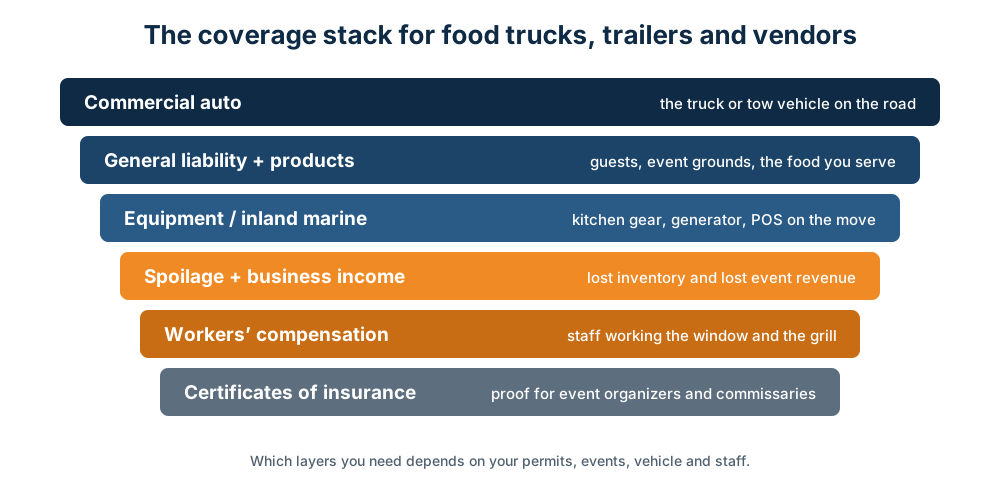
Food trucks in Vermont typically need commercial auto liability and physical damage for the truck, general liability with products coverage for what you serve, equipment coverage for the kitchen on board, and workers’ compensation once you hire anyone. Festivals, breweries and wedding venues across Vermont usually require a certificate naming them as additional insured before you can park and serve.
This page is for food truck and trailer operators working Vermont’s festival circuit, brewery lots, ski areas, fairs and private events. The season is compressed, the roads are hard on equipment, and one bad weekend can matter a great deal, so the policy needs to fit how a Vermont truck actually runs.
Vermont licensing and auto requirements for mobile kitchens
Statewide, food trucks and trailers need a commercial caterer license from the Vermont Department of Health. The unit must meet the Department’s Mobile Unit and Push Cart Requirements, the operator must provide evidence of wastewater permits and water testing where applicable, and the unit must pass an opening inspection. Towns may add their own vending permits, so check each municipality on your route.
Vermont’s minimum auto liability under 23 V.S.A. § 800 is 25/50/10 (in thousands of dollars). A food truck is a heavy vehicle carrying propane, hot oil and generators, and a collision can cause far more damage than those limits contemplate. Personal auto policies generally do not cover a vehicle used as a commercial kitchen, so the truck needs a commercial auto policy. Event organizers often specify liability limits higher than the state minimum.
Workers’ compensation is required for any employer with one or more full- or part-time employees in Vermont, including seasonal help for a summer of festivals. Sole proprietors are not required to cover themselves. Details are on our Vermont workers’ compensation page.
What goes wrong on a Vermont food truck
- A propane leak at a fairground. A loose fitting after a bumpy dirt-road drive feeds a flash fire when the griddle lights. The truck’s kitchen is gutted and a neighboring vendor’s tent is scorched, creating both a property loss and a liability claim.
- The frost-heaved back road. Frost heaves and potholes on the way to a mountain wedding crack a water tank mount and shift the fryer. Equipment damage in transit is not a standard auto physical damage item unless the policy is built for it.
- Frozen lines in storage. A truck parked for winter without fully draining its water system can split tanks, lines and fixtures in the first deep freeze.
- A customer and a hot fryer basket. A child reaches through the service window at a crowded festival; a burn claim follows.
- A food-borne illness after a hot day. Several guests at a private event fall ill; the host’s insurer looks to your products coverage.
- A breakdown in foliage season. A transmission failure in October wipes out your most valuable weekends and the event deposits that go with them.
Food truck policy checklist
- Commercial auto liability — required for the truck, ideally at limits event contracts ask for, not the state minimum.
- Auto physical damage — collision and comprehensive for the truck or trailer itself.
- General liability with products-completed operations — customer injuries at the window and illness from the food you sell.
- Inland marine or equipment coverage — the griddles, fryers, refrigeration and generator, including while in transit.
- Business income — lost revenue after a covered loss takes the truck off the road.
- Spoilage — stock lost to a refrigeration or generator failure.
- Workers’ compensation — required from the first employee in Vermont.
- Additional insured endorsements — blanket wording saves you from ordering a new endorsement for every festival.
Pricing factors for mobile food in Vermont
Carriers price a food truck on the vehicle’s value and age, driving records, annual mileage and radius, cooking equipment (fryers and open flame rate higher), the number of events, whether you serve alcohol at any of them, sales, and claims history. Trailers pulled by a separate vehicle raise questions about the tow vehicle’s coverage.
To improve your pricing: keep propane systems inspected with dated records, carry a class K extinguisher and an automatic suppression system over fryers, winterize and document storage, list only drivers with clean records, and keep an events calendar handy for the application.
Getting quotes and event certificates
Provident Financial Group is an independent agency licensed in Vermont. One application is quoted by multiple carriers and compared side by side, so you can see which ones handle auto, equipment and liability together. After binding, you can generate live certificates of insurance for each festival, brewery or venue. Call (866) 964-6660. Coverage is subject to underwriting and policy terms.
Frequently asked questions
Do I need a commercial caterer license to run a food truck in Vermont?
Yes. The Vermont Department of Health licenses food trucks and trailers as commercial caterers, and the unit must pass an opening inspection. Towns may also require a local vending permit.
Can I just add my food truck to my personal auto policy?
Generally no. Personal auto policies are not built for a vehicle used as a commercial kitchen, and a claim could be denied. Food trucks belong on commercial auto.
How do I get a certificate for a Vermont festival?
Send us the organizer’s requirements, including exact names for additional insured status. With blanket additional insured wording, many certificates can be issued the same day.
Should I keep coverage active while the truck is stored for winter?
Keep comprehensive and equipment coverage in force during storage; theft, fire and freeze damage can happen in a garage. Some carriers let you reduce auto liability while the truck is laid up.
Ready to line up coverage before the season opens? Get Multiple Quotes within minutes.