
Coffee shops and cafes in Vermont typically need a business owner’s policy that pairs general liability with commercial property, equipment breakdown for espresso machines and grinders, and workers’ compensation, which Vermont requires once you hire a single employee. Because Vermont winters bring ice dams, heavy snow and frozen pipes, the property half of the policy deserves as much attention as the liability half.
This page is for independent espresso bars, roasters with a retail counter, bakery-cafes and drive-up coffee kiosks across Vermont, from college-town shops to village cafes on a ski-area access road. If you open at 6 a.m., run on thin margins and depend on two or three pieces of expensive equipment, the details below apply to you.
Licensing and legal ground rules for Vermont cafes
The Vermont Department of Health’s Food & Lodging Program licenses and inspects food service establishments statewide, and a new cafe must pass an opening inspection before it serves anyone. The Department’s published Food Service Establishment Rule does not require a certified food manager; it requires the person in charge to demonstrate food safety knowledge, and the Department recommends accredited manager certification. Insurers tend to view a certified manager favorably, so it is worth doing even where it is optional.
Workers’ compensation applies to any employer with one or more full- or part-time employees in Vermont, with no minimum threshold. Sole proprietors and partners of unincorporated businesses do not have to cover themselves, but every barista on the schedule must be covered. If you later add beer or wine to the menu, you enter Department of Liquor and Lottery licensing, mandatory seller-server training and Vermont’s broad dram shop statute, and you will need liquor liability as well.
What actually goes wrong behind a coffee bar
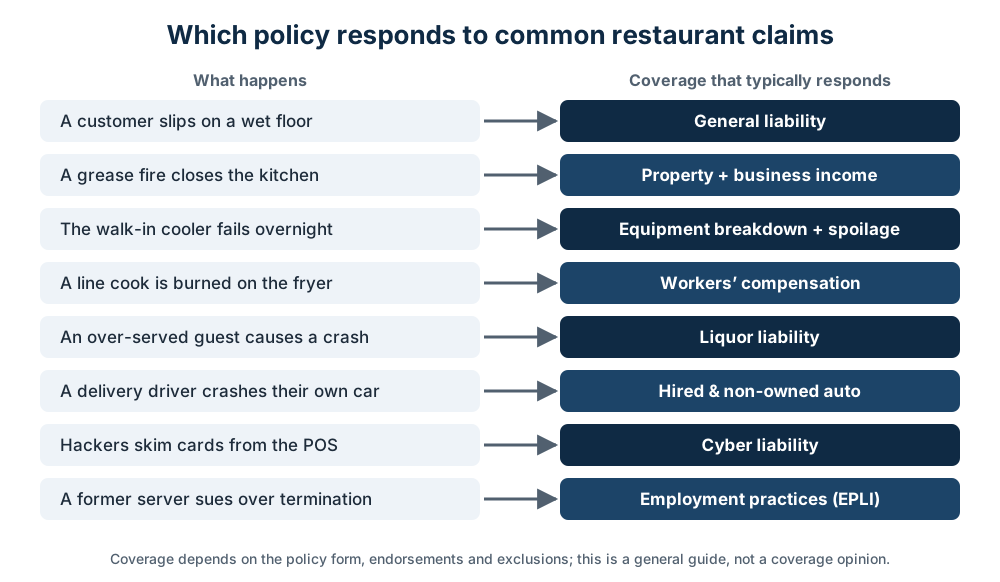
Hot liquid is the signature cafe claim. A lid pops off a to-go cup handed through a drive-up window and a customer suffers second-degree burns on her lap; the suit points to the cup, the lid and how full the barista filled it. General liability defends that claim. Employees face the same heat from the other side: steam-wand burns, portafilter scalds and wrist strain from thousands of tamps a week are workers’ compensation claims.
Allergens are the quieter exposure. Oat, almond and dairy milks share steam pitchers, pastry cases hold nut-topped muffins next to plain scones, and a customer with a severe reaction can bring a costly bodily injury claim. Clear labeling and separate pitchers help with both safety and underwriting.
Winter drives the property losses. An espresso machine’s water line freezes over a long holiday closure and floods the counter; ice builds up at the front door and a regular falls on the first morning of a thaw; heavy snow slides off an older building onto a customer’s parked car. A fire in a coffee roaster’s chaff collector can shut a roaster-cafe down for weeks, which is where business income coverage earns its keep.
Vermont cafe coverage checklist
- Business owner’s policy (BOP) — bundles general liability and property for a small cafe, often at better terms than buying them separately.
- General liability — burn claims, slips on icy entries, and allergic reaction lawsuits.
- Commercial property — espresso machines, grinders, roasters, furniture and tenant improvements, with close reading of freeze and snow-weight wording.
- Equipment breakdown — pays when an espresso machine’s boiler or a roaster’s controls fail electrically or mechanically.
- Spoilage — milk, cream and pastries lost when a reach-in cooler dies overnight.
- Business income — replaces revenue while you repair after a covered fire or water loss.
- Workers’ compensation — required with even one part-time barista in Vermont.
- Cyber liability — protects against POS breaches and loyalty-app data exposure.
- Flood insurance — a separate policy if your shop sits in a river-town downtown.
How carriers price a Vermont coffee shop
Underwriters look at annual sales, square footage, whether you cook with open flame or a fryer, whether you roast on site, hours, seating capacity, drive-up windows, building age and heating, sprinklers, flood zone and prior claims. A counter-service espresso bar with no cooking typically rates differently than a cafe serving hot breakfast from a griddle.
Practical steps that help: keep a written snow-and-ice log, install low-temperature and water-leak sensors near the espresso machine and water filtration, service equipment on a documented schedule, clean roaster chaff and exhaust regularly, and train staff on lid checks and allergen handling. Photos of your setup and a clean loss history carry weight when you shop the account.
Getting cafe quotes through an independent agent
US Restaurant Insure is a brand of Provident Financial Group, an independent insurance agency. You submit one application, and we compare options from multiple carriers quoted through our agency, side by side, so you can weigh deductibles, equipment limits and property wording. Your landlord’s certificate request can be handled with a live certificate of insurance the same day you bind. Call (866) 964-6660 anytime you have questions.
Frequently asked questions
Does a Vermont coffee shop need a certified food manager?
The Health Department’s published rule requires the person in charge to demonstrate food safety knowledge rather than hold a certification, though the Department recommends accredited certification. Check with the Department for any newer rule changes.
Is a customer’s coffee burn covered by my policy?
Bodily injury to a customer from a spilled or defective cup is generally a general liability claim, subject to your policy terms. Burns to your own staff fall under workers’ compensation.
Will insurance pay to repair my espresso machine if it breaks?
Ordinary wear usually is not covered, but equipment breakdown coverage generally responds to sudden electrical or mechanical failure, including resulting spoilage if you add it.
Do I need workers’ comp for a single part-time barista?
Yes. Vermont requires coverage for any employer with one or more full- or part-time employees.
Want to see how several carriers view your cafe? Get Multiple Quotes within minutes.