
Coffee shops and cafes in Kansas typically need general liability for hot-beverage burns and slip-and-fall claims, a business owner’s policy that bundles property and business income, equipment breakdown for espresso machines and refrigeration, and workers’ compensation once gross annual payroll exceeds $20,000. A very small Kansas cafe may fall under that payroll threshold, but most shops with a few baristas will cross it.
This guide is for independent coffee houses, drive-thru coffee stands, bakery-cafes, and roaster-cafes operating in Kansas. The exposures are quieter than a bar’s, but a single scald claim or a dead espresso machine on a Monday morning can hit a small shop hard.
Kansas rules a coffee shop owner should know
Food service in Kansas is licensed by the Kansas Department of Agriculture (KDA) through its Food Safety and Lodging program, which issues food establishment licenses. KDA does not require a certified food protection manager statewide, but it recommends one, noting that employing a certified manager can help improve compliance. Your city or county may add its own rules, so check locally before you open.
Workers’ comp is where small cafes need to pay attention. Kansas requires coverage for employers with more than $20,000 in gross annual payroll in a calendar year. A husband-and-wife shop with one part-timer might sit below that line at first, but payroll grows quickly once you add opening and closing shifts. Elections and rejections of coverage for sole proprietors, partners, and corporate stockholders are handled through the Kansas Department of Labor. If you plan to add beer or wine later, that requires a license from KDOR’s Alcoholic Beverage Control division and changes your insurance picture.
Everyday cafe incidents that turn into claims
- A barista hands a to-go latte through the drive-thru window, the lid pops, and a customer suffers burns to her lap. Hot-liquid claims are the signature coffee shop liability exposure.
- A customer with a tree-nut allergy reacts to a syrup that was cross-contaminated in a shared pump, and her family files a claim.
- A laptop crowd’s power cords snake across the floor and a patron trips on one heading to the restroom.
- The espresso machine’s boiler element fails on a Saturday morning, and you lose the busiest day of the week while you wait for a technician.
- A barista develops a steam-wand burn on her forearm, and another reports wrist strain from months of tamping, both workers’ comp claims.
- A severe thunderstorm knocks out power for a day and a half, spoiling dairy, cold brew, and pastry cases.
What a Kansas coffee shop policy should include
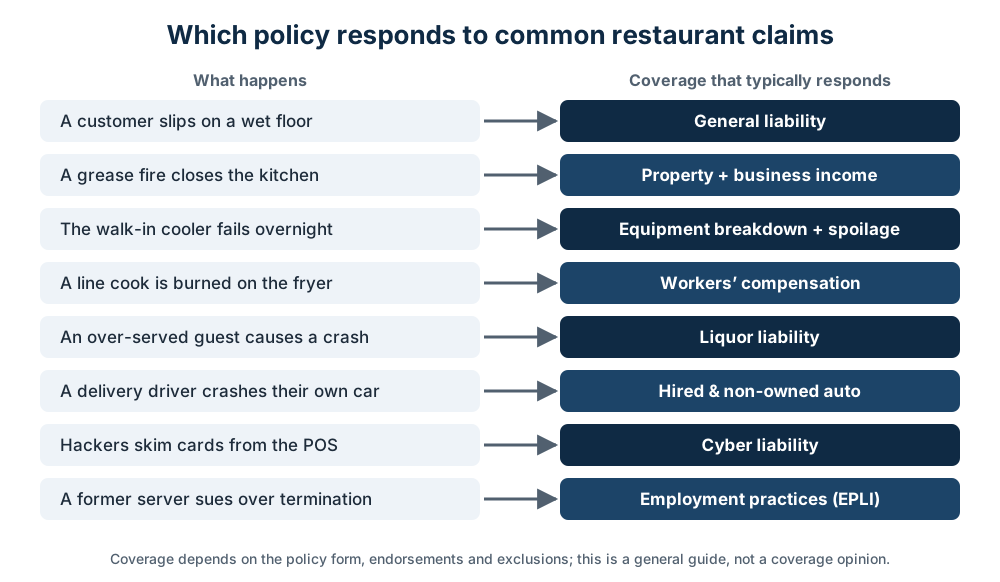
- General liability — burns, falls, and allergic reactions involving customers; landlords almost always require it.
- Products liability — covers the drinks and baked goods you serve, including items you buy wholesale and resell.
- Business owner’s policy (BOP) — bundles property, liability, and business income at a price that usually suits a single-location cafe.
- Equipment breakdown — espresso machines, grinders, roasters, and walk-in or reach-in refrigeration.
- Food spoilage — milk, cream, and prepared items lost when power or equipment fails.
- Workers’ compensation — required above the Kansas payroll threshold; burns and repetitive-motion injuries are common.
- Cyber liability — card data and mobile-ordering accounts are targets for small shops.
- Hired and non-owned auto — if staff run catering orders or supply errands in their own cars.
How carriers price a Kansas cafe
Underwriters weigh annual sales, square footage, seating, whether you have a drive-thru, how much food you prepare on site versus reheat, any roasting operations (roasters add fire exposure), building construction, and claims history. Property rates reflect local hail and wind history, which is a meaningful factor across Kansas.
Ways to look better on an application: use lids and sleeves rated for hot beverages and train staff to double-check them, label allergens and keep dedicated pumps for nut syrups, service your espresso machine on a schedule and keep the records, and install surge protection. If you roast, keep chaff collectors cleaned and document it.
Comparing cafe quotes through an independent agency
Provident Financial Group fills out one application for your shop and compares several carriers that write small food-service risks, so you can see BOP bundles next to standalone packages. When your landlord asks for a certificate naming them as additional insured, we can issue it promptly. Reach us at (866) 964-6660.
Frequently asked questions
Do I need workers’ comp for a two-person coffee shop in Kansas?
Only if your gross annual payroll exceeds $20,000 in a calendar year, unless you are working as a subcontractor. Many owners buy it anyway once they hire, because payroll crosses the threshold quickly.
Is a BOP enough for a Kansas coffee shop?
For many single-location cafes, a BOP plus workers’ comp covers the core risks. Add equipment breakdown and cyber if they are not already included.
Are hot-coffee burn claims covered by general liability?
Yes, bodily injury to customers from your products is typically covered under general liability, subject to policy terms and limits.
Does Kansas require a food safety manager at my cafe?
Not statewide. KDA recommends a certified food protection manager, and local jurisdictions may set their own requirements.
Want to see what your Kansas cafe qualifies for? Get Multiple Quotes within minutes.