
Bakeries in Kansas typically need general liability with products-completed operations coverage, commercial property with equipment breakdown and spoilage, business income protection, and workers’ compensation once gross annual payroll passes $20,000. Wholesale accounts, allergen controls and heavy ovens shape the program, and Kansas hail and wind make your property deductible one of the most important numbers on the policy.
This page is for Kansas retail bakeries, cake studios, bakery-cafes and wholesale bread and pastry kitchens, whether you run a single storefront in Hutchinson or a production space supplying grocery stores and coffee shops around Wichita and Overland Park. It covers the Kansas rules that touch your insurance and the coverages that actually respond when something goes wrong behind the counter.
What Kansas rules mean for a bakery’s insurance
Kansas bakeries are licensed through the Kansas Department of Agriculture’s Food Safety & Lodging program, which issues food establishment licenses. KDA does not require a certified food protection manager statewide; it only recommends one as a way to improve compliance, and we found no statewide food handler card requirement. Your city or county may add its own rules. Underwriters still ask about training, so a certified manager helps at quote time even where it isn’t mandatory.
Workers’ compensation becomes mandatory once gross annual payroll exceeds $20,000 in a calendar year, according to the Kansas Department of Labor. A two-person start-up bakery may sit under that line in its first year, but adding a 4 a.m. production baker and weekend counter help crosses it fast, and the small-payroll exemption does not apply if you work as a subcontractor. Our Kansas restaurant workers’ comp guide walks through the details.
Property is the other Kansas-specific issue. The Kansas Insurance Department warns about damaging winds, pelting hail and floodwaters across the state, and standard property policies do not cover rising-water flood. A bakery in a low-lying strip center should price separate NFIP flood coverage, and every bakery should know whether its policy carries a separate wind/hail deductible. If you deliver cakes in a company van, Kansas auto policies must carry 25/50/25 liability (in thousands of dollars) plus PIP and uninsured/underinsured motorist coverage.
Where bakery claims actually come from
Allergens sit at the top of the list. Picture a customer who buys a cookie labeled nut-free that was baked on the same sheet pans as your almond croissants; an allergic reaction and an emergency room visit become a products liability claim against the bakery, not a premises claim. Foreign objects are next: a fragment from a worn mixer paddle baked into a loaf that a grocery customer bites into.
Equipment losses are expensive and common. A deck oven’s thermostat fails overnight, scorching a full wholesale run and frying the control board. A walk-in cooler compressor quits over a holiday weekend, and Monday morning you are discarding butter, cream cheese and forty finished cakes. Flour dust near ignition sources adds fire exposure that underwriters take seriously.
Employee injuries follow a pattern too: forearm burns pulling sheet pans, cuts from bread slicers, and back strains from moving fifty-pound flour sacks. And after a spring hailstorm cracks a skylight and water ruins the display case, the lost week of sales matters as much as the repair bill.
Kansas bakery coverage checklist
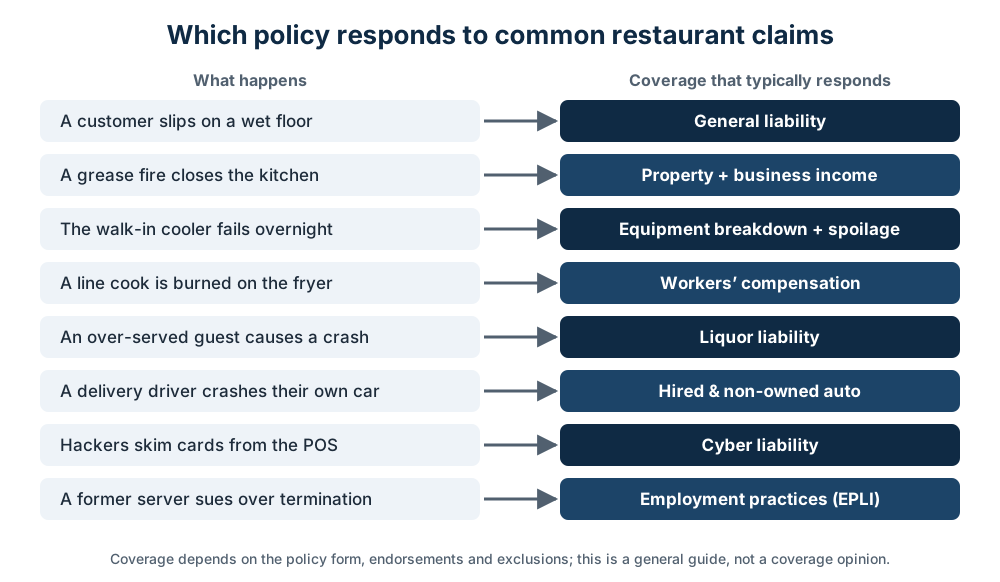
- General liability — a customer slips on a dusting of flour or an icing drip near the display case.
- Products-completed operations — allergen and foreign-object claims that surface after the product leaves your counter or your wholesale dock.
- Commercial property — ovens, mixers, sheeters, display cases and tenant improvements at replacement cost, with the wind/hail deductible spelled out.
- Equipment breakdown — mechanical or electrical failure of deck ovens, rack ovens, walk-ins and compressors.
- Spoilage — perishable stock lost to a cooler failure or a utility outage.
- Business income and extra expense — lost earnings and temporary costs after a covered fire or storm closes the shop.
- Workers’ compensation — required above the Kansas payroll threshold; covers burns, cuts and lifting injuries.
- Hired and non-owned auto or commercial auto — wedding cake and catering deliveries in company or employee vehicles.
- Product contamination or recall (optional) — worth pricing for wholesale bakeries supplying retailers.
What moves a Kansas bakery’s premium
Carriers look at your split between retail and wholesale sales, total payroll, oven types and whether cooking under the hood is protected by a serviced suppression system, the age and construction of the building, your fire protection class, and your prior claims. Delivery radius and whether you use owned vehicles also matter.
You can improve how a bakery prices by documenting allergen separation and labeling, keeping hood and suppression service records current, cleaning up flour dust on a written schedule, putting temperature alarms on walk-ins, and choosing a property deductible and wind/hail deductible you could actually absorb after a storm. Clean loss runs from your prior carrier help more than almost anything else.
Quoting a bakery through an independent agency
Provident Financial Group is an independent agency, so you fill out one application and we compare several carriers side by side instead of you calling each one. We explain the differences in deductibles and exclusions, not just price, and once you bind we issue live certificates of insurance you can send to landlords, wholesale buyers and farmers market organizers. Prefer to talk it through? Call (866) 964-6660.
Frequently asked questions
Do Kansas bakeries need a certified food manager to get insured?
Kansas does not require one statewide; KDA only recommends it, and local rules may differ. Carriers do not demand certification, but a trained manager and written food safety procedures can help your application.
Does bakery insurance pay to remake a wedding cake damaged in transit?
A liability policy generally does not pay to replace your own product. Ask about property-in-transit or inland marine coverage if deliveries are a big part of your business.
Will a hail claim change what my Kansas bakery pays?
It can. Carriers weigh recent weather losses at renewal, which is one reason to understand your wind/hail deductible before a storm rather than after.
Do wholesale customers require special coverage from my bakery?
Many grocery and coffee shop accounts require products liability, additional insured status and sometimes specific limits. We can review the vendor agreement and match the certificate to it.
Want a clear picture of your options before your next wholesale contract or lease renewal? Get Multiple Quotes within minutes.