Catering can be one of the smartest revenue streams a restaurant adds. Weddings, corporate lunches, graduation parties, and pop-up events bring in income without adding seats, and they introduce your food to people who might never have walked through your door.
But there is a catch that many owners discover too late. Your insurance was likely built around one assumption: that your business happens at your address. The moment your food, your equipment, and your staff leave the building, you are operating in a different risk environment, and your existing policy may or may not have followed you out the door. Here is what to check before your next event.
Why Leaving Your Address Changes the Picture
At your restaurant, you control the environment. You know where the floor gets slick, your equipment is installed and inspected, and your kitchen runs on systems you built. At an off-site event, you are cooking in someone else’s space, navigating unfamiliar layouts, running temporary power, and serving guests in settings you have never seen before that day.
Insurance policies are written around your described operations. If your policy was quoted for a sit-down restaurant and you have since added regular catering work, the insurer may not have priced or contemplated that exposure. That mismatch is where unpleasant surprises tend to live, so the first question is not whether catering is a good idea but whether your insurer knows you are doing it.
How Liability Coverage May Travel With You
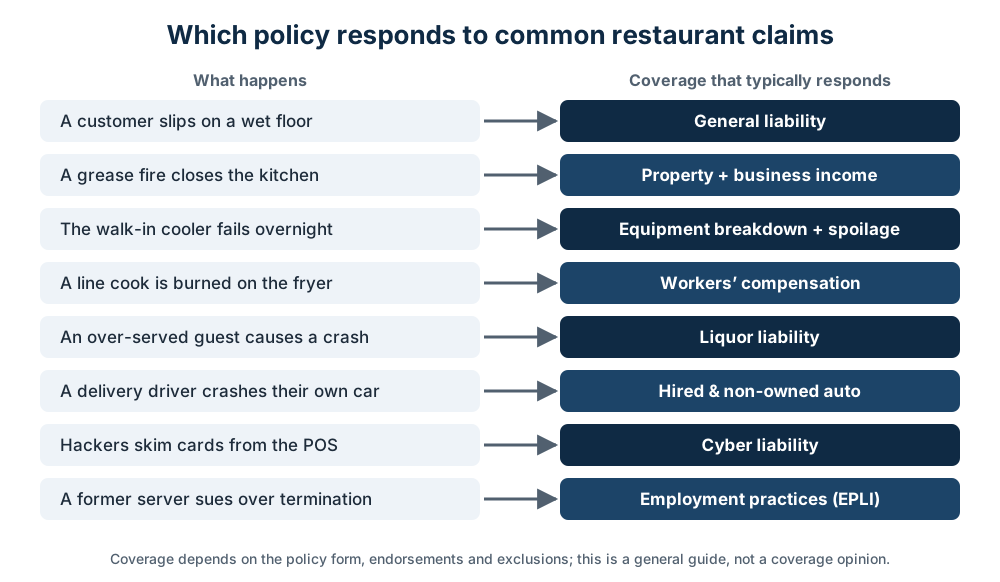
The good news is that general liability insurance is generally not limited to your premises. It typically follows your operations, which means a claim arising from an off-site event, such as a guest who trips over your serving equipment or alleges an illness from your food, may still fall within the policy.
The caution is in the details. Some policies contain endorsements that limit coverage to designated premises, which can effectively strip away protection the moment you leave your address. Others may respond to occasional events but were never rated for a steady catering operation. Reading your policy for a designated premises limitation, or asking your agent to check, is one of the most important five-minute tasks in this whole subject.
Venues add another wrinkle. Many event spaces require caterers to provide a certificate of insurance and to name the venue as an additional insured. This is usually a routine request that your agent can handle, but it needs to happen before the event, not the morning of.
Your Equipment Away From the Restaurant
Commercial property coverage is often written to protect business property at your described location, sometimes with only a small amount of coverage for property elsewhere. Chafing dishes, portable burners, coolers, serving equipment, tents, and tables riding around in a van may be worth far more than that built-in limit.
This is where inland marine coverage, sometimes called a floater, tends to come in. Despite the odd name, it is simply coverage designed for business property that moves, and it may protect your equipment in transit and at the event site. If you have invested meaningfully in catering gear, it is worth listing what you actually haul to a typical job and comparing that number to what your current policy would pay if the van were stolen overnight.
People, Vehicles, and Someone Else’s Kitchen
Off-premises work also stretches your coverage for people and vehicles. Employees injured while loading, driving, or working an event are generally a workers’ compensation matter, and that coverage typically applies wherever the work happens, though it is worth confirming your classifications reflect off-site work.
Vehicles deserve their own hard look. Personal auto policies often exclude business use, so a server delivering a catering order in their own car, or a van you bought for events, may need commercial auto coverage or hired and non-owned auto coverage to close the gap. This is a topic with enough traps that it deserves a direct conversation with your agent rather than an assumption.
Then there is the borrowed kitchen problem. If you rent a commissary or cook in a venue’s kitchen and something goes wrong, such as a fire that damages their property, your liability for damage to property in your care can get complicated. Some policies limit or exclude damage to property you occupy or use, and endorsements exist to address it. If you regularly work in spaces you do not own, ask specifically about this.
Alcohol, Contracts, and the Questions Venues Will Ask
If your catering package includes bar service, the alcohol questions multiply, because serving drinks at a private event raises many of the same liquor liability issues as serving them in your dining room, sometimes with less control over the crowd. Whether your existing liquor coverage extends off-premises is a policy-specific question, and it should be settled in writing before you quote your first open bar.
Contracts matter more off-site as well. Venues and corporate clients often push insurance requirements into their agreements, including minimum liability limits, additional insured status, and waivers of subrogation. Signing first and asking your agent later can leave you contractually obligated to carry coverage you do not have. The better order is to send the contract to your agent before you sign.
A short pre-event checklist covers most of this ground. Does the insurer know about your catering operations, does liability follow you off-premises, is your equipment covered in transit, are vehicles and drivers properly insured, and does the venue contract ask for anything your policy does not currently provide.
Catering is worth doing, and it is entirely insurable when the coverage is set up to match how you actually operate. The gap between “we have insurance” and “we have insurance for this” is where restaurants get hurt, and it is a gap an independent agent can usually close quickly once they see the full picture. If off-premises events are becoming part of your business, consider having that conversation before the next booking, so the only surprises at the event are pleasant ones.