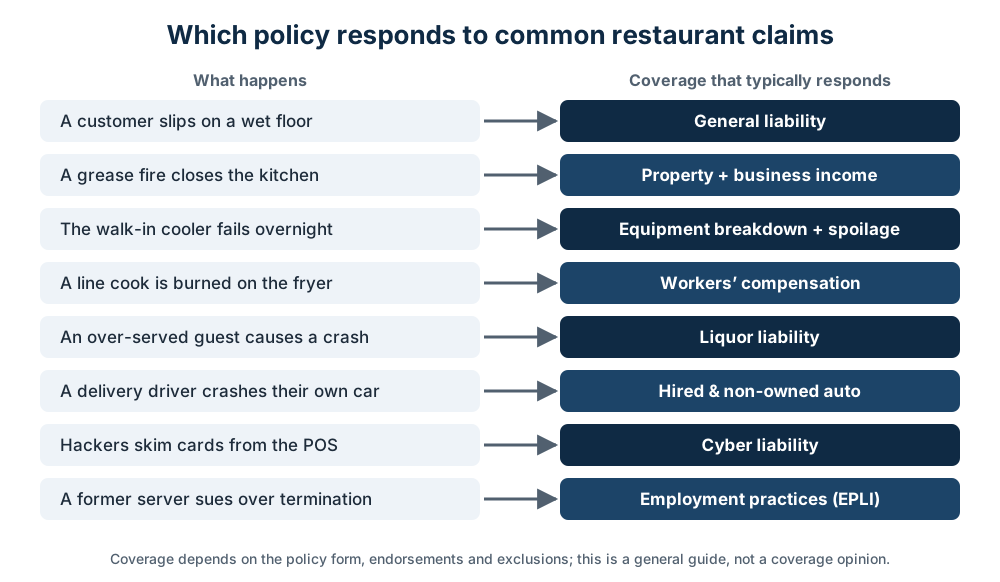
A walk-in cooler that quits on a Friday afternoon is not just an inconvenience. It is thousands of dollars of protein sitting in a warming box, a dinner service you may not be able to run, and a repair bill that arrives before the insurance conversation even starts. Most restaurant owners assume their property policy handles it. Often, it does not.
Equipment breakdown coverage is one of the least understood pieces of a restaurant insurance program, and it fills a gap that catches owners off guard at the worst possible moment. Here is how it typically works and why it is worth asking about.
What Equipment Breakdown Coverage Actually Does
Equipment breakdown coverage, sometimes still called boiler and machinery coverage, generally responds when mechanical or electrical equipment fails from an internal cause. Think of a compressor motor burning out, a control board shorting, a power surge frying the electronics in your combi oven, or a pressure vessel rupturing.
The key phrase is internal cause. The damage starts inside the equipment itself rather than arriving from outside as fire, wind, or water. That distinction is the whole reason this coverage exists as a separate item.
Policies vary widely, but equipment breakdown coverage often extends beyond the repair itself. It may pick up spoiled inventory, the cost of expediting a replacement part, and lost business income while you are down. Those secondary costs frequently exceed the price of the repair.
Why Your Property Policy May Not Respond
A standard commercial property policy is built around external perils. Fire, theft, vandalism, storm damage, a burst pipe. When a covered peril damages your equipment, the property policy generally responds.
But most property forms contain an exclusion for mechanical breakdown, electrical arcing, and similar internal failures. The logic from the carrier side is that wear, age, and mechanical failure are maintenance issues rather than sudden accidental losses. Whether or not that feels fair at 5 p.m. on a Friday, it is how the forms are typically written.
That exclusion is exactly the hole equipment breakdown coverage is designed to fill. On many restaurant policies it is available as an endorsement, and on some business owner’s policies a limited version is built in. It is worth knowing which situation you are in before you need it.
The Equipment Most Often at Issue
For a restaurant, the exposure list is longer than most owners expect. Walk-in coolers and freezers are the obvious one, and usually the most expensive when they fail because of what is stored inside.
Beyond refrigeration, the list often includes ice machines, dishwashers and booster heaters, HVAC and rooftop units, exhaust hood motors, water heaters, fryers with electronic controls, combi ovens, espresso machines, and increasingly the point-of-sale hardware and networking gear that the whole operation runs on.
Modern kitchen equipment is far more electronically dependent than the equipment of twenty years ago. That has made it more efficient and also given it more ways to fail in a manner a property policy will not touch.
Spoilage, Downtime, and the Costs That Follow
The repair invoice is often the smallest number in an equipment breakdown loss. Consider what typically follows a failed walk-in.
There is the spoiled inventory, which for a busy kitchen can be substantial. There is the emergency service call at premium rates. There may be rented temporary refrigeration while a part is sourced. And there is the revenue you did not earn on the nights you could not open or had to run a limited menu.
Many equipment breakdown endorsements address these categories, though limits and waiting periods differ considerably from policy to policy. Some spoilage coverage carries a modest sublimit that may not reflect what a full walk-in actually holds. That is a detail worth checking against your real inventory value rather than assuming.
How Restaurant Owners Can Prepare
A few practical steps tend to make this easier. Keep a current list of major equipment with approximate ages and replacement costs. Carriers often ask, and it helps you size limits realistically.
Document your maintenance. Regular service on refrigeration and HVAC not only reduces the odds of a failure, it also helps demonstrate that a loss was sudden rather than the end result of a long-ignored problem.
Know your typical inventory value on hand. Restaurants often carry more in the walk-in than they estimate off the top of their head, particularly ahead of a weekend or a catered event.
Finally, understand your waiting period. Business income coverage tied to equipment breakdown often has a waiting period measured in hours before it begins to respond. If yours is long, a one-day outage may not trigger anything.
Talking It Through With an Agent
Equipment breakdown is one of those coverages that costs relatively little compared with the losses it addresses, which is why it is worth a specific conversation rather than an assumption. The right questions are whether you have it at all, what the spoilage sublimit is, how business income interacts with it, and whether your limits reflect what you actually have in the building today.
An independent agent who writes restaurant accounts can read your current policy, tell you plainly what is and is not there, and compare options across carriers. Every policy form is different, and the only reliable answer comes from reading yours. If you would like a second set of eyes on your coverage before the next piece of equipment decides to quit, we are glad to help.