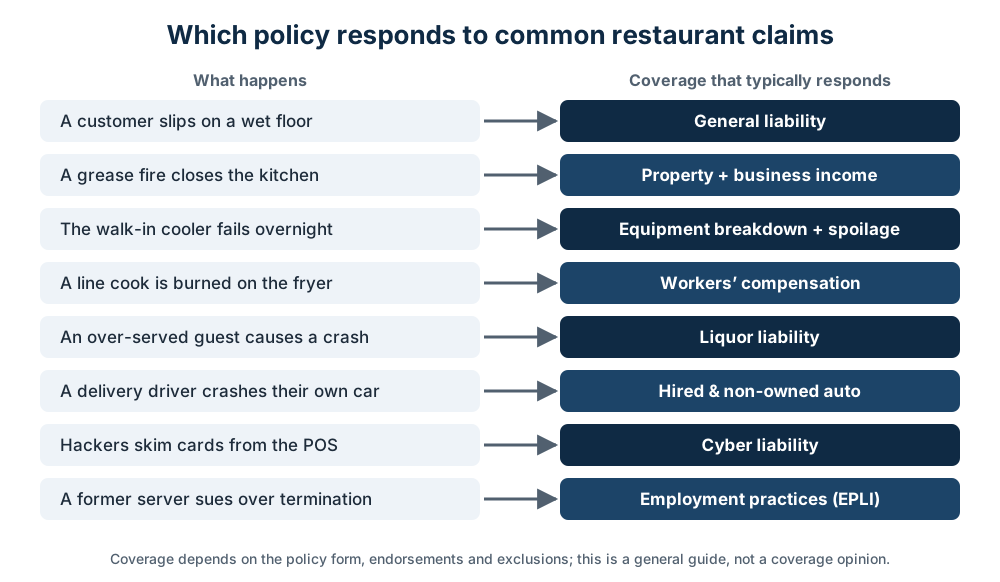
A commercial kitchen is one of the more hazardous workplaces in the service economy. Hot oil, open flames, sharp knives, wet floors, heavy stockpots, and a pace that rarely slows down all share the same few hundred square feet. When an employee gets hurt in that environment, workers’ compensation insurance is the policy that responds — and in nearly every state, carrying it isn’t optional once you have employees.
Yet many restaurant owners treat workers’ comp as a line item they bought once and never revisited. Understanding how the coverage actually works in a restaurant setting — what it pays for, how your premium is calculated, and what you can do to keep claims manageable — often pays for itself many times over.
Why Restaurant Workers’ Comp Is Its Own Animal
Workers’ comp is priced and underwritten by industry, and restaurants have their own classification codes, claim patterns, and underwriting concerns. Carriers know the typical restaurant claim isn’t a catastrophic fall from scaffolding — it’s a deep cut during prep, a grease burn at the fry station, or a slip on a freshly mopped line.
That claim profile means frequency, not severity, usually drives a restaurant’s comp costs. A kitchen that produces a steady stream of small claims may end up paying more over time than one that had a single larger injury, because frequent claims suggest to underwriters that a bigger one is coming.
The Injuries That Actually Happen in Kitchens
Industry loss experience is remarkably consistent about how restaurant employees get hurt. Lacerations from knives, slicers, and broken glassware lead the list. Burns follow closely — from fryers, ovens, steam, and hot liquids carried through crowded prep areas. Slips and falls on wet or greasy floors round out the top three, and they often produce the most expensive injuries: sprains, fractures, and back injuries that keep someone out of work for weeks.
Less obvious exposures matter too. Repetitive-motion injuries affect prep cooks and dishwashers. Lifting injuries happen in walk-ins and during deliveries. And front-of-house staff face their own risks, from carrying loaded trays to dealing with the occasional aggressive customer.
What the Policy Typically Pays For
When a covered injury occurs, workers’ comp typically pays the employee’s medical treatment, with no deductible or copay for the worker. It also generally replaces a portion of lost wages after a short waiting period, covers physical therapy and rehabilitation, and provides permanent disability benefits if the injury leaves lasting impairment. In the worst cases, it pays death benefits to a worker’s family.
Just as important for the owner: workers’ comp is usually an exclusive remedy. An employee who accepts comp benefits generally cannot also sue the restaurant for negligence over the same injury. That trade-off — guaranteed benefits in exchange for litigation protection — is the heart of the system.
How Your Premium Is Built
Restaurant comp premiums start with payroll, sorted into class codes that reflect the work being done. Kitchen and wait staff typically fall under restaurant classifications, while clerical employees may be rated separately at a much lower rate. Misclassifying employees — or lumping everyone into one code — can mean overpaying, or facing a painful bill after a premium audit.
On top of payroll and class codes sits your experience modifier once your business is large enough to qualify. A history of frequent claims pushes the modifier up; clean years pull it down. Tips often count as payroll for comp purposes, which surprises owners at audit time, so it’s worth confirming how your state and carrier treat reported tips.
Keeping Claims — and Costs — Under Control
The restaurants that pay the least for workers’ comp over time are rarely the ones that shopped hardest; they’re the ones that run the safest kitchens. Cut-resistant gloves for prep work, enforced non-slip footwear policies, immediate spill cleanup, proper training on fryers and slicers, and a culture where reporting a near-miss isn’t punished all reduce claim frequency.
When an injury does happen, speed matters. Prompt reporting, immediate medical attention, and staying in touch with the injured employee typically shortens claims and lowers their cost. A simple return-to-work plan — light duty rolling silverware or hosting instead of working the line — often gets employees back sooner and keeps wage-replacement costs down.
Part-Timers, Teens, and Seasonal Staff Still Count
Restaurants lean heavily on part-time and seasonal labor, and owners sometimes assume those workers fall outside comp requirements. In most states, they don’t. Part-time servers, summer hires, and teenage staff are generally employees who must be covered from their first shift. Minors can carry additional wrinkles — some states impose extra penalties when an employee under 18 is injured doing prohibited work, such as operating a meat slicer.
Talk Through Your Coverage Before the Next Renewal
Every restaurant’s risk profile is different — a quick-service counter, a full-bar gastropub, and a catering-heavy operation each look different to an underwriter. An independent insurance agent who works with restaurants can review your class codes, check how your payroll and tips are being reported, compare quotes from multiple carriers, and help you build a safety story that underwriters reward. If it’s been more than a year since anyone looked at your workers’ comp program, a conversation costs nothing and may save real money.