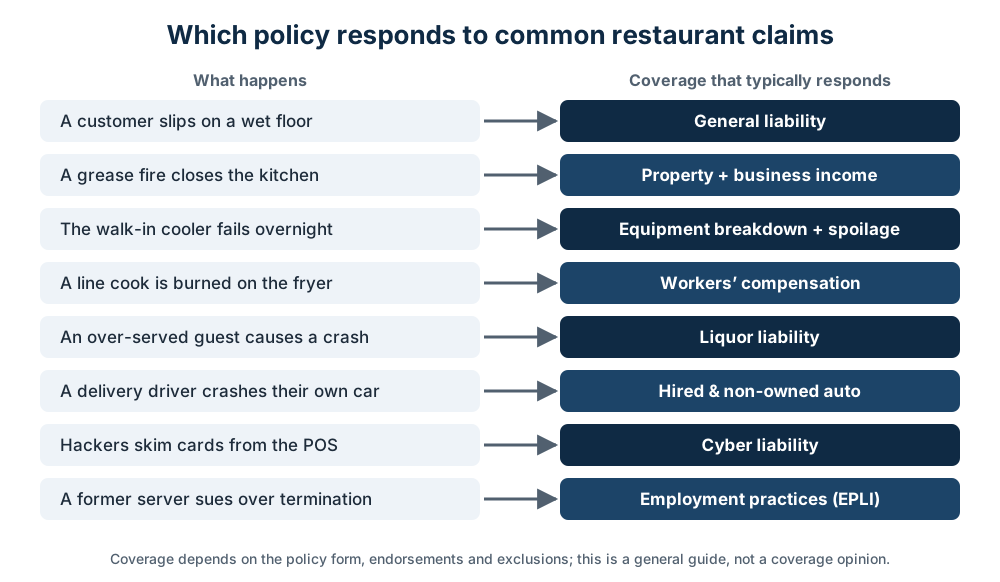
A $1 million general liability limit sounds like a lot of coverage until a single incident in your dining room produces a claim that runs past it. A severe slip-and-fall, a foodborne illness outbreak affecting a large party, a liquor liability claim following a drunk-driving crash — any of these can produce a verdict or settlement that exceeds a standard primary policy’s limits. Umbrella and excess liability insurance exists for exactly that gap, and for restaurants, which combine public foot traffic, alcohol service, and food preparation under one roof, it’s worth more attention than it usually gets.
What Umbrella and Excess Liability Actually Do
Both umbrella and excess liability policies are typically designed to add an extra layer of coverage above your underlying policies — general liability, liquor liability, commercial auto, and employer’s liability are common ones. An excess policy generally mirrors the terms of the underlying policy it sits above, while an umbrella policy can sometimes broaden coverage slightly and may also pick up some gaps the underlying policies don’t address, subject to its own terms. Either way, once a claim exceeds the limit of the policy below it, the umbrella or excess layer is typically what responds next, up to its own limit.
Why Restaurants Carry More of This Risk Than They Realize
Restaurants sit at an unusual intersection of risk factors: constant public foot traffic, alcohol service with its associated dram shop exposure, food preparation with product liability implications, and often a commercial auto exposure from delivery vehicles. Any one of those alone can produce a large claim, and a single bad incident — say, an intoxicated patron who causes a serious crash after being over-served — can easily generate a claim well into seven figures once medical costs, lost wages, and legal defense are factored in. A restaurant with only the state-minimum or policy-minimum underlying limits can find that gap between what their policy pays and what a verdict demands coming directly out of the business.
How Much Coverage Is Typically Enough
There’s no universal number, since the right amount typically depends on factors like whether you serve alcohol, how many locations you operate, your typical party sizes and seating capacity, and what other businesses in your area and segment tend to carry. Many landlords, franchisors, and event contracts also specify a minimum combined liability limit — often $2 million to $5 million — as a condition of the lease or agreement, which can be a useful starting benchmark even if your own risk tolerance would otherwise point elsewhere.
What Underlying Policies Need to Line Up
An umbrella or excess policy is typically only as good as the underlying coverage it sits on top of. Carriers generally require that your underlying general liability, liquor liability, auto, and employer’s liability policies carry certain minimum limits before they’ll write the umbrella layer above them, and a gap or lapse in an underlying policy can create what’s sometimes called a “gap in the tower” — meaning the umbrella may not respond the way an owner expects if the layer beneath it wasn’t properly maintained. This is one of the more common reasons a restaurant assumes it has more protection than it actually does.
Reviewing Your Tower as Your Business Changes
Adding a second location, expanding your bar program, starting a delivery service, or hosting larger private events are all reasons to revisit your umbrella and excess limits, since each one typically increases the size of the worst-case claim your business could face. It’s worth reviewing this layer of coverage at every renewal rather than treating it as a one-time decision made when the restaurant first opened.
Umbrella and excess liability won’t come up in daily operations the way your general liability or workers’ comp policy might, but it’s often the layer that determines whether a single bad night puts the business itself at risk. An independent agent can map out your current tower of coverage and help you decide where more height actually makes sense.