
Restaurants in Virginia Beach, VA typically need property coverage that addresses hurricane and wind risk, separate flood insurance, general liability, liquor liability if they serve alcohol, and workers’ compensation. The Virginia rule that matters most for seasonal operators: workers’ comp becomes mandatory once you have three or more employees regularly in service, and a summer hiring wave can push you over that line.
This page is for oceanfront restaurants, boardwalk and resort-area bars, neighborhood spots serving the city’s large military community, and food trucks working beach-season events.
An oceanfront resort market with a short, intense season
Virginia Beach is a resort city, and its oceanfront draws heavy summer tourism alongside year-round business from residents and military families. For restaurants, that means packed patios and outdoor seating from late spring into early fall, a large seasonal workforce and a much quieter off-season. Tourist crowds bring more slip-and-fall exposure, more alcohol service and more first-time guests who don’t know your space.
Salt air and sand also wear on outdoor furniture, patio heaters and exterior equipment, so maintenance records matter when a guest is hurt by a failed chair or a loose railing.
Hurricane season and coastal flooding in Hampton Roads
Virginia’s exposure to hurricanes and tropical storms is greatest in Hampton Roads and along the coast, together with coastal and riverine flooding, severe thunderstorms and winter storms. For a Virginia Beach restaurant, that shapes the whole property program: wind coverage may carry a separate named-storm or hurricane deductible, flood is usually excluded from standard policies and needs its own coverage, and business income should reflect how long a coastal closure can last. Carriers will look closely at distance to the water, elevation, building construction and your storm preparation plan.
Seasonal hiring and Virginia’s three-employee comp rule
Va. Code § 65.2-101 requires workers’ comp for employers with three or more employees regularly in service, and executive officers and LLC managers count toward that total. Many small beach operations run with a couple of people in winter and a dozen by July. Once your regular crew reaches three, coverage is required, and operating uninsured exposes you to daily civil penalties, employee lawsuits without the usual defenses and a possible order to cease business. A knowing failure to insure is a Class 2 misdemeanor.
Alcohol service at the beach: liability without a dram shop statute
Virginia has no dram shop cause of action; the state Supreme Court’s 1986 Williamson decision placed responsibility on the drinker, not the seller. Even so, beach bars still face lawsuits alleging negligent security or other theories, and a liquor liability policy provides defense on covered claims. Your Virginia ABC license is the other exposure: violations can bring suspensions and civil penalties, which ABC can reduce for licensees that document server training through MART, RSVP or a STAP-certified course.
Food safety falls under the Virginia Department of Health, which requires a certified food protection manager in most kitchens. Mobile food units display a VDH permit sticker and need a commissary unless they’re fully self-contained. Owned vehicles need at least 50/100/25 (in thousands of dollars) under the limits that took effect in 2025.
Virginia Beach loss scenarios
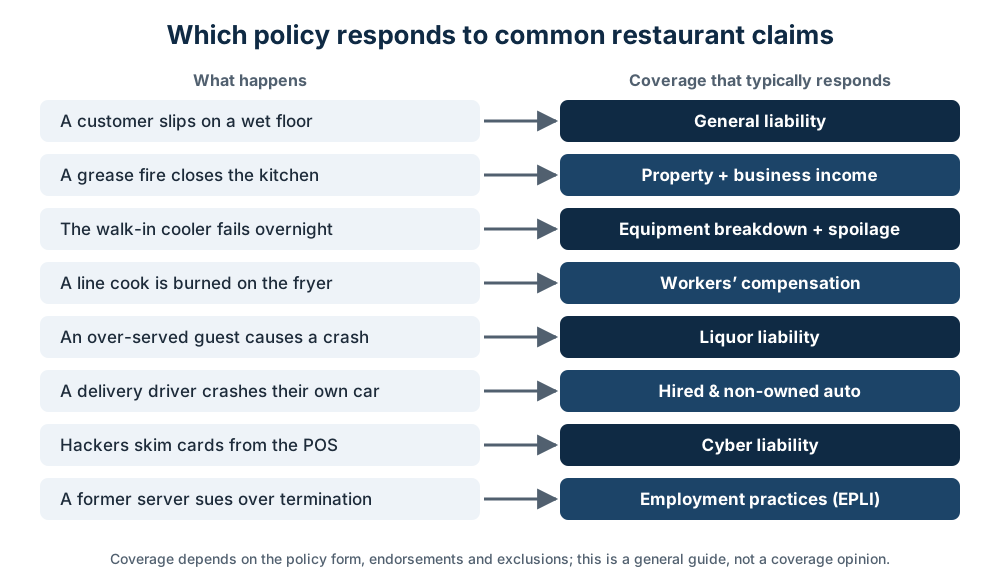
- A tropical storm’s surge floods the ground floor of an oceanfront restaurant in late August, wiping out the rest of the season.
- A tourist is cut when a corroded patio railing gives way.
- A fight breaks out on a crowded deck, and the injured guest alleges inadequate staffing.
- A seasonal line cook is burned in June, weeks after the restaurant’s headcount crossed three.
What to carry at the oceanfront
- Commercial property with wind coverage — understand the hurricane deductible before storm season.
- Flood insurance — a separate policy for coastal locations.
- Business income — sized for a closure that could span your peak season.
- General liability — patios, decks and heavy tourist traffic.
- Liquor liability and assault and battery — defense for alcohol-related and security claims.
- Workers’ compensation — required once three or more employees are regularly in service.
- Equipment breakdown and spoilage — for outages after coastal storms.
- Hired and non-owned auto — deliveries and event runs in employee vehicles.
Seasonal pricing considerations
Coastal location and construction weigh heavily on property pricing. Liability pricing follows sales, alcohol share, outdoor seating, hours and security. A written hurricane plan, storm shutters, elevated equipment, patio maintenance logs and documented server training all make a submission stronger.
Getting quotes with one application
US Restaurant Insure is part of Provident Financial Group, an independent agency. One application goes to multiple carriers quoted through our agency, and we compare them side by side with you, including wind and flood options. Once bound, you get live certificates of insurance for landlords and event organizers. Call (866) 964-6660.
Frequently asked questions
Will my policy pay for hurricane damage?
Wind damage is often covered subject to a separate hurricane or named-storm deductible, while flood and storm surge usually require a separate flood policy.
Do summer employees count toward the three-employee threshold?
Virginia counts employees regularly in service in your business. If your season regularly brings you to three or more, plan on coverage and ask us to review your staffing pattern.
Does my food truck need a VDH permit?
Yes. VDH issues Mobile Food Unit permits as a displayed sticker, and a commissary is needed unless the unit is fully self-contained; some localities require one for all units.
Why carry liquor liability if Virginia has no dram shop law?
Lawsuits can still be filed on other theories, defense costs add up, and landlords and venues commonly require the coverage.
Ready to compare coverage before the next storm season? Get Multiple Quotes within minutes.
Official Virginia sources
- Virginia ABC: licensee training
- Code of Virginia § 65.2-101 (workers' comp definitions; employee threshold)
- Virginia Department of Health: food safety in Virginia
- 12VAC5-421-55 (certified food protection manager)
State facts on this page are drawn from the statutes and agency pages above. Laws and agency rules change, so confirm current requirements with the agency before relying on them. This page is general information, not legal advice or a coverage opinion.