
Pizzerias in Delaware typically need hired and non-owned auto for delivery drivers, general liability, property coverage for ovens and the dining room, workers’ compensation from the first employee, and liquor liability if beer or wine is on the menu. Delivery is usually the exposure that surprises owners most, because a driver’s personal auto policy may not respond while they are carrying pizzas for you.
Whether you run a slice counter near the University of Delaware, a family pizzeria in Dover or a busy summer shop in Dewey Beach, this page explains how Delaware law applies to a pizza business and what to put on your policy before your next rush.
Delivery drivers, Delaware PIP and the auto gap
Delaware requires auto liability of at least 25/50/10 (in thousands of dollars) and mandatory Personal Injury Protection, which pays medical expenses and lost wages regardless of fault. Those minimums apply to any vehicle you own for delivery, but most pizzerias rely on employees driving their own cars. That is where hired and non-owned auto (HNOA) comes in: it protects the business when an employee’s car causes an accident during a delivery and the injured person sues the pizzeria, not just the driver.
Many personal auto policies limit or exclude coverage for delivering food for pay, so a crash can leave the driver underinsured and your business as the next target. Ask drivers for their own declarations page, check driving records before they start, and read our comparison of HNOA versus commercial auto if you are deciding whether to buy a company car.
Beer, wine and BYOB at a Delaware pizza shop
Delaware is unusual: the state Supreme Court held in McCall v. Villa Pizza, Inc. (1994) that there is no statutory or common law cause of action against a tavern by a patron or third party injured off the premises by an intoxicated patron, and it left any change to the General Assembly. That lowers the third-party liquor exposure compared with neighboring Pennsylvania and Maryland, but it does not make liquor liability pointless. Lawsuits can still be filed and must still be defended, on-premises incidents are a separate question, the legislature can change the rule, and many landlords and lenders require the coverage anyway. General liability policies commonly exclude liquor-related claims for businesses that sell alcohol, so the separate policy fills that gap.
If you pour, Delaware requires every employee who sells, serves or dispenses alcohol, and their managers, to complete state-approved server training, renewed every two years. If you let customers bring their own bottle instead, be careful: a for-profit establishment may not allow it without a Bottle Club license from the Office of the Alcoholic Beverage Control Commissioner. More detail is on our Delaware liquor liability page.
Where pizzeria claims start
- A cook pulls a peel from an 800-degree deck oven and burns a wrist, or slices a palm on a pizza cutter while closing, both workers’ comp claims.
- A delivery driver runs a stop sign in Newark and injures a cyclist; the cyclist’s attorney names your business because the driver was on the clock.
- Grease buildup in the hood over a conveyor oven ignites after a Friday rush and smoke damages the dining room.
- A customer with a gluten allergy is served a regular crust labeled gluten-free and ends up in the emergency room.
- A walk-in compressor dies over a holiday weekend and cheese, dough and toppings are lost.
The pizzeria coverage lineup
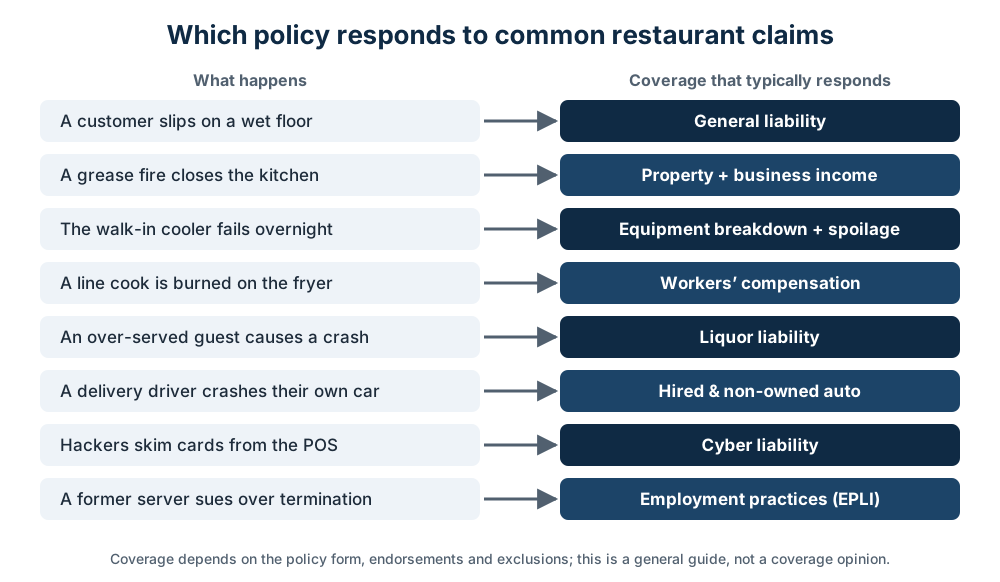
- Hired and non-owned auto — protects the business when employees deliver in their own vehicles.
- Commercial auto — needed for any delivery car the business owns, with Delaware’s required PIP.
- General liability — handles customer slips, trips and bodily injury from food you serve.
- Liquor liability — covers alcohol-related claims that general liability typically excludes, including defense costs.
- Commercial property and business income — pays for fire damage to ovens and the dining room and replaces lost sales during repairs.
- Equipment breakdown and spoilage — covers oven, mixer and refrigeration failures plus the food that goes bad.
- Workers’ compensation — required from the first employee and central to kitchen and driver injury claims.
- Cyber — useful if you take online orders and store customer payment or contact data.
Rating factors that move pizzeria pricing
Carriers want to know your delivery share of sales, the number of drivers and how you vet them, your delivery radius and hours (late-night delivery rates differently), the percentage of revenue from alcohol, and your oven types and hood suppression. Loss history, years in business and building construction also count. Improve your position with a written driver policy, annual motor vehicle record checks, documented hood cleaning, clear allergen procedures and current server training cards for anyone pouring beer.
Quoting a pizza shop with one application
Provident Financial Group is an independent agency, so one application lets us compare multiple carriers side by side, including how each treats delivery and alcohol. We can issue certificates of insurance for landlords and delivery platforms the same day. Call (866) 964-6660 to talk it through. Coverage is subject to underwriting and policy terms.
Frequently asked questions
Does my pizzeria’s general liability cover delivery accidents?
Generally no. Auto-related claims are excluded from general liability, which is why hired and non-owned auto or a commercial auto policy is needed for delivery.
If Delaware has no dram shop liability, why do carriers still ask about my beer sales?
Alcohol changes the risk of fights, falls and lawsuits even when a specific legal theory is unavailable, and defense costs are real. Underwriters also price liquor liability separately from the rest of the package.
Can customers bring wine to my Delaware pizza place?
Not without the right license. A for-profit establishment needs a Bottle Club license from the Office of the Alcoholic Beverage Control Commissioner before patrons can bring their own alcohol to drink on site.
Do third-party delivery apps change what I need?
If the app’s drivers deliver your food, their coverage generally applies to them, but you may still need your own liability and certificate requirements set by the platform. If your own staff deliver, HNOA is the key coverage.
Ready to compare pizzeria coverage in Delaware? Get Multiple Quotes within minutes.