
Food vendors and farmers market sellers in Vermont typically need general liability with products coverage, an additional insured endorsement for each market or event, equipment coverage for tents, coolers and cooking gear, and workers’ compensation if anyone on the payroll helps at the booth. Most Vermont farmers markets and festivals ask for a certificate before your first market day.
This page is for vendors who sell prepared food, baked goods, maple products, preserves, hot sandwiches, crepes or kettle corn from a booth, tent or cart at Vermont’s summer and winter farmers markets, craft fairs and town festivals. If you operate a truck or trailer, see our Vermont food truck page instead.
Licenses, permits and market requirements in Vermont
The Vermont Department of Health’s Food and Lodging Program handles food licensing statewide. Mobile units and push carts are licensed as commercial caterers and must meet the Department’s Mobile Unit and Push Cart Requirements and pass an opening inspection. Which license applies to a booth depends on what you make and where you prepare it, so confirm your category with the Department. Towns may also require local vending permits.
The market itself is often the strictest party. Market managers commonly require vendors to carry liability insurance, name the market (and sometimes the town or landowner) as additional insured, and hold the market harmless. Read your vendor agreement before buying a policy, since the limits and wording you need come from it.
Workers’ compensation is required in Vermont for any employer with one or more full- or part-time employees, even a teenager who works Saturdays at the booth for pay. Sole proprietors are not required to cover themselves. See our Vermont workers’ comp guide for exemptions.
Booth and market-day risks for Vermont vendors
- A canopy in a gust. An unweighted pop-up tent lifts in a summer thunderstorm and strikes a shopper in the next aisle. That is a general liability claim, and the market will be named in it too.
- Maple syrup and a glass jar. A jar with a chipped rim cuts a customer’s hand at home. Products liability follows the product, not just the booth.
- Undeclared sesame in a dressing. A prepared salad sold at a market triggers a reaction because the label missed an ingredient.
- A hot griddle at a crowded fair. A toddler brushes a crepe griddle; a burn claim and a demand letter follow.
- Equipment stolen overnight. Coolers, a generator and a folding kitchen left in a locked van are taken the night before a two-day festival.
- Ice at the winter market. A shopper slips on an icy loading area outside an indoor winter market while carrying your product.
Coverage checklist for market and event vendors
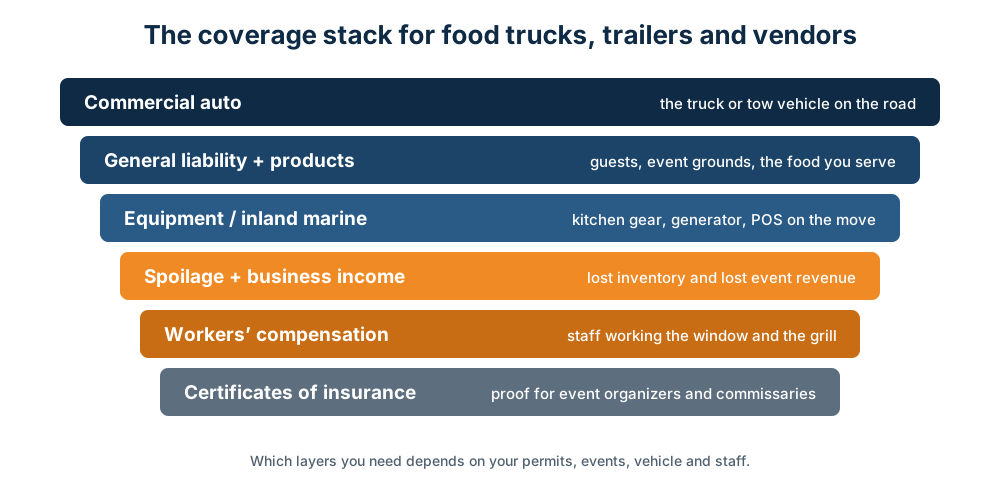
- General liability — injuries and property damage around your booth, including tents and displays.
- Products-completed operations — illness, injury or allergic reaction from food customers take home.
- Additional insured endorsement — ideally blanket wording so every market can be added as needed.
- Inland marine or business personal property — tents, coolers, grills and generators, at the market, in the van and in storage.
- Spoilage — for vendors with refrigerated inventory.
- Hired and non-owned auto or commercial auto — for the van hauling product and equipment to markets.
- Workers’ compensation — required from the first employee in Vermont.
- Liquor liability — only if you sell wine, cider or spirits samples under a license at events; see our Vermont liquor liability page.
What affects a vendor’s insurance price
Carriers look at what you sell (shelf-stable preserves rate differently than hot food cooked on-site), annual sales, the number of markets and events, cooking equipment and open flame, whether you sell to wholesale accounts too, and prior claims. An annual policy usually makes more sense than per-event coverage for anyone doing a full season.
To help your pricing: weight every canopy leg, keep a labeling checklist for allergens, keep temperature logs for coolers, store equipment securely, and keep copies of your licenses ready for the application.
Working with an independent agency on vendor coverage
Provident Financial Group is an independent agency licensed in Vermont. You complete one application and we compare multiple carriers side by side, including vendor programs built for markets and fairs. Once bound, you can issue live certificates of insurance to market managers without waiting. Call (866) 964-6660. Coverage is subject to underwriting and policy terms.
Frequently asked questions
Does my Vermont farmers market’s insurance cover my booth?
Usually not. The market’s policy protects the market, which is why it requires vendors to carry their own liability coverage and name the market as additional insured.
Is an annual policy better than buying coverage per market?
If you sell at more than a handful of events a year, an annual policy is usually simpler and avoids gaps. Per-event coverage fits occasional sellers.
Do I need product liability for maple syrup or jam?
Yes. Shelf-stable products can still cause injury or illness, and the claim can arrive long after the sale. Products-completed operations coverage is built for that.
What license does a Vermont food cart need?
Push carts and mobile units are licensed by the Vermont Department of Health as commercial caterers and must pass an opening inspection. Check local permits in each town.
Heading to market this season? Get Multiple Quotes within minutes.