
Fast casual restaurants in Indiana typically need a business owner’s policy or package that combines general liability and property, workers’ compensation from the first employee, equipment breakdown for the line and walk-in, and hired and non-owned auto if managers drop off catering orders. Concepts that pour beer or wine also need liquor liability, because Indiana’s dram shop law applies to anyone who furnishes alcohol.
This page is for counter-service owners in Indiana: build-your-own bowl shops, burrito and salad concepts, chicken-finger franchises and the like, whether you are a single strip-center tenant in Noblesville or operating a handful of units near campus in Bloomington. High volume, young crews and tight lease terms shape what you need.
Indiana requirements a fast casual owner should know
Most fast casual lines grill chicken, steak or burgers to order, which means cooking raw animal foods. Indiana requires those establishments to have a certified food protection manager responsible for all hours of operation (IC 16-42-5.2). A departing certified manager must be replaced within three months, which is worth planning for in a business with regular management turnover, and certificates renew every five years.
Workers’ compensation is required for covered employers with no minimum headcount under IC 22-3-5-1, so a shop with eight part-time crew members is covered by the law just like a large one. Operating without it is a Class A misdemeanor, and the Worker’s Compensation Board can seek an injunction. Corporate officers may elect not to be treated as employees, while sole proprietors and LLC members are excluded unless they elect in writing.
If you add beer or wine, Indiana requires alcohol servers at permitted establishments to finish an approved server training program within 120 days of starting, refresh every three years, and keep the records on file. Employees aged 18 to 20 must complete training before applying for a restricted employee permit. Separately, your shopping-center lease almost certainly spells out liability limits, additional insured status for the landlord and a waiver of subrogation; read it before you shop coverage.
Fast casual loss scenarios Indiana underwriters worry about
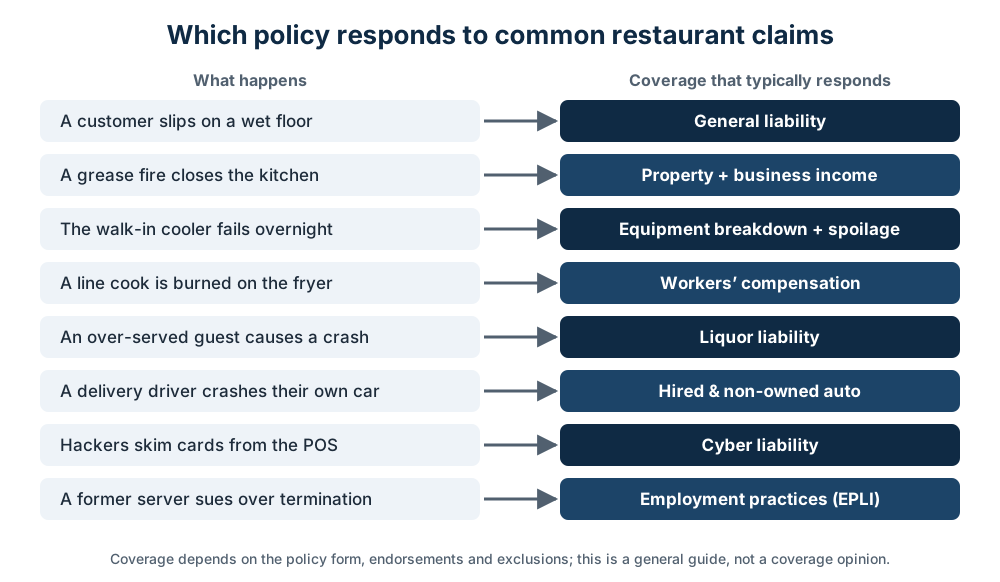
Picture the noon rush on a snowy January day: slush tracked in from the parking lot pools by the drink station and a customer goes down hard. Behind the line, a new crew member’s forearm brushes the plancha, and another nicks a finger on the mandoline during morning prep. These are routine claims, but frequent ones.
The less obvious exposures cost more. A guest orders a bowl with no peanuts, yet the same spoon went into the peanut sauce two orders earlier. A general manager delivering a catering order for an office lunch in her own SUV runs a red light. The walk-in compressor dies on the Friday night before a home football weekend, taking the weekend’s protein with it. A skimmer planted on a self-order kiosk exposes customer card data.
Building the policy for a counter-service concept
- Business owner’s policy or package — bundles general liability, business personal property and business income for a typical strip-center location.
- Products-completed operations — responds to allergen and foodborne illness claims from dine-in, pickup and third-party delivery orders.
- Workers’ compensation — burns, cuts and strains from a fast-paced line, with no minimum employee count in Indiana.
- Equipment breakdown and spoilage — walk-ins, reach-ins, ice machines and combi ovens are the heart of the operation.
- Hired and non-owned auto — for managers and crew who run catering drop-offs or bank deposits in their own cars.
- Liquor liability — needed as soon as beer or wine is on the menu.
- Cyber liability — kiosks, online ordering and loyalty apps create card-data and privacy exposure.
- Employment practices liability — high hiring volume means more termination and harassment allegations.
Rating factors for Indiana fast casual restaurants
Carriers look at annual sales and square footage, cooking methods (fryers rate differently than a salad line), any alcohol share, catering and delivery volume, hours, building age and sprinklers, and prior claims. Franchise concepts must also meet franchisor minimums, which can push limits higher than an independent would choose.
Practical steps help: non-slip mats and a wet-floor routine, cut-resistant gloves at prep, an allergen protocol with dedicated utensils, scheduled hood and duct cleaning, driver checks for anyone doing catering runs, and a short safety orientation for every new hire.
Comparing carriers through an independent agency
Provident Financial Group uses one application to compare fast casual programs from multiple carriers side by side, checking each against your lease and any franchise agreement. Once you bind, we can send certificates to your landlord and franchisor directly. Questions? Call (866) 964-6660.
Frequently asked questions
Does my franchise agreement change the insurance I need?
Yes. Franchisors typically set minimum limits, require additional insured status and sometimes specify carrier ratings, and those terms override what you might otherwise buy. Send us the insurance section of your agreement so quotes match it.
We are adding beer and wine. What changes?
You will need liquor liability coverage, and your staff who serve alcohol must complete Indiana-approved server training within 120 days of starting. Employees aged 18 to 20 need training before they can get a restricted employee permit.
Do part-time crew members count toward Indiana’s workers’ comp requirement?
Yes. Indiana’s law does not set a minimum number of employees, and part-time workers are generally employees under the Act. The exemptions, such as casual laborers, are narrow.
Is a business owner’s policy enough for a fast casual restaurant?
It is usually the foundation, not the whole program. Workers’ comp, liquor liability, auto, cyber and employment practices coverage are normally written separately or added by endorsement.
Opening a new unit or renewing a lease? Get Multiple Quotes within minutes.