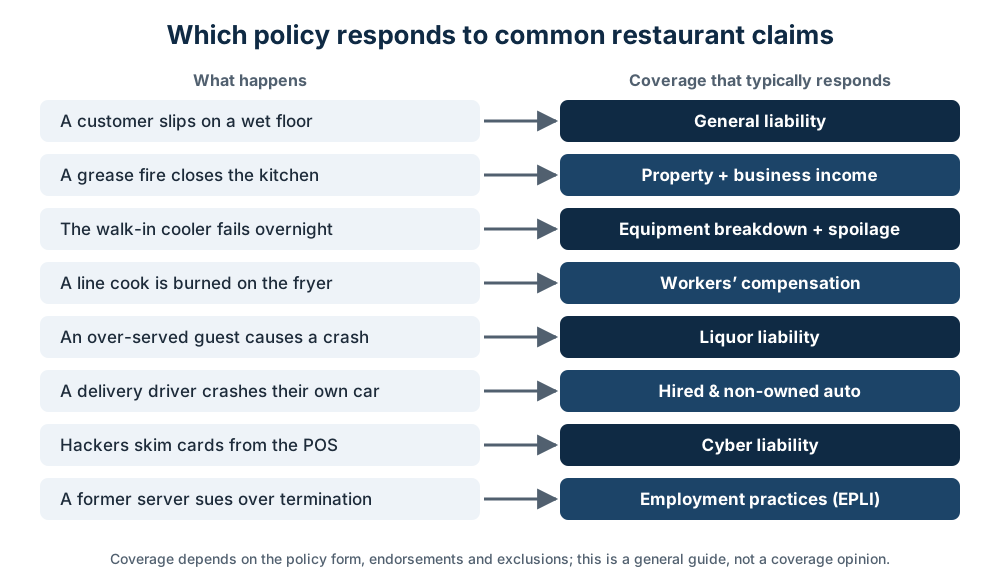
Delivery has moved from a nice extra to a core part of many restaurants’ revenue. Whether you use a third-party app, run your own drivers, or both, delivery adds exposures that were not part of the original insurance conversation when you opened your doors.
Here are the questions worth asking about your coverage if delivery is part of your business.
Who is driving matters
If an employee delivers orders in a personal vehicle, a crash may lead to claims against both the driver and the restaurant. Personal auto policies often limit coverage when a vehicle is used for business, and a restaurant’s general liability policy typically excludes auto accidents.
That is why many restaurants look at hired and non-owned auto coverage, which may respond when the business is held responsible for accidents involving vehicles it does not own. Restaurants that own delivery vehicles generally need commercial auto coverage.
What third-party platforms may and may not cover
Delivery apps often have their own insurance for drivers they classify as independent contractors, but the terms are usually limited and may apply only during certain phases of a delivery. These arrangements generally are not designed to protect the restaurant itself.
Reviewing the platform agreement for indemnification and insurance requirements is important, since some contracts shift certain responsibilities back to the restaurant.
Food safety and product liability once the food leaves the building
If a customer becomes ill after a delivered meal, a claim may still be directed at the restaurant. Product liability coverage within a general liability policy typically addresses food-related illness claims, but it is worth confirming that delivery and off-premises sales are not excluded or limited.
Workers’ compensation for delivery staff
Employees who drive as part of their job are generally covered by workers’ compensation for work-related injuries, and how drivers are classified can affect both coverage and premiums. If you use independent contractors directly, classification rules vary by state, so it is wise to review your approach with an advisor.
Ghost kitchens and virtual brands
Some restaurants launch delivery-only brands from the same kitchen. Each brand may raise questions about how the operation is described to your carrier, how revenue is reported, and whether your policy contemplates the additional activity. Keeping your agent informed helps avoid surprises at claim time.
Review your coverage before you scale delivery
Delivery can be a strong growth channel, and the right coverage helps protect it. An independent agent can walk through your operations and compare options across carriers. If delivery is growing for you, we would be glad to review your policies with you.