Restaurants process a steady stream of card payments, store customer information through reservation and loyalty tools, and often rely on cloud-based point-of-sale systems. That combination makes them an attractive target for criminals, and many owners assume a cyber incident is a problem only for large chains.
This article explains the cyber exposures restaurants commonly face and how cyber liability insurance may help, so you can have a more informed conversation about whether it fits your business.
Where restaurants are exposed
The most familiar exposure is the point-of-sale system. Malware on a terminal or a compromised vendor connection can expose card data. Online ordering platforms, reservation systems, gift card programs, and Wi-Fi networks can add more entry points.
Employees are another factor. Phishing emails that trick a manager into sharing a login or approving a fraudulent payment are a common way in, and they do not require any sophisticated technology on the attacker’s part.
What cyber liability insurance typically includes
Cyber policies are often described in two parts. First-party coverage may help with your own costs after an incident, such as forensic investigation, notifying affected customers, credit monitoring, data restoration, and business interruption. Third-party coverage may respond to claims or regulatory proceedings that arise from the incident.
Some policies also address ransomware demands and funds transfer fraud, although the terms vary widely and sublimits often apply. Reading the specifics matters more than the headline limit.
Why a general liability policy usually is not enough
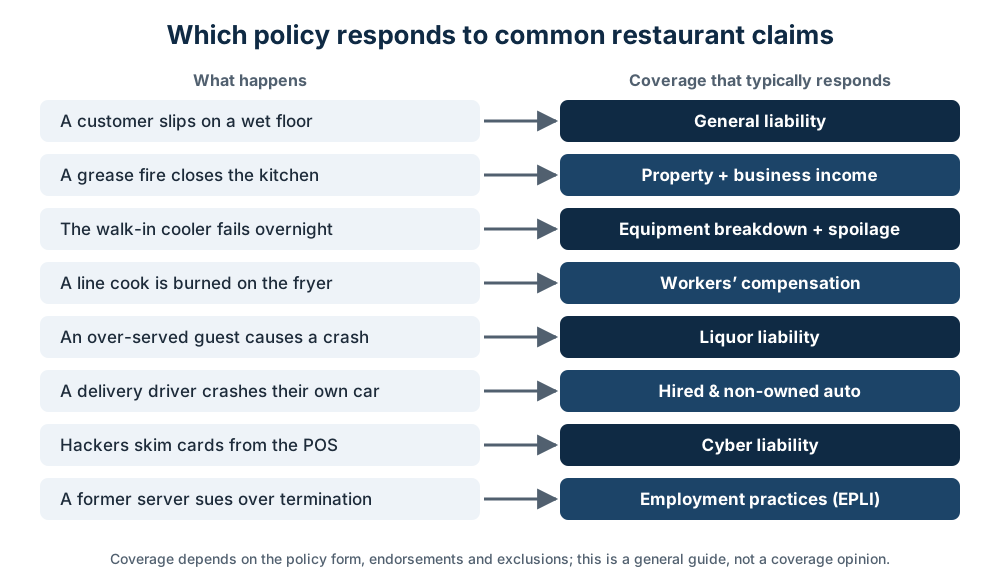
Commercial general liability is designed for bodily injury and property damage. Many forms exclude or limit data-related losses, and a standalone cyber policy is often how that gap is addressed. A business owner’s policy may include a small cyber endorsement, but it may be limited in scope.
Payment card rules and your processor
If you accept cards, your agreement with your processor typically requires you to follow payment card security standards. After a breach, you may face assessments or fines passed down through the processor. Some cyber policies include coverage for these costs, but it is worth confirming whether yours does and under what conditions.
Questions to ask when comparing policies
Useful questions include whether the policy covers losses caused by a vendor’s system rather than your own, how business interruption is calculated, whether there are waiting periods, and whether the carrier provides incident response support. Also ask what security practices the carrier expects, such as multi-factor authentication, since these are often underwriting requirements.
Simple practices that reduce risk
Keeping software updated, using multi-factor authentication for email and POS back offices, separating guest Wi-Fi from business systems, and training staff to recognize suspicious messages can make a real difference. Insurance is one layer, not a replacement for these basics.
Next steps
Cyber coverage is not one-size-fits-all. An independent agent can help you compare options and see how they fit alongside your existing policies. If you would like to talk through your restaurant’s exposure, we are happy to help.