
Delis and sandwich shops in Vermont typically need general liability with products coverage, equipment breakdown and spoilage for deli cases and walk-ins, business income, hired and non-owned auto for catering drop-offs, and workers’ compensation from the first employee. Slicer injuries and cold-case food safety are the exposures carriers ask about first.
This page is for sandwich shops, Italian and Jewish-style delis, cheese and charcuterie counters, and the deli counter inside a village store. Whether you slice local cheddar all day or build sandwiches for office lunches, the combination of blades, refrigeration and ready-to-eat food drives the coverage.
Vermont requirements that apply to a deli counter
The Vermont Department of Health’s Food and Lodging Program licenses and inspects food service establishments statewide, and new operations must pass an opening inspection. The published rule requires the person in charge to demonstrate food safety knowledge; the Department recommends accredited manager certification. For a deli handling ready-to-eat meats and soft cheeses, documented training is also something underwriters like to see.
Workers’ compensation is required for any Vermont employer with one or more full- or part-time employees. Corporate officers may elect exclusion with Department of Labor approval; sole proprietors and partners are not required to cover themselves. See our Vermont restaurant workers’ comp page.
If staff deliver catering trays in their own cars, Vermont’s auto minimum under 23 V.S.A. § 800 is 25/50/10 (in thousands of dollars), and personal policies often exclude business deliveries. And if your deli holds a first-, third- or fourth-class liquor license, Vermont’s uncapped dram shop statute and its newer liquor liability insurance requirement apply; see our Vermont liquor liability page. If you only sell packaged beer or wine to go, ask us and the Department of Liquor and Lottery how the rules apply to your license.
Deli-specific claim scenarios
- The slicer during cleaning. An employee cleaning a meat slicer without locking out the blade suffers a deep hand laceration. Slicer injuries are among the most serious and expensive deli comp claims.
- Ready-to-eat contamination. Sliced deli meat held too long in a case is linked to several illnesses. Ready-to-eat products are high-exposure because nothing is cooked after slicing.
- An office catering order. Sandwich platters sit out for three hours at a client’s meeting before lunch, and attendees get sick. The client’s company points to your products coverage.
- A sesame bun mix-up. A customer who ordered a gluten-free, sesame-free sandwich gets the wrong bread during the lunch rush.
- The deli case compressor. A refrigeration failure over a holiday weekend spoils a case full of meats, cheeses and salads.
- A winter outage. An ice storm cuts power to a village store for two days, and the walk-in warms before a generator arrives.
What a Vermont deli policy should include
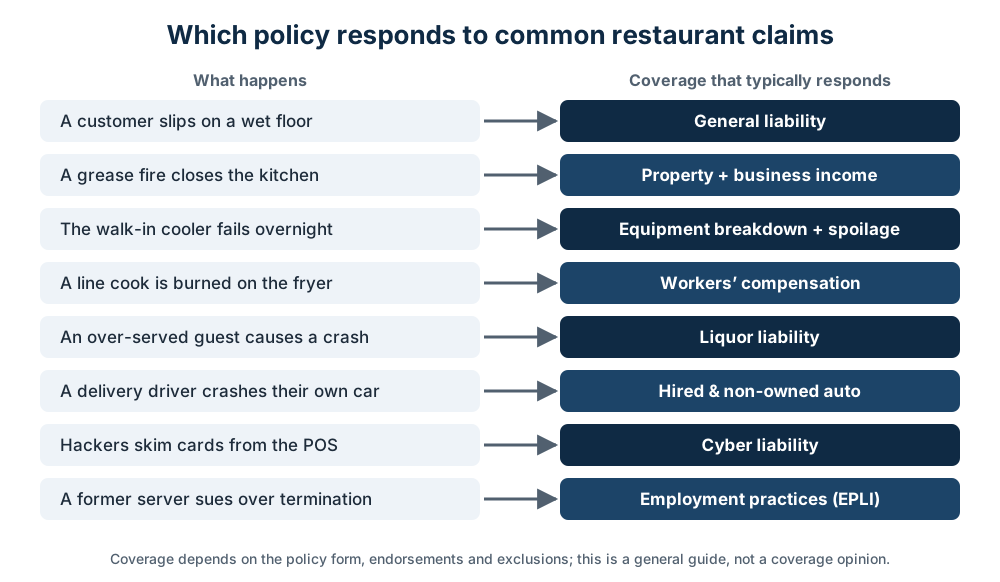
- General liability — customer injuries at the counter and in seating areas.
- Products-completed operations — illness from ready-to-eat meats, salads and catered platters.
- Equipment breakdown — slicers, deli cases, walk-ins and ovens.
- Spoilage — meats and cheeses lost to power or refrigeration failure; ask about utility service interruption.
- Commercial property — building or improvements, equipment and inventory, with winter water damage in mind.
- Business income — lost sales and payroll while repairs are made.
- Hired and non-owned auto — catering deliveries in employees’ cars.
- Workers’ compensation — required from the first employee in Vermont.
- Liquor liability — for delis licensed to serve beer or wine on site.
How a deli’s premium is calculated
Carriers consider annual sales and catering share, payroll by class code, cooking equipment (a sandwich shop with a panini press rates differently from one running fryers), refrigeration capacity, building age and heating, and loss history. Catering volume and alcohol sales both add exposure.
Ways to earn better pricing: written slicer lockout and cleaning procedures with cut-resistant gloves, temperature logs for deli cases, labeled allergen-free prep, a generator plan or refrigeration alarms, and delivery instructions that tell catering clients how long food can safely sit out.
Getting deli quotes through Provident Financial Group
Provident Financial Group is an independent agency licensed in Vermont. One application is compared across multiple carriers side by side, so you see where spoilage, equipment and products terms differ. After binding, you can issue live certificates of insurance to landlords and catering clients. Call (866) 964-6660. Coverage is subject to underwriting and policy terms.
Frequently asked questions
Are slicer injuries covered by workers’ comp in Vermont?
Yes. Workplace injuries to employees, including slicer lacerations, are workers’ compensation claims, and Vermont requires coverage from the first employee.
Does my deli’s policy cover food that spoils during a power outage?
Only with spoilage coverage, and outages that start away from your premises may require utility service interruption coverage too.
Do catering clients ask delis for a certificate of insurance?
Larger offices and venues often do, sometimes with additional insured status. We can issue certificates quickly after binding.
Does selling beer to go change my deli’s insurance?
It depends on your license class. Tell us what you sell and how, and confirm the rules with the Department of Liquor and Lottery.
Want to compare deli coverage? Get Multiple Quotes within minutes.