
Bakeries in Vermont typically need general and product liability, commercial property with equipment breakdown and spoilage, business income coverage, and workers’ compensation as soon as they hire a single employee. Bakeries that wholesale bread or pastry to co-ops, cafes or general stores should expect those buyers to ask for product liability limits and additional insured status on a certificate of insurance.
This page is for retail bakeries, wholesale bread operations, cake studios and bakery-cafes across Vermont. If most of your revenue comes from espresso drinks and seating, our Vermont coffee shop insurance page may fit better.
Vermont rules that shape a bakery’s insurance
The Vermont Department of Health’s Food and Lodging Program licenses and inspects food service establishments statewide, and a new bakery must pass an opening inspection before it operates. The published rule requires the person in charge to demonstrate food safety knowledge, and the Department recommends accredited manager certification. For a bakery selling allergen-heavy products, a certified manager also reads well to underwriters.
Workers’ compensation is required for any employer with one or more full- or part-time employees working in Vermont, so the first part-time counter clerk triggers it. Sole proprietors and partners of unincorporated businesses are not required to cover themselves, and corporate officers may elect exclusion with Department of Labor approval. Coverage comes from private carriers or the assigned risk plan; Vermont has no state fund. See our Vermont restaurant workers’ compensation page.
If you run a van on wholesale routes, Vermont’s auto liability minimum under 23 V.S.A. § 800 is 25/50/10 (in thousands of dollars), a floor rather than a recommendation for a vehicle making daily winter stops. And if you add a wine-and-pastry evening under a liquor license, Vermont’s dram shop law applies; read our Vermont liquor liability page first.
Where Vermont bakery claims actually come from
- The Monday freeze. A bakery closed Sundays and Mondays turns the heat down; a supply line in an exterior wall freezes during a January cold snap and splits. By Tuesday at 4 a.m. there is water across the floor, ruined flour and sugar, and a week of lost sales.
- Snow and ice on the building. Heavy snow loads on a flat addition or ice dams along the eaves can push meltwater into the retail area. Property coverage responds to many of these losses, but only if the form and limits match the building.
- River flooding. Many Vermont downtowns sit along rivers, and the July 2023 floods damaged businesses across the state. Standard commercial property excludes flood, so a riverside bakery needs a separate flood policy.
- A mislabeled loaf at the co-op. A seeded bread picks up walnut cross-contact and is sold at a grocery account without the allergen callout. The customer reacts, and the store tenders the claim back to you as a products claim.
- The dough sheeter and the mixer. Hand injuries from sheeters, slicers and planetary mixers, plus burns from sheet pans and deck ovens, drive bakery workers’ comp claims.
Bakery coverage checklist
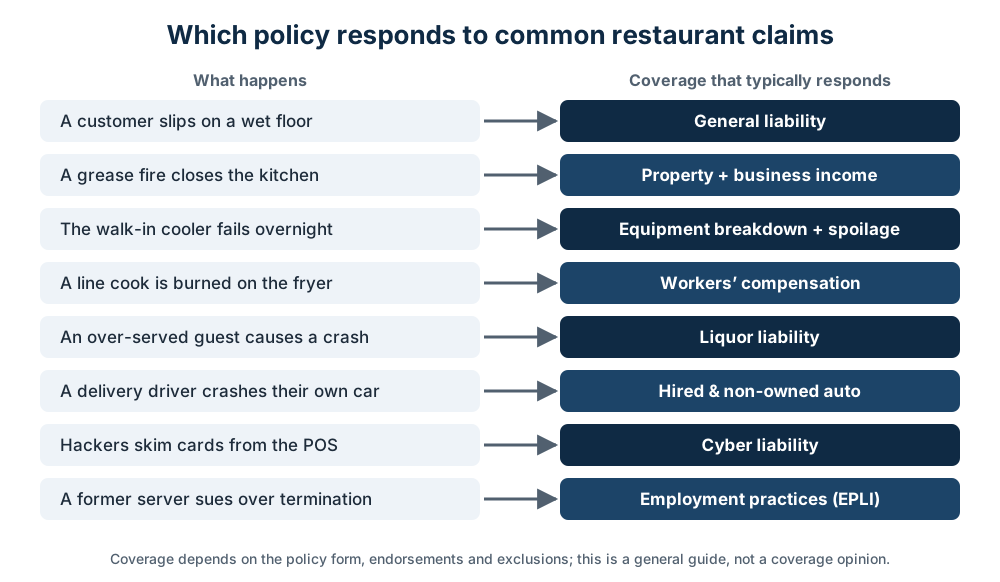
- General liability — customer injuries in the shop, including slush-slick floors all winter, and at markets where you sell.
- Products-completed operations — responds when something you baked and sold, retail or wholesale, makes someone sick or triggers an allergic reaction.
- Commercial property — the building (if owned), ovens, mixers, retarders, display cases and inventory, at replacement cost where available.
- Equipment breakdown — a failed oven control board or walk-in compressor is a mechanical loss, not a fire; this is the coverage that pays.
- Spoilage — laminated dough, cream fillings and custards lost to a power outage or refrigeration failure.
- Business income and extra expense — keeps payroll and rent paid while the shop is closed after a covered loss.
- Flood insurance — a separate policy for bakeries in or near a flood zone.
- Workers’ compensation — mandatory from the first employee in Vermont.
- Hired and non-owned auto or commercial auto — for staff running orders in their own cars or a delivery van.
What moves a Vermont bakery’s premium
Carriers look at gross sales and the retail-to-wholesale split, payroll by class code, the building’s construction, age, heating system and sprinklers, flood zone, and loss history. Doughnut fryers bring hood and suppression questions, and wholesale volume raises the products exposure.
Ways to improve pricing: install low-temperature and water alarms that text you when the shop is closed, keep a winter heat plan and a snow-removal log, document oven and hood service, use a written allergen and labeling procedure, and get hold-harmless language and certificates from ingredient suppliers.
Quoting a bakery with Provident Financial Group
US Restaurant Insure is the restaurant site of Provident Financial Group, an independent agency licensed in Vermont. You fill out one application, and we compare multiple carriers side by side, including packaged policies and bakery programs where they fit. Once bound, you can pull certificates of insurance for landlords, wholesale accounts and farmers markets without waiting on a callback. Call (866) 964-6660 with questions. Coverage is always subject to underwriting and policy terms.
Frequently asked questions
Do Vermont wholesale accounts require product liability from my bakery?
Most grocery stores, co-ops and cafes that buy from outside bakers ask for a certificate showing general and products liability, and many want to be named as additional insured. Check the vendor agreement before your first delivery.
Will my policy pay for dough and fillings lost when the power goes out?
Only if it includes spoilage coverage, and some forms limit off-premises power failures. Ask how the spoilage and utility service provisions read.
Does a bakery run with only family help need workers’ comp in Vermont?
Vermont exempts certain categories, including some resident family members and casual workers, but the rules are specific. Any non-exempt employee, full or part time, triggers the requirement, so confirm with the Vermont Department of Labor.
Is damage from a flooded river covered by my bakery’s property policy?
Standard commercial property policies exclude flood. A bakery near a river or in a mapped flood zone should price a separate flood policy.
Ready to compare bakery coverage for your Vermont shop? Get Multiple Quotes within minutes.