
Bakeries in Delaware typically need general liability that includes products coverage, commercial property with equipment breakdown and spoilage, workers’ compensation from the very first employee, and commercial auto if a van delivers cakes or wholesale orders. Because a bakery’s products leave the building and get eaten elsewhere, allergen and contamination claims matter as much as slips on the sales floor.
This page is for retail bakeries, custom cake studios, bread and pastry shops, and small wholesale bakers operating anywhere from Wilmington to Rehoboth Beach. It walks through the Delaware rules that affect your policy, the claims we see bakeries face, and how to compare quotes from several carriers without filling out the same form five times.
Delaware permits, food manager rules and the bakery application
Delaware handles food permits at the state level rather than county by county. The Division of Public Health’s Office of Food Protection permits food establishments statewide under the State of Delaware Food Code, and since April 1, 2016 permitted establishments must have at least one Certified Food Protection Manager on staff, with the person in charge at inspection holding that certification. Very-low-risk establishments have a statewide variance and some low- and medium-risk operations may petition for one, so ask DPH where your bakery falls. Underwriters routinely ask whether you hold a current permit and a certified manager, and a clean inspection history helps your application.
Two other Delaware rules land on almost every bakery. Workers’ compensation is required as soon as you have one employee, and the penalties for going without it are steep (see our Delaware restaurant workers’ comp guide). If you deliver, Delaware auto policies must carry liability of at least 25/50/10 (in thousands of dollars) plus mandatory Personal Injury Protection, which applies to a delivery van just as it does to a family car.
Oven burns, nut cross-contact and the wholesale account that sues
Bakery losses tend to be less dramatic than a bar fight but more frequent than owners expect. Picture a few that underwriters price for:
- A baker reaches into a deck oven at four in the morning and suffers a forearm burn that needs weeks off work, which is a workers’ comp claim.
- A dough sheeter or spiral mixer catches a glove and injures a hand, often the most expensive type of kitchen injury.
- Muffins you supply wholesale to a Newark coffee shop are labeled nut-free but were baked on shared trays, and a customer has a reaction. You and the cafe are both named in the suit.
- A three-tier wedding cake slides in the back of a van on Route 1 in July heat, and the couple demands a refund plus the cost of a replacement dessert.
- A nor’easter knocks out power overnight and the walk-in holding buttercream, custards and laminated dough warms past safe temperatures.
Allergen claims are the one to take seriously. Written labeling procedures, separate equipment for nut products and ingredient records for every wholesale SKU help both at claim time and during underwriting.
Coverages to put on a Delaware bakery’s list
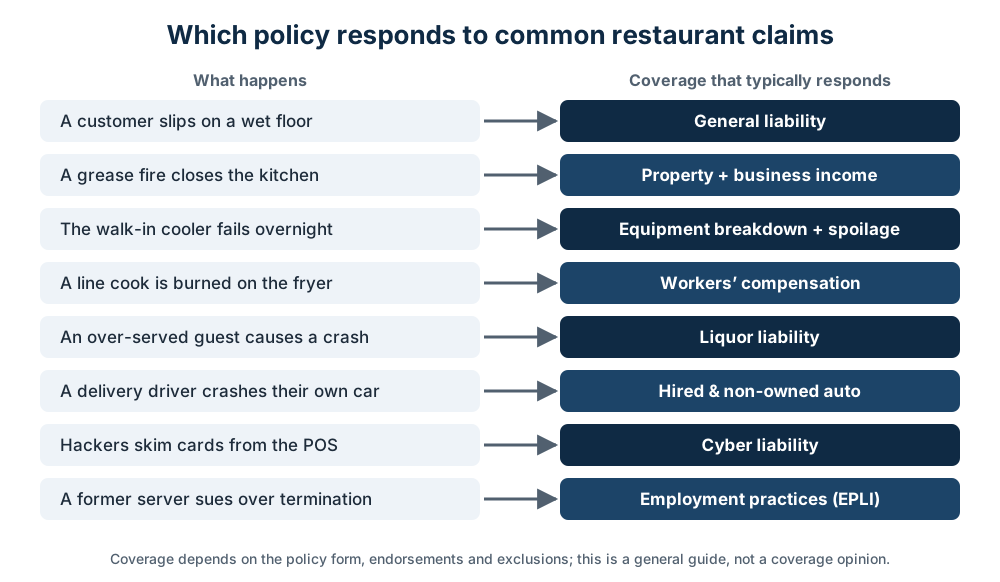
- General liability with products-completed operations — responds when someone is hurt by something you baked, whether it was eaten at your counter or at a wedding reception.
- Commercial property — protects ovens, mixers, display cases, inventory and your build-out if you lease the space.
- Equipment breakdown — covers the sudden mechanical or electrical failure of a deck oven, compressor or retarder, which standard property forms usually exclude.
- Spoilage — pays for dairy, eggs and finished goods lost when refrigeration fails or the power goes out.
- Business income — replaces lost revenue while a damaged kitchen is repaired, important during the holiday and wedding seasons.
- Workers’ compensation — required in Delaware from the first employee and the main source of payment for burns, cuts and lifting injuries.
- Commercial or hired and non-owned auto — covers delivery vans and employees who run orders in their own cars.
- Flood (separate policy) — worth pricing if you operate in a low-lying part of Sussex or Kent County, because standard property policies exclude flood.
Why two bakeries get very different quotes
Carriers look at your sales split between retail counter, custom orders and wholesale, since wholesale accounts raise products exposure. They weigh the type of ovens and fryers you use (donut fryers change the fire picture), whether your hood has automatic suppression, the age of wiring and refrigeration, delivery radius, payroll by job type and your loss history. Location matters too: coastal and flood-exposed addresses in Delaware draw closer attention to wind and water.
You can help your pricing by documenting allergen controls, keeping suppression and hood service records current, installing temperature alarms on coolers, and requiring wholesale buyers to share responsibility in a written supply agreement. Higher property deductibles can also make sense if cash flow allows. For more on the drivers behind price, see how restaurant insurance is priced.
From one application to side-by-side bakery quotes
As an independent agency, Provident Financial Group takes one application and compares options from multiple carriers side by side, so you can see how each handles products liability, spoilage limits and equipment breakdown. When a farmers market, landlord or wholesale buyer asks for a certificate of insurance, we issue it quickly and can add them as additional insured when your policy allows. Call (866) 964-6660 or start online. Coverage is always subject to underwriting and policy terms.
Frequently asked questions
Does my bakery’s liability policy cover a customer’s allergic reaction?
Usually the products-completed operations part of general liability is what responds to a bodily injury claim from something you sold, subject to the policy’s terms and exclusions. Confirm there is no allergen or contamination exclusion before you bind.
Is a home-based cake business in Delaware covered by my homeowners policy?
Homeowners policies generally exclude business activity, so a cake sold from your kitchen typically needs its own commercial policy. Check with DPH on what permit your operation requires before you start selling.
Do I need workers’ comp if my only employee works weekends?
Yes. Delaware requires coverage for any employment with one or more employees, and part-time staff count.
Will insurance pay if a snowstorm closes my bakery for a week?
Business income coverage generally responds only when the closure follows direct physical damage covered by your policy, such as a collapsed awning or a fire. A closure because roads are icy, with no damage, usually is not covered.
Want to see how carriers price your bakery? Get Multiple Quotes within minutes.