
Restaurants in Atlantic City, NJ typically need property coverage that addresses wind and flood, business interruption for storm closures, general and liquor liability, and workers’ compensation that flexes with seasonal staff. The New Jersey rule that matters most here is workers’ comp: every employer with a non-owner worker must insure, and summer hires, part-timers and seasonal staff all count from day one.
Atlantic City’s dining economy is built on the casinos, the Boardwalk, beach season and convention business, from resort-adjacent steakhouses to boardwalk stands, bars and family spots. Provident Financial Group is an independent insurance agency based in Mendham, New Jersey, and shore restaurants are a big part of what we quote for owners across the state.
Shore-town realities that shape your policy
Coastal New Jersey faces hurricanes, nor’easters and storm-surge flooding, and Superstorm Sandy in 2012 showed how far water can reach. For an Atlantic City restaurant, that means three separate property questions: windstorm (often carried with a separate, higher deductible on the coast), flood (excluded from standard forms and purchased separately), and salt air, which shortens the life of condensers, compressors and outdoor equipment.
Revenue is seasonal and event-driven. Summer weekends and big conventions can make a year, and a storm or evacuation during peak season hurts far more than a closure in February. Carriers also see a nightlife profile: late hours near casinos, tourists unfamiliar with the area and plenty of alcohol.
New Jersey rules through a seasonal lens
Workers’ comp and payroll swings. Coverage comes from private carriers rated under New Jersey Compensation Rating & Inspection Bureau (NJCRIB) classifications. An NJCRIB bulletin confirms that amusement park and boardwalk food and drink purveyors are assigned class code 9079. Because premium is based on payroll, estimate seasonal payroll carefully; carriers audit after the policy year, and a low estimate becomes a bill. Temporary Disability and Family Leave Insurance contributions apply to seasonal workers too. More at New Jersey restaurant workers’ compensation.
Liquor. Licensees face liability under the Licensed Alcoholic Beverage Server Fair Liability Act for foreseeable injuries after serving a visibly intoxicated patron or a minor. With so many visitors driving home late, that is a real exposure even though the state does not mandate liquor liability insurance.
Vehicles and vendors. Food trucks and catering vans need commercial auto; New Jersey’s minimum for policies issued or renewed on or after January 1, 2026 is 35/70/25 (in thousands of dollars), and we quote well above it. Mobile units are licensed by local health departments with municipal vendor permits, so a truck working several shore towns may need several permits. Fixed kitchens are inspected locally under N.J.A.C. 8:24.
Atlantic City loss examples
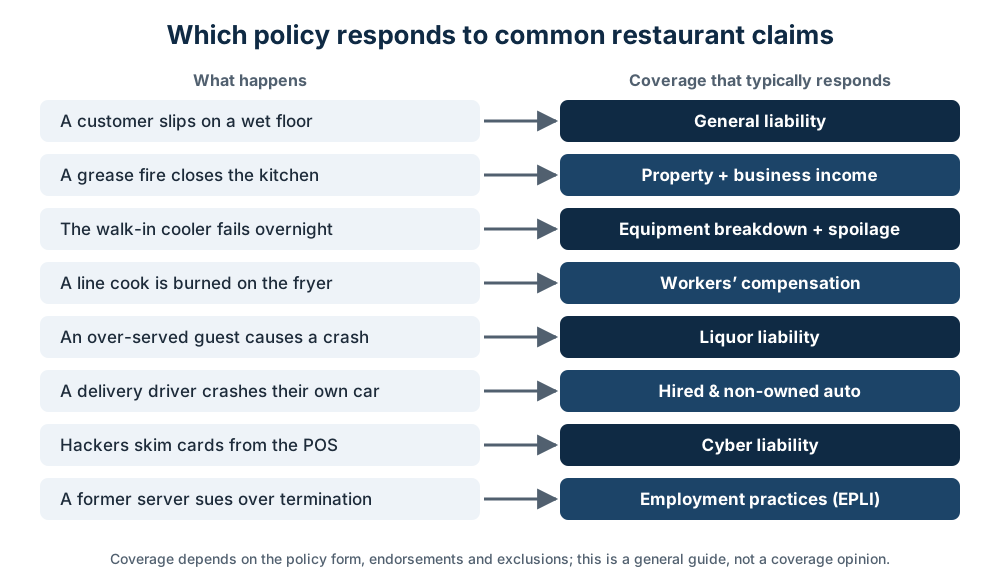
- A nor’easter drives water under the doors and knocks out power for days, spoiling a full walk-in right before a holiday weekend.
- Wind tears an awning loose and damages a neighboring storefront; the neighbor’s carrier comes after you.
- A convention guest trips over a cord at an off-site catered event and blames the restaurant.
- A late-night patron who was served past the point of visible intoxication crashes on the Expressway.
Coverage checklist for shore restaurants
- Property with windstorm — understand the wind or named-storm deductible before hurricane season.
- Flood insurance — required for many mortgaged buildings in flood zones and wise for tenants’ contents.
- Business interruption with civil authority — lost income when access is blocked; terms and waiting periods vary.
- Spoilage and equipment breakdown — refrigeration failures and power outages.
- General liability — tourists, sidewalks, outdoor seating and boardwalk stands.
- Liquor liability — late-night service near casinos and entertainment venues.
- Workers’ compensation — sized to peak seasonal payroll.
- Commercial auto — food trucks, catering and delivery vans.
How carriers price Atlantic City risks
Distance to the water, flood zone, construction and year built, wind mitigation such as impact-rated openings, seasonal versus year-round operation, alcohol share and closing time all influence pricing. Documented storm preparation, elevated equipment, backup power for refrigeration and accurate payroll estimates help. Some carriers limit new coastal property business before or during hurricane season, so quoting early matters.
Quoting with an independent agency
Provident Financial Group puts your one application in front of multiple carriers quoted through our agency, including separate flood markets, and compares wind deductibles, exclusions and limits side by side. Certificates for venues, casinos, event organizers or landlords go out as soon as you bind. Call (866) 964-6660.
Frequently asked questions
Does my policy cover hurricane damage?
Wind is typically covered with its own deductible, but storm-surge flooding is not. You need a separate flood policy for that.
We only open May through September. Can we pay comp only for those months?
Premium follows payroll, so a seasonal operation pays on the payroll it actually has, subject to carrier minimums.
Is a boardwalk food stand rated the same as a sit-down restaurant?
Not always. NJCRIB assigns boardwalk food and drink purveyors class code 9079, and liability forms reflect the stand’s setup.
Do casinos or event venues ask for certificates of insurance?
Usually yes, with additional insured wording. We issue those certificates quickly.
See what your Atlantic City restaurant qualifies for, subject to underwriting and policy terms. Get Multiple Quotes within minutes.
Official New Jersey sources
- N.J.S.A. 2A:22A-5 (Licensed Alcoholic Beverage Server Fair Liability Act)
- New Jersey Division of Workers' Compensation: employer requirements
- New Jersey Department of Health: retail food program
- N.J.A.C. 8:24-2.1 (person in charge; certified food protection manager)
State facts on this page are drawn from the statutes and agency pages above. Laws and agency rules change, so confirm current requirements with the agency before relying on them. This page is general information, not legal advice or a coverage opinion.