
Delis and sandwich shops in Indiana typically need general liability with products coverage for sliced meats and prepared salads, equipment breakdown and spoilage for deli cases and walk-ins, workers’ compensation from the first employee, and a business owner’s policy that ties property and business income together. Shops that deliver box lunches or cater office meetings should add hired and non-owned auto.
This page is for Indiana deli owners of every stripe: the family Italian deli selling imported cheeses and olive oil, the sandwich shop feeding a downtown lunch crowd, the breakfast counter doing egg sandwiches by seven, and the deli counter tucked inside a small grocery. The slicer, the cold case and the catering tray drive most of your risk.
Indiana food safety and employment rules for deli operators
Food service in Indiana is regulated under the Indiana Food Code (410 IAC 7-24) by the Indiana Department of Health’s Food Protection Program and your county health department. Whether you need a certified food protection manager depends on what you do in the kitchen. Establishments that cook raw animal foods, such as frying bacon and eggs or roasting turkey breasts in-house, must have a certified manager responsible for all hours of operation. Limited-prep operations are exempt, so a shop that only slices already-cooked meats and assembles sandwiches should confirm its status with the county. One certified manager may cover multiple establishments owned by the same person on the same or adjoining property.
Workers’ compensation is required with no minimum employee count under IC 22-3-5-1. Many delis are owner-operated, and here is a detail owners often miss: sole proprietors, partners and LLC members are not covered unless they elect coverage in writing with notice to the carrier and the Board. If you are the one running the slicer all day, that election deserves a real conversation. If you own a van for catering, Indiana’s auto liability minimum is 25/50/25 (in thousands of dollars).
Slicers, deli cases and other sandwich-shop hazards
The meat slicer is the signature injury in this business. A counter employee cleaning the blade at closing without the guard in place can lose the tip of a finger in a second, and that one claim can shape your workers’ comp pricing for years. Knife cuts while breaking down a prosciutto leg and strains from hauling cases of canned tomatoes are close behind.
On the customer side, a chipped tooth from a bone fragment in chicken salad, a sesame reaction from bread that shared a board with seeded rolls, or a batch of egg salad that sat too long in a delivery car on the way to a sixty-person office lunch in Carmel can all become liability claims. Deli meats held in a case that loses temperature overnight raise both a spoilage loss and a food safety question. In a deli with grocery aisles, a shelf of imported cans tipping onto a shopper is a real exposure too.
What an Indiana deli’s insurance program should include
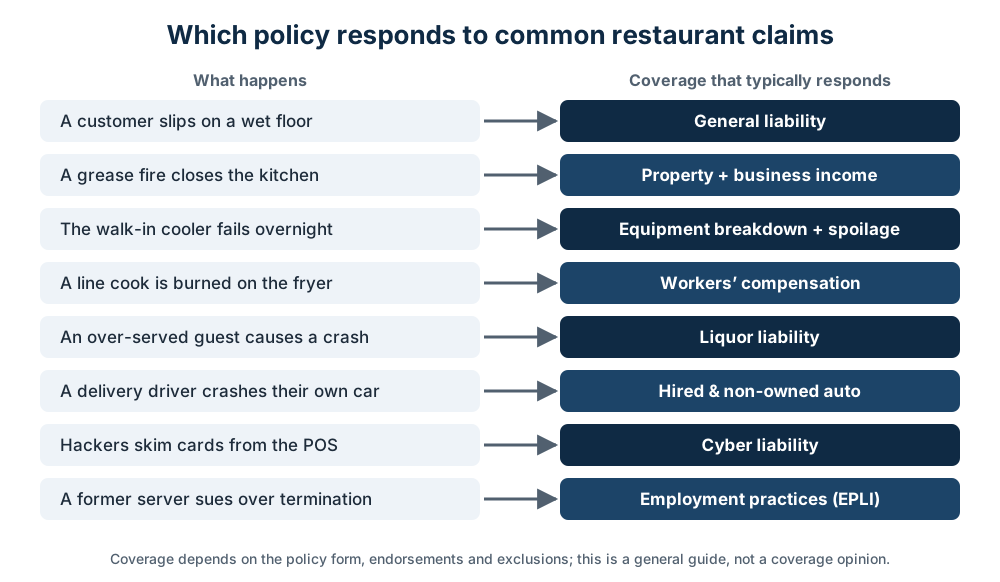
- General liability with products-completed operations — covers illness, allergen and foreign-object claims from counter sales, grab-and-go and catering trays.
- Business owner’s policy — bundles property and business income for the storefront, deli cases and retail inventory.
- Equipment breakdown and spoilage — slicers, deli cases, walk-ins and the ice machine, plus the meat and cheese inside them.
- Food contamination coverage — helps with cleanup, lost inventory and income if the health department closes you over a contamination issue.
- Workers’ compensation — slicer and knife injuries, with an election decision for owner-operators.
- Hired and non-owned or commercial auto — for box-lunch delivery and catering drop-offs.
- Crime coverage — cash drawers and employee theft at a busy register.
How underwriters size up a sandwich shop
Carriers look at sales split between dine-in, catering and retail, whether you cook on a grill or fryer or only assemble cold food, the number of slicers, opening hours, building age and sprinklers, and prior claims. A deli with a hot line rates differently from a cold sandwich counter.
You can help your pricing with slicer guards and cut-resistant gloves, a written slicer cleaning routine, date labels on every opened product, alarmed temperature monitoring on cases and walk-ins, insulated carriers for catering runs, and driver record checks for anyone delivering.
One application, side-by-side quotes for your deli
Provident Financial Group is an independent agency, so you fill out one application and we compare several carriers side by side, looking at spoilage limits, catering coverage and workers’ comp terms together. After binding, we can issue certificates to landlords and corporate catering clients quickly. Call (866) 964-6660.
Frequently asked questions
Does a deli that only slices and assembles need a certified food protection manager?
Possibly not. Indiana’s requirement applies to establishments that cook raw animal foods, and limited-prep operations are exempt, so confirm your classification with your county health department.
Am I covered by workers’ comp as the owner behind the counter?
Not automatically. Sole proprietors, partners and LLC members in Indiana are excluded unless they elect coverage in writing, while corporate officers are included unless they elect out.
What happens if the deli case fails overnight?
Equipment breakdown pays to repair the unit, and a spoilage endorsement pays for the product lost, subject to the policy limit and deductible. Check that the spoilage limit fits your inventory.
Will office catering clients ask for a certificate?
Corporate campuses and event venues frequently do. We can issue a certificate naming the client as additional insured once your policy is in force.
Adding catering or opening a second counter? Get Multiple Quotes within minutes.