
Delis and sandwich shops in Delaware typically need general liability with products coverage, property and spoilage protection for cold cases full of meats and cheeses, workers’ compensation from the first employee, and hired and non-owned auto if staff drop off catering trays. Meat slicers and ready-to-eat cold cuts drive the claims carriers care about most, so both show up on the application.
Whether you run a classic Italian deli in Wilmington, a sub shop near Dover Air Force Base or a beach sandwich counter that triples its staff in summer, this page explains how Delaware rules and deli-specific risks translate into the right coverage.
What Delaware expects of a deli counter
Delaware issues food establishment permits at the state level. The Division of Public Health’s Office of Food Protection permits delis statewide under the State of Delaware Food Code, and permitted establishments must have at least one Certified Food Protection Manager, with the person in charge at inspection holding the certification. Some very-low-risk operations have a variance; a deli slicing and holding cold cuts should confirm its category with DPH rather than assume.
Workers’ compensation is required from the first employee, including seasonal and part-time counter staff. If you deliver office lunches in a company vehicle, Delaware requires 25/50/10 liability (in thousands of dollars) and Personal Injury Protection on that vehicle; if employees use their own cars, hired and non-owned auto protects the business.
Slicers, cold cuts and catering trays
A deli’s risk picture is unusually concentrated in a few places. Consider these situations:
- A new hire cleaning a meat slicer with the guard removed loses the tip of a finger, one of the costlier hand injuries in food service and a workers’ comp claim.
- Customers who bought sliced turkey from your case over two weeks report illness, and the health department traces it back to a slicer that was not broken down often enough.
- An employee delivering a sandwich platter to a Newark office park backs into a parked car in the lot.
- A walk-in and the reach-in cold case both fail after a lightning strike, taking out prosciutto, cheeses and prepared salads.
- A customer slips on a wet floor by the soda cooler during the lunch line.
Slicer training, a written cleaning schedule and temperature logs for cold cases are the controls underwriters ask about most. If you sell prepackaged grocery items, keep supplier invoices so a products claim can be passed back to the manufacturer when appropriate.
Coverage list for delis and sandwich shops
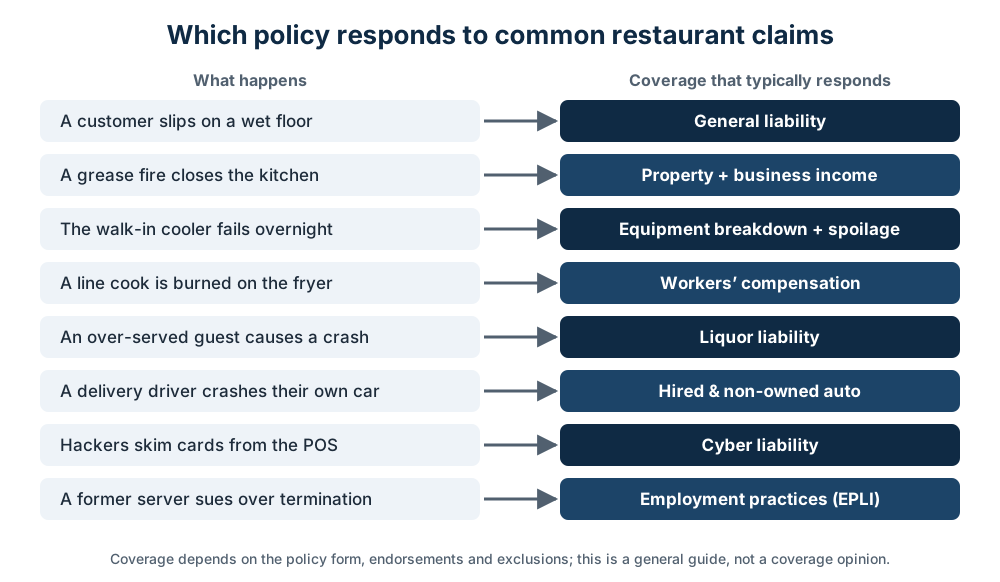
- General liability — covers customer injuries in the shop and damage to others’ property.
- Products-completed operations — responds when a sandwich or sliced meat you sold makes someone sick after they leave.
- Commercial property — protects slicers, cold cases, ovens, grills and your fixtures.
- Spoilage — pays for meats, cheeses and prepared foods lost when refrigeration or power fails.
- Equipment breakdown — covers sudden mechanical failure of compressors and cases that property forms typically exclude.
- Hired and non-owned auto — protects the business when staff deliver catering orders in their own cars.
- Workers’ compensation — required in Delaware from the first employee and the main coverage for slicer and knife injuries.
- Food contamination or recall coverage — optional coverage worth asking about if you sell packaged or wholesale items.
Rating a deli: what carriers weigh
Carriers look at sales mix (made-to-order counter, catering and grocery), cooking on site versus cold prep only, number of slicers and staff, delivery volume, hours and building age. Cold-prep delis without fryers often rate more favorably on the property side, while catering delivery and prepackaged sales add liability exposure. Maintaining slicer guards, documented sanitation, an alarm on your walk-in and a short list of trained delivery drivers can all improve what you are offered.
Placing a deli with an independent agency
Provident Financial Group compares multiple carriers from one application and lays the options side by side, so you can see who includes spoilage, who offers contamination coverage and how auto is handled. Certificates for landlords and office catering clients can be issued quickly. Call (866) 964-6660. Coverage is subject to underwriting and policy terms.
Frequently asked questions
Does general liability cover food poisoning from my cold cuts?
Bodily injury from food you sold is typically handled under the products-completed operations part of general liability, subject to the policy’s terms and exclusions.
If a slicer injury happens to me as the owner, am I covered?
Sole proprietors and partners are excluded from Delaware workers’ comp by default but may elect coverage for themselves, which is worth considering if you work the counter every day.
Do I need commercial auto if I only deliver trays a few times a week?
If employees use their own cars, hired and non-owned auto is usually the right fit. If the business owns the vehicle, it needs a commercial auto policy with Delaware’s required PIP.
Will my insurance pay to replace spoiled inventory after a storm outage?
It will if your policy includes spoilage coverage that applies to off-premises power failure. Many base forms do not, so ask for it by name.
Ready to compare deli coverage? Get Multiple Quotes within minutes.