
Fast casual restaurants in Delaware typically need a business owners policy or restaurant package covering general liability and property, workers’ compensation from the first employee, cyber coverage for app and kiosk ordering, and liquor liability if you sell beer or wine. High customer counts and build-your-own menus make slip-and-fall and allergen claims the ones carriers watch most closely.
This page is written for counter-service concepts: bowl and salad shops, burrito and grain-bowl lines, burger and chicken concepts, and franchise locations in shopping centers from Christiana to Milford. It pulls together the Delaware requirements that matter to a fast casual operator and the coverage decisions that come with them.
State requirements behind a counter-service lease
Delaware permits food establishments at the state level through the Division of Public Health’s Office of Food Protection under the State of Delaware Food Code, and since 2016 permitted establishments have needed at least one Certified Food Protection Manager, with the person in charge at inspection holding that credential. Workers’ compensation is required as soon as you employ one person, part-timers included, and Delaware’s penalties for skipping it are severe.
Shopping center landlords and franchisors add their own layer: named additional insured status, specific liability limits, sometimes an umbrella, and certificates delivered before you open. Our restaurant insurance requirements guide explains the common lease and franchise clauses.
Beer and wine on a fast casual menu
Plenty of fast casual concepts add a few taps or canned wine. In Delaware, anyone who sells, serves or dispenses alcohol, and their managers, must complete state-approved server training, with certification valid for two years; the Commissioner can fine licensees and bar untrained staff. The Delaware Supreme Court’s 1994 McCall v. Villa Pizza decision held there is no cause of action against a seller by someone injured off the premises by an intoxicated patron, but alcohol still brings on-site incidents, defense costs for claims that get filed anyway and landlord insurance requirements. General liability typically excludes liquor claims for businesses that sell alcohol, so a small liquor liability policy is usually worth adding. See our Delaware liquor liability guide.
Lunch-rush claims in a fast casual dining room
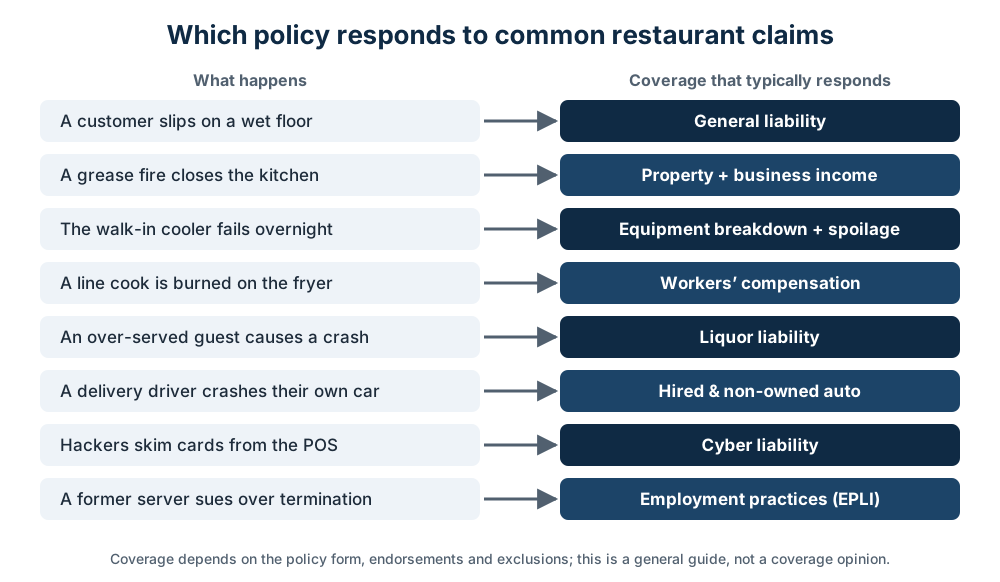
- Ice from the self-serve drink station melts on tile and a customer falls during the noon rush, fracturing a wrist.
- A guest orders a bowl without sesame, but the same scoop crosses toppings on the line and triggers a reaction.
- A line cook is splashed while dropping chicken into a fryer during a staffing crunch.
- A kiosk vendor’s software is breached and customers’ saved cards are used fraudulently, and your brand takes the blame.
- A storm tears a sign loose at a strip center near the beach and it damages a parked car.
Floor mats, a dedicated allergen protocol with separate utensils, and clear signage at drink stations are simple controls that underwriters like to see.
Coverage checklist for a fast casual location
- Business owners policy or restaurant package — bundles general liability, property and business income, often the most efficient base for a single location.
- General liability — the policy that answers most customer injury and foodborne illness claims.
- Workers’ compensation — required from the first employee in Delaware.
- Liquor liability — needed if beer or wine is sold, since general liability typically excludes it.
- Cyber liability — covers breach response and fraud tied to kiosks, apps and loyalty programs.
- Equipment breakdown — for walk-ins, fryers and ventilation that keep the line running.
- Employment practices liability — addresses harassment, discrimination and wage-related claims from a young, high-turnover workforce.
- Umbrella — adds limits above general liability and auto when a landlord or franchisor asks for more.
Pricing levers for fast casual owners
Carriers rate on annual sales, payroll by class, square footage, cooking methods (fryers and open flame versus assembly-only lines), alcohol share, hours, delivery setup, building age and claim history. A franchise with documented brand standards often looks better on paper than a new independent. You can improve your quote by showing hood and suppression service records, written slip and allergen procedures, a clean inspection history and multi-factor authentication on ordering systems.
How we shop a fast casual account
Provident Financial Group is an independent agency. One application reaches multiple carriers, and we compare options side by side so you can see which include cyber, spoilage and equipment breakdown and which leave them out. We issue certificates for landlords and franchisors quickly. Call (866) 964-6660. Coverage is subject to underwriting and policy terms.
Frequently asked questions
Is a BOP enough for a Delaware fast casual restaurant?
For many single locations it is a good base, but it usually does not include workers’ comp, liquor liability, cyber or auto. Those are added separately.
Do kiosk and app vendors cover a data breach at my restaurant?
Their contracts often limit what they will pay, and the breach may still be your problem with customers. A cyber policy fills that gap.
Does my franchisor’s insurance cover my location?
Generally no. Franchisees are usually required to buy their own policies and name the franchisor as additional insured.
Will one slip-and-fall claim raise my premium?
It can affect renewal pricing, especially if it is large or part of a pattern. Documented floor-care procedures help show it was not a recurring problem.
Opening a new fast casual location or reviewing renewal terms? Get Multiple Quotes within minutes.