
Bakeries in Kentucky typically need product liability with strong allergen protection, commercial property with equipment breakdown for ovens and mixers, business income, and workers’ compensation. Kentucky requires comp from the first employee, part-time counter help included, and bakeries that sell wholesale to cafes or grocery stores will usually be asked for certificates of insurance naming those buyers.
This page is for retail bakeries, cake and cupcake studios, bread bakeries that supply restaurants, and bakery-cafes throughout Kentucky, whether your storefront is in Louisville’s Highlands, downtown Frankfort, or a small-town main street. Early hours, heavy equipment, and customers who rely on your ingredient labels define the risk.
Kentucky rules that touch a bakery
Food service establishments and retail food stores in Kentucky are regulated by the Cabinet for Health and Family Services under the Kentucky food code, 902 KAR 45:005. That code lets a person in charge demonstrate food safety knowledge by being a certified food protection manager through an accredited program or a local health department class. Whether your operation is permitted as a food service establishment or a retail food store affects inspections, so confirm the details with your local health department.
Kentucky requires workers’ compensation for employers with one or more employees unless the Commissioner approves self-insurance, and it counts family, temporary, and part-time workers. A family bakery where a spouse and teenager help on Saturdays should talk with an agent about how those workers are treated. The Kentucky Department of Workers’ Claims oversees compliance, and fines apply per employee for each day without coverage.
If you deliver wedding cakes or wholesale orders, the delivery vehicle needs to meet Kentucky’s auto liability minimums of 25/50/25 (in thousands of dollars), and a business-owned van should be on a commercial auto policy rather than a personal one.
Real bakery losses, from the mixer to the display case
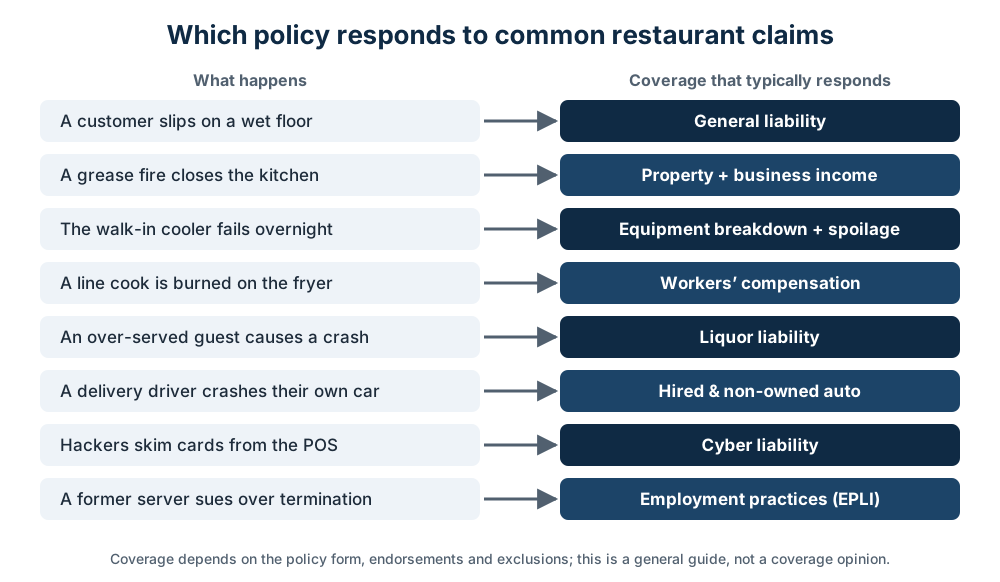
Bakers get hurt in predictable ways: a hand caught in a dough sheeter, a burn from a deck oven door, a strained back lifting flour sacks, or a wrist injury from years of shaping loaves. These are workers’ comp claims, and bakery payroll is often concentrated in exactly the jobs that produce them.
On the customer side, the most serious risk is allergens. A customer orders a nut-free birthday cake, but the frosting was mixed in a bowl that held praline filling, and a child has a reaction. A wholesale buyer’s cafe sells your muffins without the allergen sheet you supplied, and the claim comes back to you. Delivered wedding cakes collapse in a hot van, and the couple wants their money back plus damages.
Property losses tend to be mechanical: a walk-in freezer fails overnight and ruins butter, laminated dough, and frozen cake layers; a planetary mixer’s gearbox fails in the middle of holiday orders. A grease or flour dust fire in the oven area can close the shop for weeks.
Coverage list for Kentucky bakers
- Product liability — allergen reactions, foreign objects, and foodborne illness from baked goods sold retail or wholesale.
- General liability — customer slips on a flour-dusted floor or injuries in your seating area.
- Commercial property — ovens, mixers, sheeters, display cases, and tenant improvements.
- Equipment breakdown — motor, compressor, and electrical failures in mixers, freezers, and ovens.
- Spoilage — ingredients and finished goods lost when refrigeration fails.
- Business income — lost sales during a covered shutdown, especially damaging before holidays.
- Workers’ compensation — mandatory in Kentucky from the first employee.
- Commercial auto or hired and non-owned auto — cake deliveries and wholesale routes.
- Product recall expense — pulling a mislabeled batch back from wholesale customers.
What underwriters weigh when pricing a bakery
Carriers consider gross sales, the split between retail and wholesale, whether you ship across state lines, how many ovens and fryers you run, and whether you have a hood and suppression system over fryers. Property pricing turns on the building’s construction and sprinklers, while comp is driven by payroll and experience.
You improve your standing with written allergen procedures, color-coded tools for allergen-free orders, clear ingredient labels on everything that leaves the shop, machine guards on sheeters and slicers, and a maintenance log for refrigeration. Wholesale customers should receive an allergen and ingredient sheet in writing.
Comparing bakery policies with one application
Provident Financial Group is an independent agency. We submit your bakery’s information to multiple carriers, compare business owner’s policies and stand-alone options side by side, and send certificates of insurance to the grocers, cafes, and landlords who ask for them. Call (866) 964-6660 to talk it through.
Frequently asked questions
Does product liability cover a customer’s allergic reaction?
Bodily injury from an allergen in food you sold is typically handled under the products portion of your liability policy, subject to its terms.
Is a freezer failure covered?
Only if you carry equipment breakdown and spoilage coverage; standard property forms usually exclude mechanical failure.
Do family members working in my Kentucky bakery need comp?
Kentucky counts family members as employees, so they generally need to be covered.
Do wholesale accounts change my insurance?
Yes. Wholesale adds product exposure and usually requires additional insured endorsements for the buyers.
Compare bakery coverage today. Get Multiple Quotes within minutes.