Cooking fires are the most common cause of structure fires in eating and drinking establishments, and the kitchen line is where nearly all of them start. Grease, high heat, and constant activity make it an environment where a small ignition can become a serious loss in under a minute.
Insurance is only part of the answer. How your restaurant handles fire suppression, hood cleaning, and documentation affects whether you have a fire at all, how much it costs, and in some cases how smoothly the claim goes afterward.
How Kitchen Fires Typically Start and Spread
Most commercial kitchen fires begin with cooking oil or grease reaching its ignition point, usually at a fryer, range, or broiler. Once ignited, the fire follows the fuel.
That fuel is often the grease accumulated inside the exhaust hood, filters, and ductwork. A well-maintained system contains very little. A neglected one can carry fire from the cook line up through the duct and into the roof structure, which is how a contained flare-up becomes a building loss.
The other common path is simply an unattended pan. Fires that start during normal cooking and go unnoticed for even a short period behave very differently than fires caught immediately.
What Fire Suppression Systems Do
Commercial kitchens with grease-producing appliances are generally required to have a hood suppression system, most commonly a wet chemical system designed for cooking oil fires.
When heat triggers the system, it discharges an agent that both smothers the flames and reacts with the hot grease to form a soapy layer that helps prevent reignition. Well-designed systems also shut off the gas or fuel supply to the appliances underneath, which removes the energy feeding the fire.
These systems require periodic professional inspection, typically on a semiannual schedule, and the nozzles must be positioned correctly for the appliances actually sitting beneath them. This last point matters more than owners realize. Rearranging the cook line or swapping a fryer for a griddle without having the system reconfigured can leave an appliance outside the protected area.
Hood and Duct Cleaning
Exhaust cleaning is the maintenance item most directly tied to fire risk, and the one most often deferred when a kitchen is busy.
Cleaning frequency generally depends on cooking volume and the type of cooking. High-volume operations and solid fuel or heavy charbroiling produce grease far faster than a low-volume kitchen doing mostly saute work. Local fire codes and your insurance carrier may each have expectations, and they are not always identical.
Keep the service records. A dated certificate from a qualified cleaning contractor, filed and retained, is useful for fire inspections, for carrier underwriting, and for demonstrating your maintenance history if a loss occurs.
Where Insurance Fits
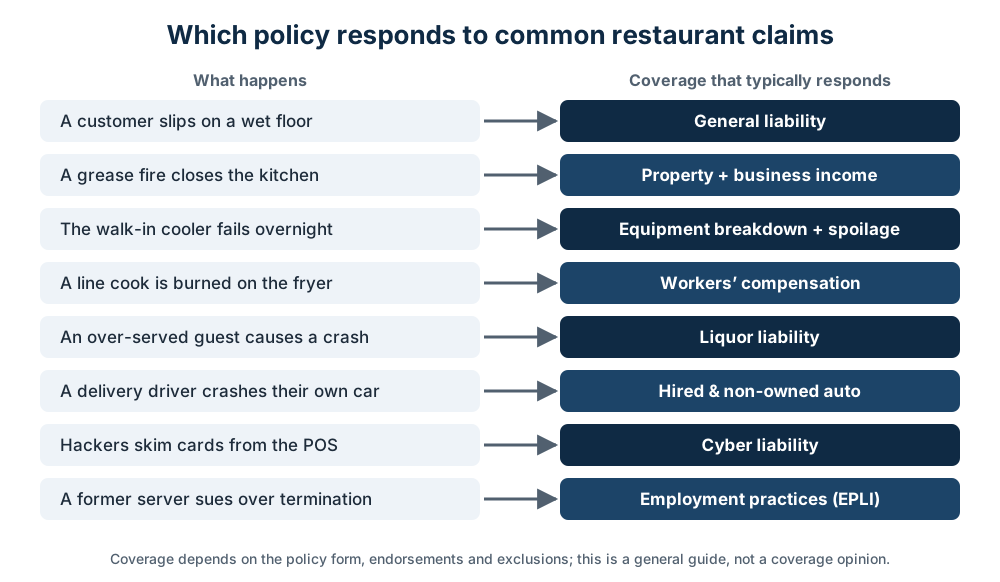
Fire is a covered peril under standard commercial property forms, so a kitchen fire is generally the kind of loss property insurance is built to address. The more useful questions are about the pieces around it.
Business income and extra expense coverage often matters more than the building repair. A restaurant closed for weeks after a fire loses revenue the entire time while rent, loan payments, and key staff costs frequently continue. How long your business income coverage runs, and whether it accounts for a realistic rebuild timeline, is worth reviewing.
Consider also whether your property limits reflect current replacement costs rather than what the build-out cost several years ago. Construction and equipment pricing has moved considerably, and policies that were adequate when written may no longer be.
Some policies contain protective safeguards conditions, which require specified fire protection systems to be maintained and operational. Knowing whether your policy includes such a condition, and what it obligates you to do, is a fair question to put to your agent.
Building Habits That Reduce the Risk
Train every cook on where the manual pull station is and how to use it. Automatic activation works, but a person who reacts in the first seconds can stop a fire before it reaches the hood.
Keep a Class K extinguisher accessible on the line and make sure staff know it is the one for cooking oil, not the general purpose extinguisher by the back door.
Establish a genuine no-unattended-cooking rule for fryers and broilers, and treat it as seriously as food safety rules.
Clean filters on a routine schedule rather than when someone notices they look bad, and keep the area around the line free of cardboard, paper goods, and stored oil.
Log your inspections and cleanings in one place. When a fire marshal or an underwriter asks, having it organized makes the conversation short.
A Coverage Review Worth Having
Fire prevention and fire insurance work together. Good suppression and cleaning practices reduce how often you need the policy, and a well-structured policy handles the part prevention cannot.
An independent agent who works with restaurants can review your property limits, look closely at how your business income coverage is set up, and flag any conditions in your policy tied to fire protection equipment. If it has been a while since anyone read your policy against how your kitchen actually operates today, that review is a straightforward place to start.