A summer storm knocks out power on a Friday night. By Sunday afternoon the walk-in has been warm for two days, and everything inside it — proteins, dairy, prepped sauces, an entire weekend of inventory — goes in the dumpster. For a busy kitchen, a single spoilage event can mean thousands of dollars of product plus the revenue from the covers you could not serve. Food spoilage coverage is the piece of a restaurant insurance program built for exactly this scenario.
What Is Food Spoilage Coverage?
Food spoilage coverage, often paired with utility interruption coverage, helps reimburse the value of perishable stock lost when refrigeration fails. Depending on the policy, that can include losses from power outages, mechanical breakdown of refrigeration equipment, and in some cases contamination events. It is typically added to a commercial property policy or a business owners policy as an endorsement with its own limit.
Standard property coverage alone often will not do this job. Many property forms exclude loss caused by power interruption originating away from your premises, which is precisely how most outages happen. That is why the spoilage endorsement exists as a separate, named piece.
The Two Big Triggers: Outages and Breakdowns
Most spoilage claims come from one of two directions. The first is a utility outage: a storm, a downed line, a grid failure, or a planned shutoff that lasts longer than promised. The second is equipment failure: a compressor dies quietly on a Sunday night and nobody notices until Monday prep. Policies treat these differently. Some cover both, some cover only breakdown, and utility-caused losses may require the outage to last a minimum number of hours before coverage applies. Knowing which triggers your policy responds to is the difference between a covered claim and a denied one.
How Much Coverage Do You Need?
Add up the replacement value of everything in your walk-ins, reach-ins, and freezers on your fullest day, typically right after a major delivery before a busy weekend. That number is your realistic exposure, and for many full-service kitchens it is far higher than the default limit on a package policy. If your standard limit is 5,000 dollars and your Friday inventory is 20,000 dollars, you are carrying the difference yourself.
Documentation Makes or Breaks the Claim
Spoilage claims move quickly when you can show what was lost. Keep invoices organized, take photos or video of discarded product before it leaves the building, log temperatures during the event if you can, and record the outage or repair details. Many operators keep a simple spoilage log template in the manager’s binder so the steps happen automatically during a stressful weekend. Your insurer may also ask for maintenance records on failed equipment, which is one more reason to keep service receipts for compressors and condensers.
Prevention Still Pays
Coverage handles the loss; prevention protects the weekend. Temperature alarms that text you when a cooler drifts warm, regular preventive maintenance on refrigeration, backup generator capacity for critical boxes, and a written outage plan for staff can turn a catastrophe into an inconvenience. Some insurers look favorably on these controls, and a few offer premium credits for monitored refrigeration.
Fit It Into the Bigger Picture
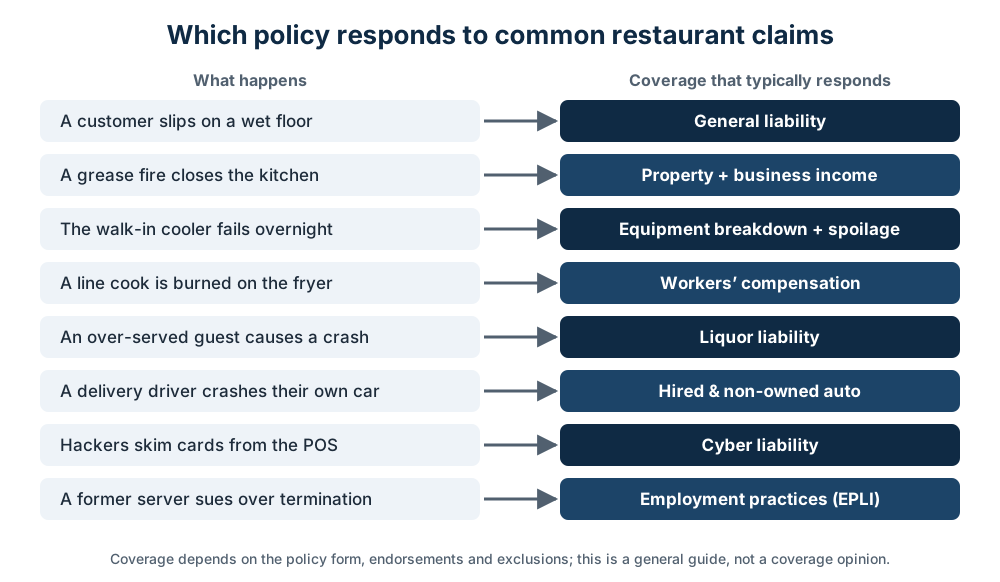
Spoilage coverage works best alongside business income coverage, which addresses the revenue lost while you are closed, and equipment breakdown coverage, which pays to repair or replace the failed refrigeration itself. Reviewed together, these three pieces cover the product, the downtime, and the machine.
Every policy is different, and the language of your own forms controls what is covered. If you are not sure what your current spoilage limit is, or whether a long outage would actually be covered, our team can review your policy and compare options from carriers that know food service. Reach out for a free review before the next storm season fills the forecast.