Delivery has gone from a side business to a survival skill for restaurants. But every order that leaves your door in a car creates a risk most owners have never priced: what happens if your driver causes an accident on the way? The answer depends on details many operators discover only after a crash, and the coverage gaps can be large enough to threaten the business. Here is what to know before the next dinner rush hits the road.
The Personal Auto Policy Problem
Most restaurant delivery drivers use their own cars, insured under personal auto policies. Here is the catch: personal auto policies commonly exclude losses that occur while the vehicle is used for business delivery, sometimes under a specific “delivery for a fee” or livery exclusion. That means a driver’s own insurer may deny a claim from an accident that happened on a delivery run, leaving the driver, and very possibly your restaurant, exposed.
When the driver’s personal policy walks away, injured parties look for the next pocket, and the business that sent the driver out is the obvious candidate.
Why Your General Liability Policy Will Not Save You
General liability covers many things, but automobile liability is not one of them. GL policies typically exclude claims arising from the use of autos. Without specific auto coverage, an accident caused by your delivery driver may land on the business with no policy behind it.
Hired and Non-Owned Auto: The Coverage Most Restaurants Are Missing
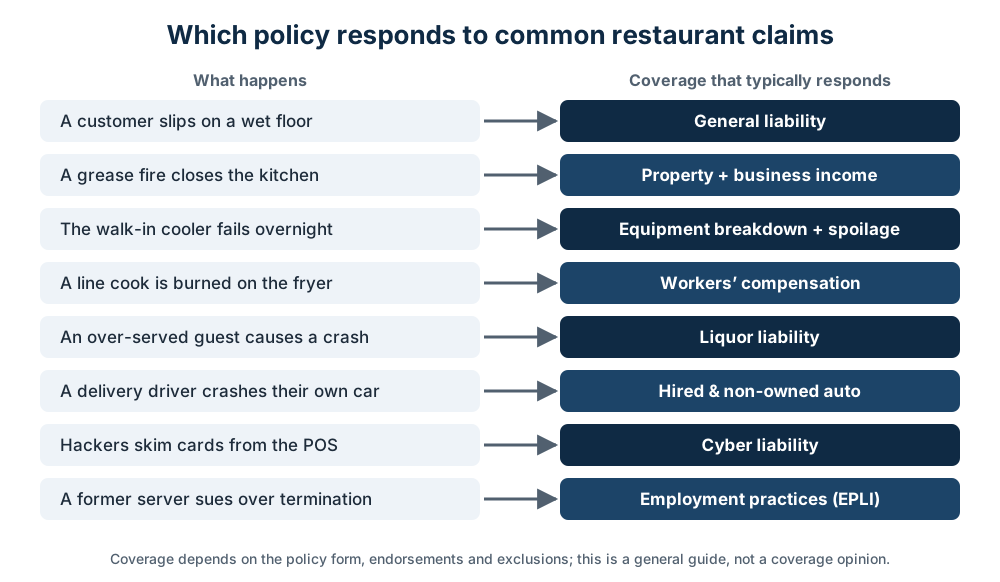
Hired and non-owned auto coverage, usually shortened to HNOA, is designed for exactly this exposure. It protects the business when employees use their own vehicles (non-owned) or rented vehicles (hired) for company business. If your driver causes an accident during a delivery and the injured party sues your restaurant, HNOA can respond on behalf of the business.
Two important notes. First, HNOA generally protects the business, not the driver’s own vehicle or the driver personally. Second, insurers underwrite delivery operations carefully, and some carriers will not write HNOA for restaurants with delivery at all, which makes working with an agent who knows the restaurant market genuinely useful.
If You Own Delivery Vehicles
Restaurants that run their own delivery cars, vans, or scooters need commercial auto insurance, full stop. Commercial auto covers vehicles owned by the business, the liability they create, and physical damage to the vehicles themselves. Titling a vehicle to the business but insuring it on a personal policy is a gap waiting to be found at claim time.
What About Third-Party Apps?
Using DoorDash, Uber Eats, or similar platforms shifts much of the on-the-road exposure to the platform’s drivers and their coverage arrangements, which is one reason some operators go app-only. But read your agreements: responsibilities differ by platform and by whether the order came through your own website using the platform’s drivers. Hybrid models, where your staff delivers some orders and apps handle others, still leave you with the employee-driver exposure for your own runs.
Practical Steps for Owners
A few habits close most of the gap. Verify that every delivery driver holds a valid license and carries their own auto insurance, and re-check periodically, not just at hiring. Ask your agent specifically about HNOA and disclose your delivery operation honestly; hiding delivery from your insurer risks a denied claim later. Set delivery zone and weather rules that keep drivers out of the highest-risk situations. And if delivery is growing, revisit the coverage annually, because the exposure grows with the order count.
Every operation is different, and policy language always controls what is covered. If delivery is part of your business and you are not certain the coverage matches, our team can review your program and compare quotes from carriers that understand food service. Reach out for a free, no-obligation review, and send the next order out the door with confidence.