
Annapolis restaurants typically need property coverage that addresses tidal and storm flooding, general liability, liquor liability, business income for seasonal closures, workers’ compensation and coverage for off-site catering. The Maryland rule that matters most for any dining room serving alcohol is the alcohol awareness requirement: the license holder or a designee must complete an approved program and retrain every four years.
This guide is for waterfront seafood houses, historic-district taverns, cafes and caterers in Maryland’s capital and the surrounding Anne Arundel County communities.
A capital city on the water: the Annapolis risk profile
Annapolis combines a small historic downtown, a busy harbor and a steady calendar of visitors: boaters, tourists, Naval Academy families and the lawmakers, staff and lobbyists who fill the city during the General Assembly’s winter session. Revenue is seasonal, with busy warm months and big event weekends, so a closure at the wrong moment hurts more than the same closure in a slow month.
Location near the water is the headline exposure. Maryland faces hurricanes, tropical storms and Chesapeake Bay flooding, and low-lying waterfront streets in Annapolis are known for flooding during high tides and storms. Historic buildings add another layer: repairing older structures to current code, or with materials that match the original, can raise the cost of a claim.
Maryland law in an Annapolis setting
Alcohol licensing is local. Maryland retail alcohol licenses are issued and enforced by local liquor boards rather than a single state office, with the Alcohol, Tobacco, and Cannabis Commission providing state oversight. Confirm the conditions attached to your specific license with the board that covers your address, since local rules on training and staffing can differ.
No dram shop cause of action. Maryland’s highest court declined to recognize tavern liability for off-premises harm by an intoxicated patron in Warr v. JMGM Group, LLC (2013). Waterfront bars still face on-premises injuries, dock-side incidents and defense costs, so liquor liability remains a core policy.
Workers’ comp. Every Maryland employer with one or more employees must carry it, including seasonal summer staff. Chesapeake Employers’ Insurance Company covers any employer that applies if private carriers decline, and the maximum fine for going uninsured rose in 2024.
Food trucks and catering. Mobile units are licensed by the health department in their home county and can obtain reciprocity licenses in other counties, operating within 90 miles of their base or commissary, a useful rule for caterers and trucks that work events across the region. Company vehicles need at least 30/60/15 liability (in thousands of dollars).
Annapolis claim scenarios to plan for
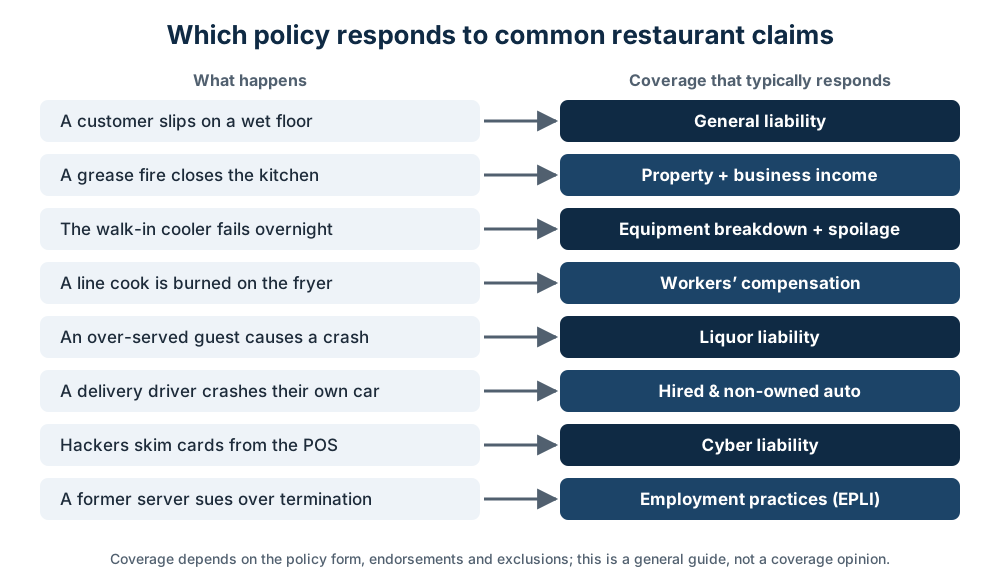
- A storm-driven high tide pushes water into a waterfront dining room, damaging floors, booths and low-mounted equipment.
- A guest arriving by boat slips on a wet dock or gangway you maintain.
- Water damage in a historic building requires specialty repairs that take longer than expected, stretching the closure through peak season.
- A seasonal line cook is burned during a crowded summer weekend.
What your Annapolis policy should include
- Flood insurance — commercial property forms typically exclude flood, so waterfront locations need separate flood coverage.
- Commercial property with ordinance or law coverage — for code upgrades when older buildings are repaired.
- Business income with a realistic restoration period — seasonal businesses need enough time to cover the busy months.
- General liability — including any docks, patios or walkways you maintain.
- Liquor liability — for bars and restaurants serving alcohol.
- Workers’ compensation — required from the first employee, seasonal hires included.
- Hired and non-owned or commercial auto — for catering vans and event deliveries.
Cost factors for waterfront and historic dining
Pricing depends on distance to the water and flood zone, building age and construction, sprinklers, alcohol share of sales, seasonal payroll, dock and marina exposure and prior claims. Raising equipment off the floor, flood barriers or a written storm plan, dock maintenance logs, current alcohol awareness certificates and documented electrical updates in older buildings all help underwriters see a well-managed risk.
One application, several carriers
Provident Financial Group is an independent agency. You complete one application and we compare multiple carriers side by side, including markets comfortable with waterfront and historic properties. We issue live certificates of insurance for your landlord, marina or event venue. Call (866) 964-6660 to talk it through. Coverage is subject to underwriting and policy terms.
Frequently asked questions
Does my property policy cover tidal flooding in downtown Annapolis?
Standard commercial property policies usually exclude flood, including tidal flooding. Waterfront restaurants should buy separate flood coverage and review how business income responds.
I hire extra staff every summer. Does workers’ comp cover them?
Yes, and Maryland requires it. Your payroll estimate should include seasonal wages, and the policy is audited to actual payroll afterward.
Can I cater events outside Anne Arundel County?
Maryland’s mobile reciprocity system lets licensed units work other counties within 90 miles of their base. Your liability and auto policies should also cover off-site events.
Why does building age affect my quote?
Older buildings can cost more to repair to current code and original standards, which raises claim severity. Ordinance or law coverage helps close that gap.
Get your Annapolis restaurant quoted by multiple carriers. Get Multiple Quotes within minutes.
Official Maryland sources
- Maryland Alcohol, Tobacco, and Cannabis Commission: local alcohol jurisdictions
- Maryland Workers' Compensation Commission: employer FAQ
- COMAR 10.15.03 (Maryland food service facilities regulations)
- Maryland Department of Health: COMAR 10.15.03 food service facilities
State facts on this page are drawn from the statutes and agency pages above. Laws and agency rules change, so confirm current requirements with the agency before relying on them. This page is general information, not legal advice or a coverage opinion.