
Pizzerias in South Carolina usually need general liability and property, hired and non-owned auto for drivers using their own cars (or commercial auto on owned vehicles, with a state minimum of 25/50/25), liquor liability if they sell beer or wine on-premises after 5 p.m., and workers’ compensation once four or more people are on payroll. Oven fire protection and business income round out the program.
This is for delivery-and-carryout shops, wood-fired and Neapolitan concepts, family pizza restaurants with beer taps, and late-night slice counters near campuses in Columbia, Clemson and Charleston. Delivery and alcohol are the two exposures that make a pizzeria policy different from a standard restaurant package.
Delivery drivers, beer taps and South Carolina law
South Carolina’s minimum auto liability is 25/50/25 (in thousands of dollars), and uninsured motorist coverage at those same limits is also required. Most pizzerias do not own their delivery fleet; drivers use personal cars. Their personal policies may exclude delivery for pay, and even when a driver’s policy responds, an injured party will name the restaurant. Hired and non-owned auto is the coverage that protects the business in that case. If you do own a delivery car, it needs a commercial auto policy.
Beer and wine change the picture. If your license allows on-premises consumption and you sell after 5 p.m., which nearly every pizzeria does, S.C. Code 61-2-145 requires liquor liability, or general liability with a liquor endorsement, with an annual aggregate of at least $1,000,000, a per-occurrence limit of at least half that total, and SCDOR as certificate holder. Since January 1, 2026, a risk mitigation program can lower the requirement for businesses that, for example, close by midnight, train every server, or keep alcohol under 40 percent of sales, which describes many pizza shops. Servers pouring at least 10 hours a week, and their managers, must complete SCDOR-approved training. Our South Carolina liquor liability guide goes deeper.
Workers’ comp is required at four or more regularly employed people, part-time drivers and family included. Pizzerias generally fall under NCCI’s restaurant classifications, and the South Carolina restaurant workers’ comp page explains how that is priced. Coastal shops should also confirm wind and hail, since the state’s Wind and Hail Underwriting Association serves as the residual market in counties like Charleston and Horry.
What goes wrong at a pizza shop
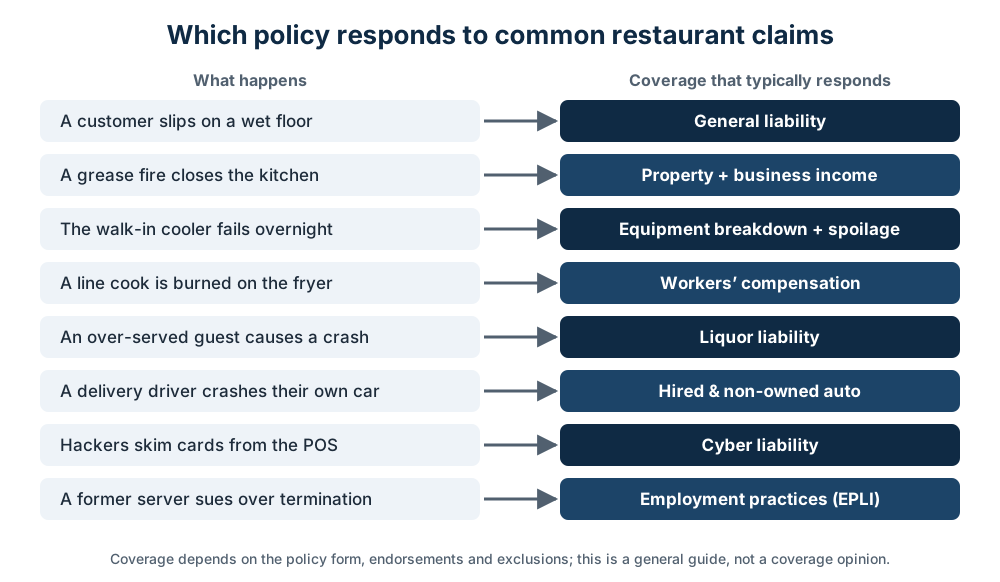
A driver running late on a Friday night rolls through a stop sign in Summerville in his own sedan and injures a cyclist. His personal carrier questions coverage because he was delivering, and the cyclist’s attorney sues the pizzeria. That single scenario is why hired and non-owned auto sits near the top of every pizzeria checklist.
Ovens are the fire exposure. A wood-fired oven’s flue builds up creosote, or grease collects in a conveyor oven’s hood, and a flash fire spreads into the ductwork. Carriers want to see suppression systems serviced and ducts cleaned on schedule. Inside the kitchen, dough sheeters and pizza cutters produce hand injuries, and pulling pies from a deck oven leads to forearm burns.
Alcohol creates its own chain of liability. A group watching a Gamecocks game orders pitcher after pitcher, one guest drives home and causes a crash, and under the 2026 reforms your share of fault is apportioned, but if the driver is also found liable for DUI the licensee can be jointly and severally liable for half of actual damages. Late-night crowds bring parking lot altercations and slip claims at a greasy slice counter, too.
Pizzeria coverage essentials in South Carolina
- Hired and non-owned auto — protects the business when drivers deliver in personal vehicles.
- Commercial auto — required for any delivery car the business owns, above the 25/50/25 minimum.
- Liquor liability — mandatory for licensed on-premises beer and wine sales after 5 p.m., with SCDOR as certificate holder.
- General liability — covers dining-room falls, parking lot injuries and damage to others’ property.
- Commercial property — insures ovens, walk-ins, POS systems and build-out.
- Equipment breakdown and spoilage — pays for a failed conveyor oven motor or a walk-in full of cheese and dough.
- Workers’ compensation — required at four or more employees, drivers included.
- Business income — keeps revenue flowing while you rebuild after a hood fire.
How pizzeria premiums are set
Delivery radius, number of drivers and their motor vehicle records, and the percentage of sales that go out the door all affect auto pricing. Alcohol share of sales, closing time and server training affect liquor. Oven type (wood, gas deck, conveyor), hood suppression, building construction and coastal location drive property. Payroll by class and your claims history drive workers’ comp.
Ways to improve terms: pull motor vehicle records at hire and annually, require drivers to carry adequate personal limits and document it, keep suppression and duct cleaning invoices, stop beer service at a set time, keep every server’s training certificate on premises as the state requires, and add cut-resistant gloves at the prep line.
Getting a pizzeria quote through Provident Financial Group
One application, multiple carriers quoted through our agency, side-by-side comparisons of auto, liquor and property terms. We deliver certificates for landlords and SCDOR filings once you bind. Call (866) 964-6660 to go over your delivery setup before you apply.
Frequently asked questions
Do South Carolina pizza drivers need commercial auto?
Drivers using their own cars need personal coverage that allows delivery, and the pizzeria should carry hired and non-owned auto. Vehicles the business owns need commercial auto.
Our pizzeria only sells beer. Does the liquor liability law still apply?
Yes, if you are licensed for on-premises consumption and sell after 5 p.m. The requirement covers beer and wine sales, not just liquor.
Can closing earlier lower our required liquor limit?
Closing by midnight is one of the risk mitigation factors in the 2026 program. Confirm eligibility with SCDOR and we will quote the resulting limit.
Is a wood-fired oven harder to insure?
It is more scrutinized, not uninsurable. Clearances, flue cleaning records and suppression make a real difference.
Start with one application: Get Multiple Quotes within minutes.