
Pennsylvania bars, restaurants, breweries and caterers that serve alcohol generally need a separate liquor liability policy, because standard general liability excludes alcohol claims for businesses that sell it. Under 47 P.S. § 4-497, a licensee can be sued by third parties for off-premises harm when it served a customer who was visibly intoxicated. We found no general statute requiring the coverage, but landlords and lenders routinely do.
This page is for Pennsylvania licensees and BYOB operators, from a Pittsburgh corner tavern to a Philadelphia BYOB bistro or a Poconos wedding caterer. It explains what the Liquor Code says, where RAMP training fits, and how to build a policy around the claims Pennsylvania venues actually face. For the statewide picture, see restaurant insurance in Pennsylvania.
What does Pennsylvania’s dram shop law actually say?
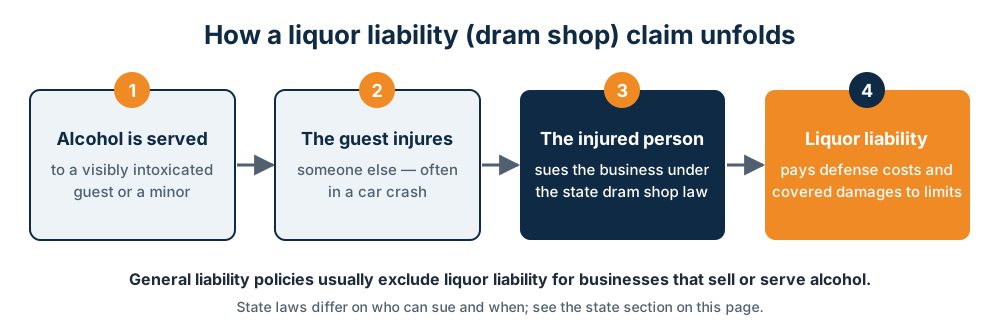
The rule is narrower than many owners assume. 47 P.S. § 4-497 says a licensee is not liable to third persons for damage caused off the premises by a customer unless that customer was sold, furnished or given alcohol while visibly intoxicated. An injured driver has to show your staff served the guest after the signs were visible, not merely that the guest drank at your bar.
Separately, 47 P.S. § 4-493(1) bars serving minors and visibly intoxicated persons, and licensees can be strictly liable for Liquor Code violations on the premises. We found no statutory damage cap. The Pennsylvania Liquor Control Board (PLCB) handles licensing; the State Police Bureau of Liquor Control Enforcement (BLCE) enforces, and a citation from the same night can strengthen a civil claim.
| Situation | Pennsylvania rule | Source |
|---|---|---|
| Licensee, injury off premises | Liable only if the customer was served while visibly intoxicated | 47 P.S. § 4-497 |
| Licensee, minors or visibly intoxicated guests | Service prohibited | 47 P.S. § 4-493(1) |
| Social host, adult guest | Generally not liable | Klein v. Raysinger |
| Social host, guest under 21 | Can be negligent per se | Congini v. Portersville Valve Co. (1983) |
Social host rules: adults vs. guests under 21
A social host generally is not liable for serving adult guests (Klein v. Raysinger), but a host who serves someone under 21 can be negligent per se (Congini v. Portersville Valve Co., Pa. 1983). A staff holiday party, a brewery rented out for a graduation, or an owner pouring for friends after close can all trigger Congini if anyone underage is served. Host liquor coverage and a written no-under-21 rule for private events help; see liquor liability vs. host liquor liability.
Is liquor liability insurance legally required in Pennsylvania?
We did not find a general statutory requirement for restaurant licensees to carry it, and we treat that point as unverified. In practice the requirement is contractual: leases, bank and SBA loans, license purchase deals, wedding venues and festival organizers ask for a certificate naming them as additional insured.
RAMP training: mandatory vs. voluntary
The PLCB’s Responsible Alcohol Management Program (RAMP) has two layers. Server/seller training is mandatory for alcohol service personnel hired or moved into those roles on or after Aug. 8, 2016, and must be completed within six months. Full RAMP certification (owner/manager training, server/seller training, new-employee orientation and signage) is voluntary unless required after sales to minors or visibly intoxicated persons, by a conditional licensing agreement, or to hold a wine expanded permit or ready-to-drink cocktail permit.
The specific legal benefits of certification are unverified, so don’t treat RAMP as a lawsuit shield. Training files and logs of refused service still give defense counsel evidence to work with, and underwriters look for them.
BYOB in Pennsylvania: allowed, but not risk-free
Nothing in the Liquor Code bars patrons from bringing their own alcohol, so unlicensed restaurants may permit BYOB and charge corkage. Licensed venues may too, but must still follow rules on legal hours, minors and visibly intoxicated persons, and local ordinances may restrict BYOB. A restaurant that sells no alcohol can still be accused of opening bottle after bottle for a drunk table. Carriers differ on BYOB; see do BYOB restaurants need liquor liability.
Claim scenarios typical of Pennsylvania venues
- A Scranton tavern pours two more beers for a regular who is slurring, and he rear-ends a car on the way home. POS timestamps and witnesses decide the visibly-intoxicated question.
- A college-town bar serves a 20-year-old with a borrowed ID, who is hurt later that night, a § 4-493(1) violation plus a civil claim.
- A Lehigh Valley caterer’s bartender over-serves a wedding guest who injures another guest in the venue lot.
- A Pittsburgh sports bar doorman breaks an ejected fan’s wrist, an assault and battery claim that standard forms may exclude.
Assault and battery and liquor exclusions
General liability policies exclude alcohol-related injury for businesses in the business of selling or serving alcohol, which is why the separate liquor policy exists. Many bar policies also exclude or sublimit assault and battery, including claims that staff failed to prevent a fight. Check both forms for A&B wording and whether defense costs erode the limit; see does liquor liability cover assault claims. A practical Pennsylvania program includes:
- Liquor liability — answers § 4-497 over-service claims.
- Assault and battery — bouncer and patron-fight claims.
- General liability — slips, food and premises claims.
- Host liquor — staff parties and private events.
- Umbrella — limits above liquor and GL (umbrella vs. excess).
- Workers’ comp — required with one employee, rated by the PCRB (Pennsylvania restaurant workers’ comp).
- Employment practices liability — harassment and wage claims.
Per-occurrence and aggregate limits on a Pennsylvania policy
The per-occurrence limit is the most the carrier pays for one incident; the aggregate is the most it pays for all claims in the policy year. Two serious incidents in one year can exhaust a thin aggregate. With no damage cap found, many owners add an umbrella rather than stretching the primary limit. See per-occurrence vs. aggregate limits.
How liquor receipts drive your premium
Carriers rate mainly on annual alcohol receipts. A restaurant where wine is a modest share of sales rates very differently from a tavern where beer and shots fill the till. Closing time, DJ nights, occupancy, security staffing, prior claims and BLCE citations adjust the rate. Documented RAMP training, ID scanning and an incident log help; underreporting receipts only produces an audit bill later.
Which Pennsylvania businesses face which issues
- Bars and taverns — heaviest § 4-497 and assault exposure.
- Breweries — private-event rentals and family groups with minors.
- Caterers — off-site bars and venue certificates.
- Fine dining — wine-pairing service and BYOB corkage questions.
Getting quotes through an independent agency
Provident Financial Group is an independent agency, so one application reaches multiple carriers and you compare limits, A&B terms and exclusions side by side. Once bound, you get live certificates of insurance to share with landlords, lenders and venues. Call (866) 964-6660.
Frequently asked questions
Can my bar be sued if a guest drank there and crashed later?
Yes, if the plaintiff shows your staff served the guest while visibly intoxicated, the key test under 47 P.S. § 4-497.
Does RAMP certification protect my business in court?
Its specific legal benefits are unverified. Treat it as evidence of responsible service, not an automatic defense.
Is a BYOB restaurant covered by general liability for alcohol claims?
It depends on the liquor exclusion and whether the carrier views you as furnishing alcohol. Get host liquor or liquor wording in writing.
What if we serve a 20-year-old at a private party we host?
You could be exposed. Pennsylvania courts treat serving someone under 21 as negligence per se for social hosts (Congini), and licensees are separately barred from serving minors under § 4-493(1).
Is there a cap on dram shop damages in Pennsylvania?
We found no statutory cap, so limit selection deserves real attention.
Want to see what you qualify for? Get Multiple Quotes within minutes.
Official Pennsylvania sources
- Pennsylvania Liquor Control Board legal FAQ: liability for accidents
- PLCB: Responsible Alcohol Management Program (RAMP)
- PLCB: RAMP training
- Pennsylvania Liquor Control Board legal FAQ: BYOB
State facts on this page are drawn from the statutes and agency pages above. Laws and agency rules change, so confirm current requirements with the agency before relying on them. This page is general information, not legal advice or a coverage opinion.
Related pages
- Bar insurance in Pennsylvania
- Brewery insurance in Pennsylvania
- Catering insurance in Pennsylvania
- Fine dining insurance in Pennsylvania
- Pennsylvania restaurant insurance
- Restaurant insurance in Philadelphia
- Liquor liability laws by state