
Georgia liquor liability insurance covers alcohol-related injury claims and their defense. Georgia’s dram shop law, O.C.G.A. 51-1-40, treats drinking, not serving, as the cause of injury, with two exceptions: willfully, knowingly and unlawfully serving someone under 21, or knowingly serving someone noticeably intoxicated, knowing in either case the person will soon be driving. We found no state insurance mandate; leases usually require it.
This page is for Georgia bar owners, brewery taprooms, restaurants with a bar program and caterers, from Midtown Atlanta to Savannah and Athens. Georgia’s driving-knowledge element makes its law narrower than many states’, but cases still get filed and defended. For your broader program, see restaurant insurance in Georgia.
O.C.G.A. 51-1-40: Georgia’s two-part dram shop test
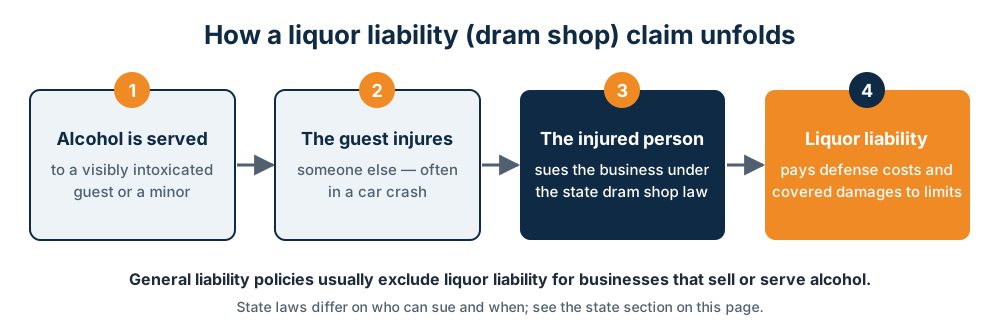
The statute opens by declaring that consuming alcohol, not selling or serving it, is the proximate cause of injuries an intoxicated person inflicts. A seller or server becomes liable only in two situations: it willfully, knowingly and unlawfully serves someone under 21, or it knowingly serves someone in a state of noticeable intoxication. In either case, the server must also know the person will soon be driving. There is no statutory damage cap.
The second element is where Georgia cases are fought. Plaintiffs look for proof that staff knew the guest was driving: a valet ticket, car keys on the bar, a guest mentioning the drive home, a server who closed out a tab in the parking lot. That element is a defense argument, not a shield against being sued, and defense costs are why the coverage earns its keep here. Training staff to ask about transportation and to offer a rideshare builds the record you want.
| Situation | Does 51-1-40 liability fit? | What decides it |
|---|---|---|
| Guest under 21 served, then drives and injures someone | Yes, if service was willful, knowing and unlawful and the server knew the guest would soon drive | ID checks, what staff heard about driving |
| Noticeably intoxicated adult served, then drives | Yes, if service was knowing and the server knew the guest would soon drive | Valet records, tab timing, witness testimony |
| Intoxicated guest walks or rides home | The driving element is missing | Premises or other claims may still be filed |
| Owner or occupant who is not a licensed retailer; alcohol consumed without permission | Liability limited under subsection (d) | Whether the owner permitted the drinking |
Private hosts and property owners under the same statute
Section 51-1-40 applies to any person who sells, furnishes or serves alcohol, not only licensees, so the same under-21 and noticeably-intoxicated-and-driving standard can reach a private host. Subsection (d) limits the liability of premises owners and occupants, other than licensed retailers, for alcohol consumed without their permission. For restaurants renting a private room and caterers pouring at a client’s party, the difference between your liquor policy and host liquor liability decides which policy answers.
Is liquor liability insurance mandatory in Georgia?
We found no state statutory requirement, and that point, along with local licensing ordinances, is unverified. Georgia licensing runs on two tracks: you need a local license from your city or county first, then a state license from the Georgia Department of Revenue, Alcohol & Tobacco Division, and the state process may include background checks and fingerprints. Ask your local licensing office whether proof of insurance is part of the application. Contracts do the rest: landlords, lenders, event venues and franchisors routinely require liquor liability with named limits.
Server permits and training are set locally
We found no statewide server-training mandate. The Department of Revenue refers applicants to local municipalities for server permits, and any training requirements are set locally, which is unverified jurisdiction by jurisdiction. Check with your city or county before opening. Even where training is optional, it matters in Georgia because the statute turns on what your staff knew; a trained bartender who documents a cut-off and a rideshare offer is your best witness.
BYOB rules are unverified in Georgia, so ask your local licensing authority and the Department of Revenue before allowing guests to bring bottles. Our BYOB liquor liability guide covers the insurance side.
Claim scenarios typical for Georgia venues
An Athens bar serves a 20-year-old who tells the bartender he is driving back to his apartment; he crashes on the way. A Midtown Atlanta restaurant’s valet hands keys to a guest the bar has been serving all evening, and the valet ticket becomes the plaintiff’s exhibit. A Buckhead lounge has a fight spill onto the sidewalk after last call. An Alpharetta brewery taproom’s patio event ends with a guest falling down the loading dock stairs. A caterer pouring at a lake-house wedding is named with the homeowner after a guest’s crash.
Assault and battery, the liquor exclusion and your limits
General liability excludes injury arising from selling or serving alcohol once you are in that business, so 51-1-40 claims belong on a liquor policy. Fights are a separate problem: many policies exclude assault and battery or cap it with a small sublimit. See does liquor liability cover assault claims.
Per-occurrence limits cap one incident; the aggregate caps the year. Leases usually set both, often matching your general liability. With no statutory cap, size limits to a serious auto injury, confirm whether defense erodes the limit, and check that your umbrella sits over the liquor policy. More in per-occurrence vs aggregate limits.
How liquor receipts shape Georgia pricing
Carriers rate primarily on liquor receipts: annual alcohol sales and the share they represent of total revenue. A barbecue restaurant selling beer with plates is priced very differently from a late-night bar where drinks are most of the sales. Hours, valet service, live music, drink specials, security staffing, training records and loss history adjust the rate. Clean POS splits between food and alcohol and a written cut-off policy help you see what you qualify for.
Which Georgia businesses face which issues
- Bars and taverns — the most driving-knowledge disputes and late-night fights; A&B limits come first.
- Breweries and taprooms — tastings, patio events and festival pours alongside manufacturing risks.
- Fine dining and restaurants with bars — valet service puts the driving element in the record.
- Caterers — private homes and venues where the 51-1-40 standard also reaches the host.
- Employers with 3 or more employees, counting regular part-timers — workers’ comp is required; see Georgia restaurant workers’ comp.
Coverage checklist for Georgia alcohol licensees
- Liquor liability — answers 51-1-40 claims your GL excludes.
- Assault and battery — a full limit for bars and lounges.
- General liability — slips, falls and food claims.
- Umbrella — scheduled over the liquor policy.
- Garage keepers or valet coverage — if your staff parks guest cars.
- Employment practices liability — staffing and harassment claims.
Comparing Georgia quotes through an independent agency
Provident Financial Group takes one application to multiple carriers and lays the quotes side by side, including A&B terms and umbrella fit. Have your local and state licenses, liquor receipts, hours, valet details and loss runs ready. After binding, live certificates of insurance for landlords and venues are issued quickly. Call (866) 964-6660 or start online.
Frequently asked questions
Does the server have to know the guest will drive for Georgia liability?
Yes. Under O.C.G.A. 51-1-40 both exceptions require knowledge that the person will soon be driving, which is why valet and transportation evidence matters.
Do Georgia servers need a permit?
There is no statewide mandate we could identify; server permits and any training rules are set locally. Check with your city or county.
Can a private party host be liable in Georgia?
Potentially. The statute applies to any person who furnishes or serves alcohol, so the same minor and noticeably-intoxicated-and-driving standard can reach hosts.
Do I need both a local and a state liquor license?
Yes. The local city or county license comes first, then the state license from the Department of Revenue.
Serving alcohol in Georgia? Compare liquor liability, A&B and umbrella options from multiple carriers. Get Multiple Quotes within minutes.
Official Georgia sources
- Official Code of Georgia § 51-1-40 (alcohol furnisher liability)
- Georgia Department of Revenue: apply for a license to sell alcohol
State facts on this page are drawn from the statutes and agency pages above. Laws and agency rules change, so confirm current requirements with the agency before relying on them. This page is general information, not legal advice or a coverage opinion.
Related pages
- Bar insurance in Georgia
- Brewery insurance in Georgia
- Catering insurance in Georgia
- Fine dining insurance in Georgia
- Restaurant insurance in Georgia
- Liquor liability laws by state
- Does restaurant insurance cover valet parking?