
Ghost kitchens in Indiana typically need general liability with strong products-completed operations coverage, hired and non-owned auto for any delivery driving, commercial property with equipment breakdown and spoilage for the kitchen, and workers’ compensation for every employee, since Indiana sets no minimum headcount. If you rent a station in a shared commissary, that lease will usually dictate your limits and additional insured wording.
This page is written for delivery-only operators in Indiana: a single cook running two virtual brands out of a rented station, a restaurant group spinning up app-only concepts in a shared commissary, or a standalone kitchen with its own drivers. Without a dining room, your risk moves to the container, the car and the app, and the policy should reflect that.
Indiana rules that shape a delivery-only kitchen
Food safety is overseen by the Indiana Department of Health’s Food Protection Program together with local county health departments under the Indiana Food Code (410 IAC 7-24). If your kitchen cooks raw animal foods, Indiana requires a certified food protection manager to be responsible for all hours of operation, which is a real consideration for kitchens that run late-night delivery shifts. New establishments and new owners have six months to comply. One certified manager may cover multiple establishments owned by the same person on the same or adjoining property, which can help an operator stacking several brands in one building.
If you run your own delivery vehicles, each must carry at least 25/50/25 (in thousands of dollars) in liability under Indiana BMV financial responsibility rules. When employees deliver in their own cars, their personal policy is the first line of defense, and it may exclude business use entirely; that leaves your company exposed when a driver causes a crash on your order. Workers’ compensation applies from the first employee, because IC 22-3-5-1 sets no minimum count.
Where ghost kitchen claims come from
A sealed quart of pho splits in the bag and scalds a customer as she lifts it from her doorstep. A virtual brand’s menu on one app lists a sauce as nut-free, but the recipe changed last month and a customer ends up in urgent care. Both are products-completed operations claims, and they land on you even though the delivery app handled the handoff.
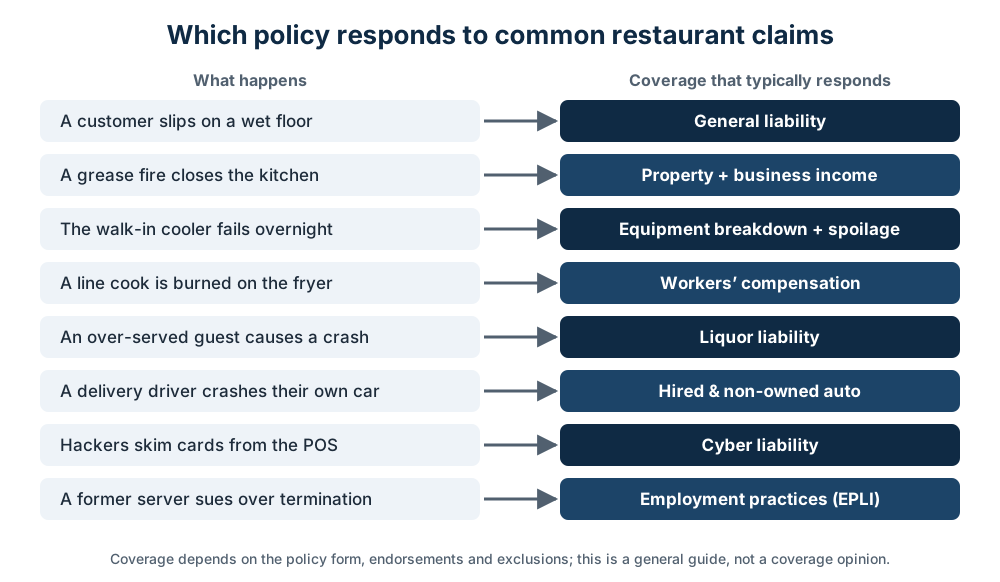
Other exposures are just as concrete. An employee rushing an order to Carmel rear-ends a stopped car, and the injured driver sues your business. A storm knocks out power for fourteen hours and the walk-in cooler warms past safe temperatures overnight. A neighboring station in a shared commissary starts a grease fire that damages your hood and equipment and closes the building for two weeks. A phishing email hands someone the login to your delivery platform account and your payouts get rerouted.
Ghost kitchen coverage checklist for Indiana operators
- General liability with products-completed operations — the core protection when a delivered meal causes illness, an allergic reaction or a burn.
- Hired and non-owned auto — covers your business when staff deliver or run errands in personal or rented vehicles.
- Commercial auto — required if the kitchen owns or leases delivery cars or vans.
- Business personal property — fryers, combi ovens, packaging stock and tablets, whether you own the building or rent a station.
- Equipment breakdown and spoilage — for compressor failures and power outages that ruin inventory.
- Business income — ask how the policy treats a shutdown of the shared facility caused by someone else, since wording varies by carrier.
- Cyber liability — delivery app accounts, online ordering and customer data are the storefront of a ghost kitchen.
- Workers’ compensation — kitchen burns, cuts and lifting injuries, plus delivery driving by employees.
Pricing a ghost kitchen: what underwriters look at
Carriers want to know revenue by brand, how orders are delivered (your drivers, app drivers or both), what you cook and how, whether the space has a hood with automatic suppression, and whether you share the facility with other operators. Operating hours matter, as do prior claims and how long the principals have run kitchens.
You can improve the picture with a written driver policy and motor vehicle record checks, allergen labeling tied to each brand’s recipes, temperature logs, tamper-evident packaging, and a commissary lease that clearly assigns responsibility for fire and equipment. The cleaner your controls, the more carriers will compete for the account.
How we quote Indiana ghost kitchens
Provident Financial Group is an independent agency. You complete one application covering all of your brands, and we compare several carriers side by side, including limits, exclusions and how each treats delivery driving. After you bind, we can issue certificates for commissary operators and landlords quickly. Call (866) 964-6660 with questions.
Frequently asked questions
Does the delivery app’s insurance protect my kitchen?
Not in a way you should rely on. App coverage generally protects the platform and its drivers under their own terms, not your liability for the food itself, so you still need products-completed operations coverage.
I run three virtual brands from one kitchen. Do I need three policies?
Usually not. Most carriers can write one policy for the kitchen and list each brand name, but every brand must be disclosed on the application so the menu and revenue are rated correctly.
Do my staff need commercial auto if they deliver in their own cars?
Your business needs hired and non-owned auto to protect it when employees drive for work. Their personal policies may exclude business use, so talk with drivers about their own coverage too.
What if the shared commissary closes for a problem I didn’t cause?
That depends on the business income wording, so ask about it before binding. Some policies respond to a covered loss at a location you depend on; many do not.
Launching a new virtual brand or moving into a commissary? Get Multiple Quotes within minutes.