
Ghost kitchens in Delaware typically need products and general liability, hired and non-owned auto if any employee delivers, property and equipment breakdown for the kitchen, cyber coverage for online ordering, and workers’ compensation from the first hire. Because there is no dining room, most of the risk sits in the food itself, the delivery trip and the contract with whoever owns the kitchen space.
This page is for delivery-only operators in Delaware: a single virtual brand in a rented commercial kitchen, a restaurant running extra brands out of its back line, or a group sharing a commissary near Wilmington or Dover. The coverage looks different from a sit-down restaurant, and carriers ask different questions.
Delaware rules a delivery-only kitchen still has to meet
No storefront does not mean no permit. The Division of Public Health’s Office of Food Protection permits food establishments statewide under the State of Delaware Food Code, and permitted establishments must have a Certified Food Protection Manager on staff. Workers’ compensation is required from the first employee. If your team makes deliveries in any vehicle, Delaware auto rules apply: 25/50/10 liability minimums (in thousands of dollars) and mandatory Personal Injury Protection on any vehicle you own.
If you run several brands, each should be listed on your application. Carriers rate by menu and cooking method, and an undisclosed brand that fries wings when the application described salads can complicate a claim.
Shared kitchens, virtual brands and third-party drivers
Most ghost kitchens rent space under a license or lease, and those agreements usually require you to name the kitchen operator as additional insured, carry specific liability limits and sometimes provide a waiver of subrogation. Read the contract before you buy; we can match the policy to it. Delivery apps set their own requirements too, so review what delivery apps require before signing on.
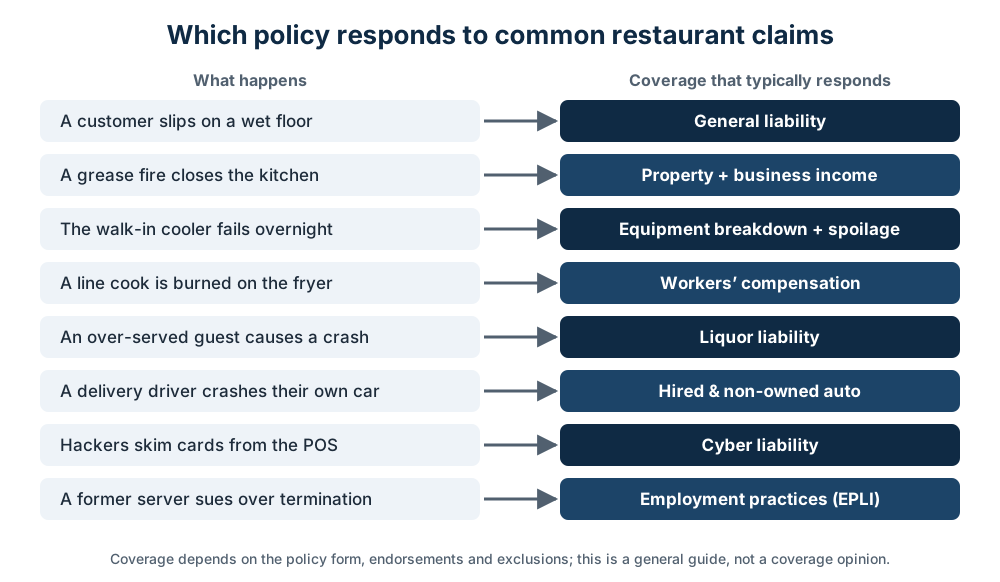
When app drivers carry your food, their coverage generally applies to the drive. When your own employees deliver in personal cars, hired and non-owned auto protects the business if a crash leads to a lawsuit against you.
Scenarios specific to a kitchen with no dining room
- A sealed container of curry arrives with a stray shard from a cracked hotel pan, and the customer chips a tooth; the claim comes through the app and names your brand.
- A neighboring tenant’s fryer fire in a shared kitchen spreads smoke through your station and ruins inventory, and the landlord asks which policy pays.
- Your ordering integration is hacked and card data from direct-order customers is exposed.
- An employee dropping catering trays in her own car rear-ends another vehicle on I-95.
- A freezer fails over a weekend when nobody is on site, since there is no front-of-house staff to notice.
Policies that fit a Delaware ghost kitchen
- Products-completed operations liability — the core coverage when a delivered meal causes illness or injury off your premises.
- General liability — covers injuries to visitors, drivers picking up orders and damage to the shared space.
- Hired and non-owned auto — protects the business when staff deliver or run errands in their own vehicles.
- Tenant’s property and improvements — covers your equipment and any build-out you paid for inside a leased kitchen.
- Equipment breakdown and spoilage — responds to refrigeration or oven failures and the food lost with them.
- Cyber liability — for data breaches, ransomware and payment fraud tied to online ordering.
- Business income — replaces revenue if a covered loss takes the kitchen offline.
- Workers’ compensation — required in Delaware from the first employee.
How underwriters rate a virtual restaurant
Expect questions about the number of brands, menu types and cooking methods, whether the kitchen is shared, who handles hood cleaning and fire suppression, order volume, how deliveries are made and your prior claims. New concepts without history are common in this space; clean kitchen procedures, tamper-evident packaging, temperature logs and a written allergen process help underwriters get comfortable. Carrying the limits your license agreement requires, no more and no less, also keeps pricing sensible.
Comparing ghost kitchen quotes in one pass
Provident Financial Group is an independent agency: one application goes to multiple carriers, and we lay the options side by side so you can see how each treats delivery, shared space and cyber. Certificates for your kitchen operator and delivery platforms can be issued quickly. Call (866) 964-6660. Coverage is subject to underwriting and policy terms.
Frequently asked questions
Does a ghost kitchen need the same insurance as a restaurant?
The building blocks are similar, but the weighting is different: products liability, delivery and contract requirements matter more, while slip-and-fall exposure from diners mostly disappears.
Who covers a fire that starts in another tenant’s station?
Your own property policy typically covers your equipment and inventory, and your insurer may pursue the responsible party unless your contract waives that right.
Can one policy cover several virtual brands?
Often yes, if every brand and menu is disclosed on the application. Leaving one out can create problems at claim time.
Do I need workers’ comp if my only staff are two part-time cooks?
Yes. Delaware requires coverage for any employment with one or more employees.
Launching or expanding a delivery-only brand? Get Multiple Quotes within minutes.