
Looking for the complete guide? See our full food truck insurance page — coverage stack, cost tables, event certificate requirements, and the five gaps that catch trucks.
A food truck is a restaurant and a vehicle at the same time — which means it needs both kinds of protection, and neither one alone is enough. Here’s the practical coverage picture for truck and trailer operators.
The two-sided risk
When your truck is driving, it’s an auto risk: accidents, damage, injury on the road. When it’s parked and serving, it’s a restaurant risk: burns, foodborne illness claims, a customer tripping at your window. Personal auto policies exclude commercial food service use, and general liability doesn’t cover driving — you genuinely need both sides.
The food truck coverage checklist
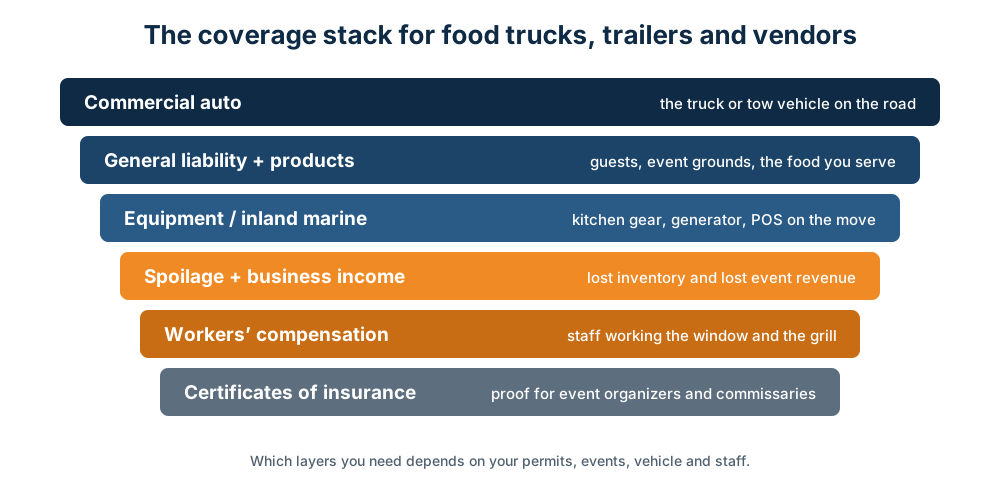
- Commercial auto — the truck or the tow vehicle and trailer, with liability and physical damage
- General liability — customer injuries and foodborne illness claims from your service window; see our coverage overview
- Equipment coverage — generators, fryers, refrigeration, and smallwares, on the truck and in storage
- Workers’ comp — required in most states once you have employees, even part-time event staff
- Liquor liability — if you serve at licensed events
- Spoilage — a generator failure shouldn’t cost you a week of inventory
Why events and commissaries will ask for certificates
Festivals, breweries, office parks, and commissary kitchens almost universally require a certificate of insurance — usually naming them as additional insured — before you can park and serve. Operators lose booked events over paperwork more often than you’d think. Set your policy up with blanket additional insured capability and certificates become a same-day formality instead of a scramble.
Frequently asked questions
Does my personal auto policy cover my food truck?
No — commercial food service use is excluded under personal policies, and a denied claim after an accident can be business-ending. The truck needs commercial auto coverage.
What does food truck insurance cost?
It depends on the truck’s value, where and how often you operate, your menu and cooking methods, and staffing. Comparing carriers matters because food truck appetite varies a lot between them.
I run a trailer, not a truck. Does that change things?
The structure changes — the tow vehicle and trailer are insured accordingly — but the overall program (auto + liability + equipment) stays the same.
Tell us about your truck, your menu, and where you serve — we’ll build the package and compare A-rated carriers. Start your quote here.