
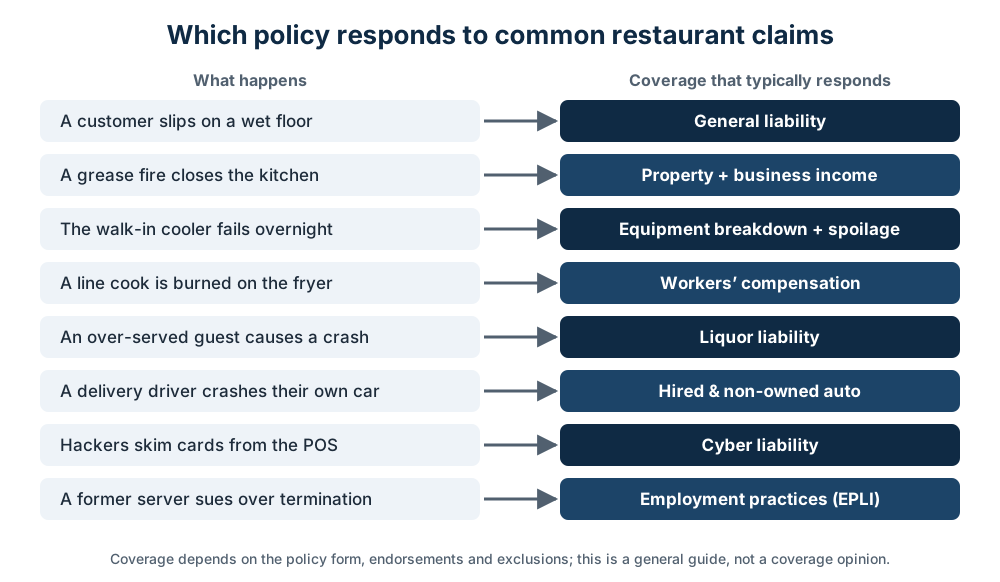
Fast casual restaurants in Kansas typically need a business owners or restaurant package policy combining general liability and property, equipment breakdown and spoilage, workers’ compensation once gross annual payroll passes $20,000, and liquor liability if you pour beer or wine. Kansas has no dram shop statute, but landlords and franchisors commonly require liquor coverage, and hail makes property terms worth reading closely.
This page is for counter-service concepts in Kansas: build-your-own bowl shops, burger and taco counters, salad chains and franchise units in Topeka, Manhattan, Lawrence and Johnson County. High volume, a small crew and a lease with insurance requirements define most of these businesses.
Kansas law and lease terms that shape a fast casual policy
Food service licensing runs through the Kansas Department of Agriculture’s Food Safety & Lodging program. KDA recommends, but does not require, a certified food protection manager, and we found no statewide food handler card mandate; check your city or county. Franchisors often require certification regardless.
If you add beer or wine, the Kansas Department of Revenue’s Division of Alcoholic Beverage Control handles licensing. Kansas has no dram shop law: in Ling v. Jan’s Liquors (1985) the Kansas Supreme Court declined to create liability for sellers of alcohol and left it to the legislature. That does not make alcohol risk disappear. Fights, falls and defense costs still happen, the state requires on-premise licensees to post a Liquor Drink Tax bond, and most shopping center leases and franchise agreements require liquor liability anyway. Server training is voluntary in Kansas; KDOR ABC offers optional licensee education visits. More detail is on our Kansas liquor liability page.
Workers’ compensation is mandatory once gross annual payroll exceeds $20,000, which nearly every fast casual unit reaches within weeks. See restaurant workers’ comp in Kansas.
Lunch-rush exposures in a counter-service restaurant
Speed drives the losses. During a noon rush a guest carrying a tray slips where the soda fountain has been dripping onto the tile, breaks a wrist and files a claim against the restaurant. A line cook reaches across the flat-top to grab a ticket and burns a forearm; another slices a thumb on a mandoline while prepping cucumbers for the afternoon. These are the everyday claims that set your general liability and workers’ comp pricing.
Menu customization creates allergen risk. A guest who asks for no sesame gets a bowl finished with the same scoop used for a sesame dressing, and the reaction becomes a products claim. On the property side, a walk-in cooler failure on a Friday night or a hailstorm that damages the storefront glass and exterior signage can close a unit through the weekend, which is where business income coverage earns its keep.
What a Kansas fast casual policy should include
- General liability — slips, trips and customer injuries in a busy dining room and at the pickup shelf.
- Products liability — allergen cross-contact and foodborne illness claims from customized orders.
- Commercial property — tenant improvements, furniture, signage and cooking equipment at replacement cost.
- Business income — lost earnings when a covered loss closes the unit.
- Equipment breakdown and spoilage — walk-ins, reach-ins, soda systems and fryers.
- Liquor liability — for beer and wine sales, often a lease or franchise requirement.
- Workers’ compensation — required above the Kansas payroll threshold.
- Hired and non-owned auto — catering drop-offs and supply runs in employee cars.
- Employment practices liability — high-turnover hourly staffing brings wage and hiring disputes.
How carriers price a fast casual location
Pricing is built mainly on annual sales and payroll, with adjustments for cooking methods, the share of sales from alcohol, the building’s construction and fire protection, hours, and prior claims. A franchise unit with a strict operations manual may present better than an independent concept with no written procedures.
Practical ways to present a stronger risk: put anti-slip mats at the drink station and pickup area, keep an allergen protocol with separate utensils, maintain hood and suppression service records, keep a documented cash-handling routine, and choose a wind/hail deductible your budget can carry after a storm.
Comparing fast casual quotes with Provident Financial Group
As an independent agency, we take one application and compare several carriers side by side, including package policies built for restaurants and BOP options for smaller units. Once coverage is bound, you get live certificates of insurance to send to your landlord or franchisor. Call (866) 964-6660 if you’d rather walk through it by phone.
Frequently asked questions
Is a BOP enough for a fast casual restaurant in Kansas?
For smaller units it often is, but many carriers exclude or limit liquor, employment practices and auto on a BOP. Compare it with a restaurant package policy before you decide; our BOP guide explains the differences.
If Kansas has no dram shop law, why does my landlord want liquor liability?
Landlords want protection from alcohol-related claims and defense costs no matter what the statute says, so leases routinely require it. It also protects you in fights and falls involving guests who were drinking.
Does my franchise agreement set my insurance limits?
Usually yes. Franchise agreements typically list required coverages, limits and additional insured wording, and we build quotes to match them.
Will a delivery partnership change my coverage needs?
If employees deliver, add hired and non-owned auto. If delivery goes only through third-party apps, review what the platform requires from your restaurant.
Opening a new unit or renewing your lease? Get Multiple Quotes within minutes.