
Fast casual restaurants in Connecticut typically need general liability with products coverage for high-volume, made-to-order food, a business owners or package policy that satisfies shopping-center landlords, cyber liability for kiosks and online ordering, employment practices liability for a large hourly crew, and workers’ compensation, which Connecticut requires for every employer regardless of size.
This page is for owners of counter-service concepts: bowl and salad shops, burrito and taco lines, burger and chicken concepts, and regional franchises in plazas along Route 1, the Berlin Turnpike and town centers across the state. Fast casual runs on speed and volume, and the insurance program has to keep up. See our national fast casual insurance page for general guidance.
State obligations for a Connecticut counter-service concept
Every employer in Connecticut must insure its full workers’ comp liability with an authorized insurer or qualify as a self-insurer (Conn. Gen. Stat. § 31-284(b)), with no minimum employee count. The market is private; there is no state fund, and NCCI administers the residual market. Uninsured employers face civil penalties and, for willful failure, felony exposure for owners and officers.
Your town or district health director permits and inspects you under the Connecticut Food Code, the FDA Food Code as fully adopted since February 17, 2023. Most fast casual kitchens fall into a class that requires a certified food protection manager and a designated alternate person in charge. Covered employers also withhold 0.5% of wages for CT Paid Leave (2026 rate), which is worth planning for in a payroll-heavy business.
Landlord and franchise requirements in plazas and malls
Shopping-center leases usually spell out required liability limits, additional insured status for the landlord and property manager, waiver of subrogation and sometimes an umbrella. Franchise agreements add their own minimums and certificate deadlines. Missing one endorsement can put you in technical default, so we review lease and franchise insurance sections line by line before quoting.
Rush-hour risks on a fast casual line
The customization line is a liability exposure unique to this format. A guest with a sesame allergy watches the server use the same spoon across toppings, and a reaction follows; guests who build their own meals expect cross-contact controls, and claims hinge on what your training and signage said. Soup and rice wells at steam-table temperatures burn staff and occasionally customers reaching across the sneeze guard.
Volume magnifies routine hazards. Spilled dressing near the drink station during a noon rush, a patio chair that collapses under a guest, a fryer fire when the suppression system was overdue for service. Behind the counter, a young crew rotates between the grill, prep knives and heavy produce deliveries, and turnover means someone is always new. Employment claims follow the same dynamic: scheduling, overtime and harassment allegations are common with large hourly teams.
Technology is now core to operations. A kiosk skimmer or a breach of your loyalty app exposes customer data, and a POS outage from a ransomware attack can shut down ordering at every location at once. Winter storms add icy parking lots and power outages that spoil a full walk-in.
Policies a fast casual operator should line up
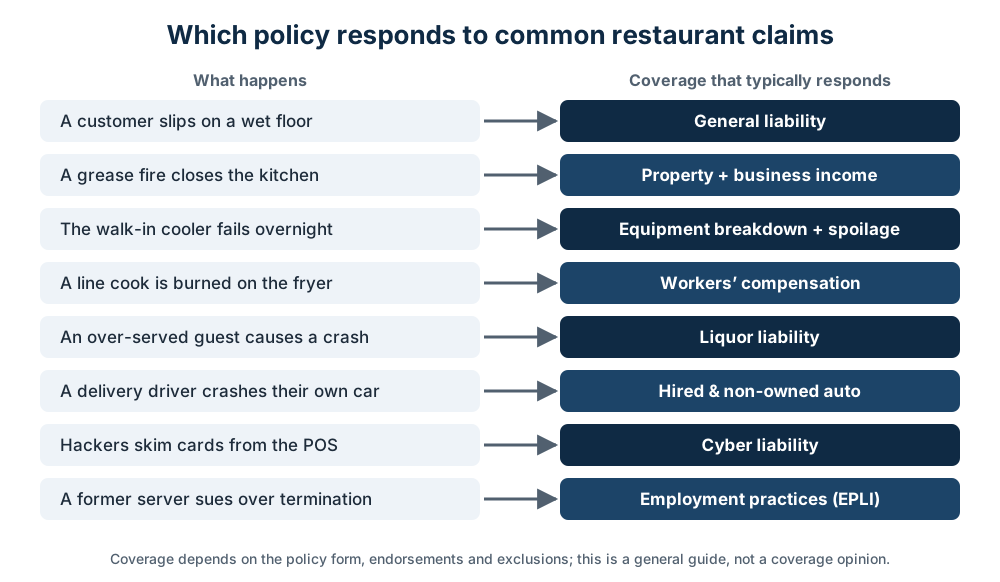
- General liability with products-completed operations — covers allergen reactions, foodborne illness and slip-and-fall claims at the counter and patio.
- Business owners or package policy — bundles property, liability and business income in a form landlords recognize.
- Equipment breakdown and spoilage — responds when a walk-in, reach-in or HVAC unit fails and takes inventory with it.
- Cyber liability — pays for breach response, notification and ordering-system downtime.
- Employment practices liability — defends wage-and-hour, scheduling and harassment claims from hourly staff.
- Hired and non-owned auto — covers catering drop-offs and supply runs in employees’ cars.
- Workers’ compensation — required for every Connecticut employer; covers grill burns, knife cuts and lifting injuries.
- Umbrella liability — meets higher lease or franchise limits across multiple locations.
Price drivers for high-volume counter service
Carriers rate on gross sales, payroll by class, square footage, cooking equipment and suppression, number of locations, delivery and catering exposure, and whether alcohol is sold. Loss history carries weight, especially repeated slip-and-fall or employee injury claims. Multi-unit operators may get better terms by combining locations on one program.
To help your pricing, keep suppression and hood service current, post allergen protocols and train on utensil changes, document floor inspections during rushes, use written onboarding for new hires, and enable multi-factor login on POS and ordering platforms.
Working with an independent agency on fast casual coverage
Provident Financial Group takes one application and compares multiple carriers side by side for liability, property, cyber, EPLI and comp. We issue certificates of insurance with the endorsements your landlord or franchisor requires. Call (866) 964-6660. Coverage is subject to underwriting and policy terms. More on our Connecticut restaurant insurance and Connecticut restaurant workers’ compensation pages.
Frequently asked questions
Does a build-your-own line change my liability exposure?
It raises allergen and cross-contact risk because ingredients share utensils and space. Carriers ask how you train staff and label ingredients.
Why does my landlord want to be an additional insured?
So the landlord is protected under your liability policy for claims arising from your operations. It is added by endorsement and shown on your certificate.
Should a fast casual restaurant carry EPLI?
With large hourly teams and frequent turnover, employment claims are a real exposure, and general liability does not cover them. EPLI fills that gap.
Can multiple locations share one policy?
Often yes. Combining locations can simplify renewals and certificates, subject to underwriting.
Opening a new unit or renewing an existing one? Get Multiple Quotes within minutes.