
Breweries and taprooms in Kansas typically need product liability within general liability, liquor liability for the taproom, property and equipment breakdown for the brewhouse, and workers’ compensation once gross annual payroll exceeds $20,000. Kansas has no dram shop statute, so the bigger exposures are often a contaminated or over-carbonated package, a failed glycol chiller, and injuries from lifting kegs.
This page is for Kansas craft brewers, brewpubs, and taproom-first operations that make beer on site and pour it by the glass, sell crowlers and cans to go, or self-distribute kegs to local accounts. A brewery carries risks a bar never sees, because you are a manufacturer as well as a server.
Kansas licensing and legal facts that shape a brewery program
Alcohol licensing runs through the Kansas Department of Revenue’s Division of Alcoholic Beverage Control (ABC). If your taproom holds an on-premise license, KDOR lists a Liquor Drink Tax bond of at least $1,000 and no statutory liability insurance requirement. In practice, taproom landlords, equipment lenders, and festival organizers will require liquor liability and general liability on a certificate before you pour.
On the liability side, Kansas repealed its dram shop act in 1949, and the Kansas Supreme Court declined to create seller liability in Ling v. Jan’s Liquors (1985) and declined again for suppliers and social hosts in Bland v. Scott (2005). Guests can still bring premises claims for falls or altercations in your taproom, and ABC can still impose administrative penalties. Workers’ comp is required above the payroll threshold, and any delivery van must carry Kansas auto minimums of 25/50/25 (in thousands of dollars) plus personal injury protection and uninsured/underinsured motorist coverage.
Food served in the taproom falls under the Kansas Department of Agriculture’s Food Safety and Lodging program, which licenses food establishments. If you host rotating food trucks instead, ask each truck for its own certificate of insurance naming your brewery.
Where Kansas breweries actually get hurt
- A batch of cans is under-attenuated and keeps fermenting in retail coolers; several cans burst and a store clerk is cut by flying aluminum. That is a product liability claim, and a recall of the lot can follow.
- A glycol chiller fails overnight in July and three fermenters of lager climb out of temperature, ruining the beer and delaying releases for weeks.
- A cellar worker strains his back moving full half-barrel kegs, the most common injury pattern in small production breweries.
- A CO2 line leak in a poorly ventilated cold room sends an employee to the emergency room.
- A guest at your anniversary party trips over a hose on the brewhouse floor during an unofficial tour.
- Hail tears through the grain silo and exterior glycol lines, halting brewing until repairs are done.
Brewery and taproom coverage checklist for Kansas
- General liability with products-completed operations — covers injury or damage caused by your beer after it leaves the building.
- Product recall or contamination coverage — pays to pull, destroy, and replace a bad batch; usually a separate endorsement or policy.
- Liquor liability — for the taproom, private events, and festival pours; required by most leases and event contracts.
- Property — brewhouse, fermenters, canning line, cold room, grain storage, and finished goods against fire, wind and hail.
- Equipment breakdown with spoilage — boilers, chillers, compressors, and the beer spoiled when they fail.
- Business income — lost profit while the brewhouse is down after a covered loss.
- Workers’ compensation — required once payroll exceeds the Kansas threshold; lifting and chemical exposures are real.
- Commercial auto and hired/non-owned auto — for self-distribution vans and employees running kegs in their own trucks.
- Umbrella — sits above liquor, general liability, and auto for distributors and large event contracts.
Pricing factors underwriters apply to Kansas brewers
Carriers look at annual barrelage, the split between taproom sales and packaged distribution, where your product ships, taproom hours and capacity, events and live music, your quality-control process, and loss history. Property pricing turns on equipment values, building construction, sprinklers, and local hail history.
To put your best foot forward, document your QC program (gravity checks, lab testing, lot coding), keep a written recall plan, train staff on CO2 and chemical safety, use keg dollies or lifts, and collect certificates from every food truck and event vendor. Accurate equipment values also prevent underinsurance at claim time.
One application, several carriers for your brewery
As an independent agency, Provident Financial Group sends one brewery application to multiple carriers that write manufacturing and liquor exposures, and we lay the quotes out side by side so you can compare limits, exclusions, and deductibles. Certificates for festivals, landlords, and distributors are issued quickly after binding. Call (866) 964-6660 to talk it through.
Frequently asked questions
Does a Kansas brewery need product liability separate from its taproom coverage?
Products-completed operations is usually part of the general liability policy, but you should confirm the limit is adequate for packaged distribution. Product recall is a separate coverage.
Is spoiled beer covered when a chiller breaks down?
Only if you carry equipment breakdown with spoilage or a similar endorsement. Standard property forms often exclude mechanical breakdown.
Do I need liquor liability if Kansas has no dram shop law?
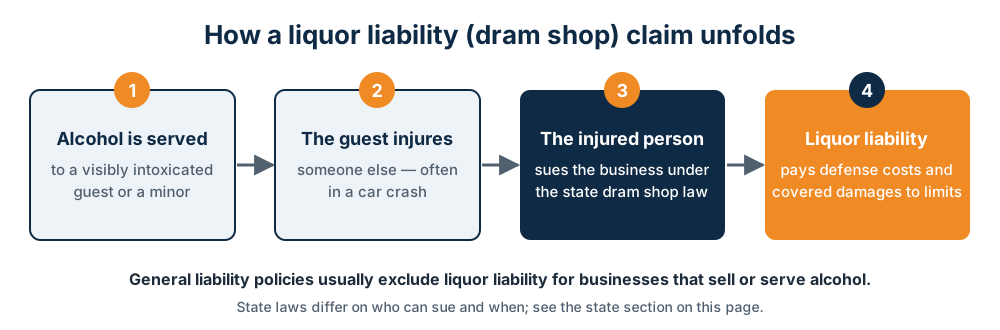
Most taprooms still carry it because landlords and event organizers require it, and it defends alcohol-related claims that plaintiffs file anyway.
Can my employees deliver kegs in their own pickups?
They can, but their personal auto policy may not respond to business use. Hired and non-owned auto liability protects the brewery in that situation.
Ready to line up brewery quotes side by side? Get Multiple Quotes within minutes.